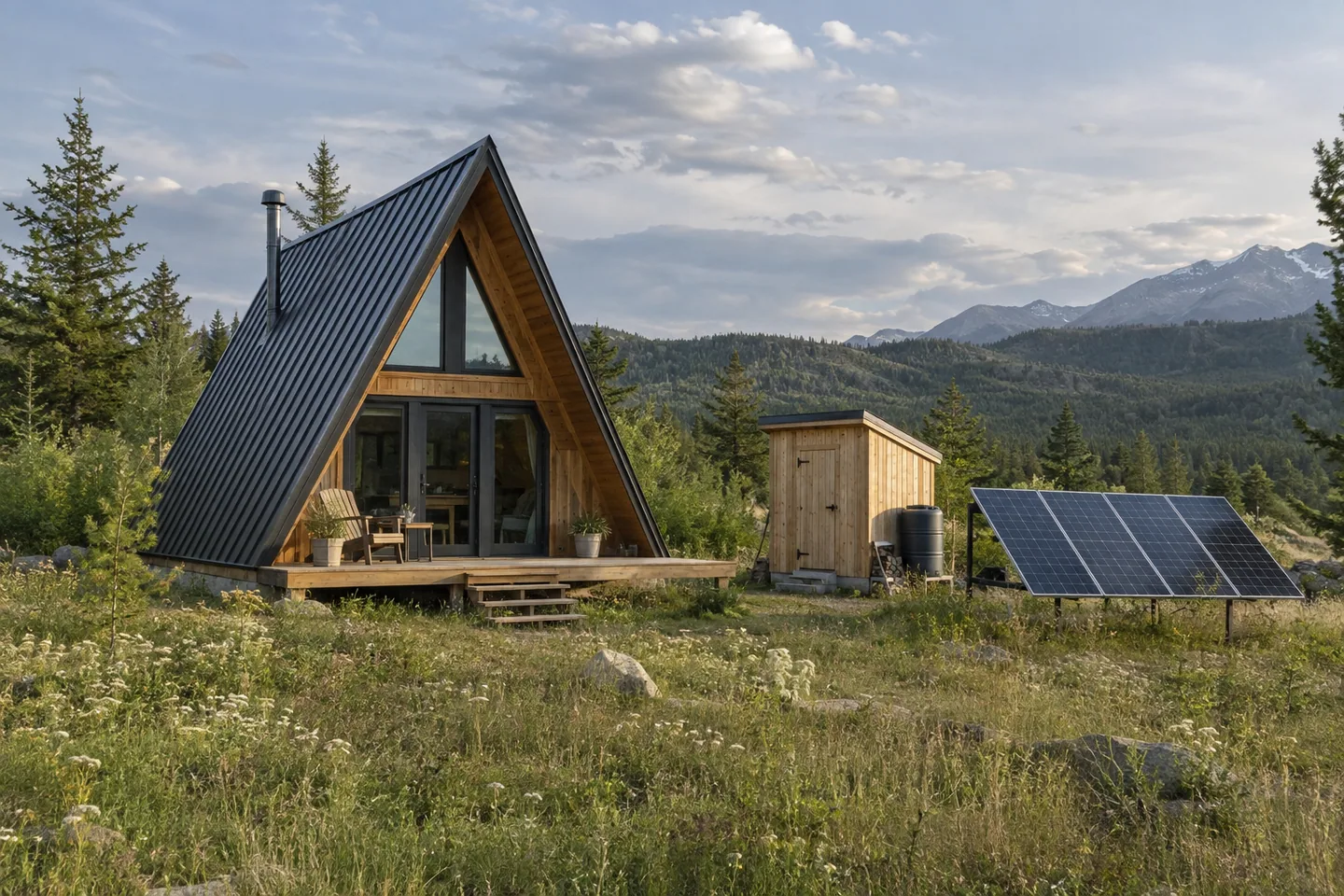
AI-generated cabin concept, used for illustration.
In this guide
An A-frame can be part of an off-grid project, but the shape does not provide the services. Start with the power, water and wastewater arrangements, then fit the building and daily routine around what is feasible at the site.
Define what “off-grid” means for you
You may mean no electricity connection, no mains water, or a property independent of several public services. Write down which connections are absent and what will replace each one. Otherwise, two proposals described as off-grid can be talking about different projects.
Also define the season of use. A summer retreat visited occasionally and a year-round home have different operating demands. Include the least convenient month in the brief, not only the conditions shown in the sales images.
Build an electricity demand list
List the devices you intend to run, their electrical input and the expected operating pattern. Include water pumping, refrigeration, communications and control equipment as well as obvious appliances. Record which loads need to operate together and which can be scheduled.
The electricity cost calculator can calculate energy for one load at a time. Add those results to make an initial demand list. It does not size batteries, inverters, wiring or generation equipment; give the list to the appropriate system designer.
Treat water as both quantity and quality
A rainfall total does not tell you whether water will be available during a dry period. Storage, demand, losses and the seasonal pattern need consideration. If you are exploring collection from the roof, our rainwater tool estimates potential volume for the period you enter.
That result says nothing about drinking quality. The CDC's rainwater guidance explains that collected rainwater can contain contaminants. Obtain suitable local advice on the water source, treatment, testing and permitted uses instead of assuming that clear water is safe.
Resolve wastewater before fixing the layout
The toilet, kitchen and bathroom need an appropriate wastewater arrangement. Ask the local authority and relevant specialist what is feasible for the property. Do not assume that a product marketed for off-grid use is automatically accepted on your site.
Reserve any required equipment and access space in the plan. Hiding all of this in a small leftover cupboard can make maintenance difficult and may not meet the system's needs.
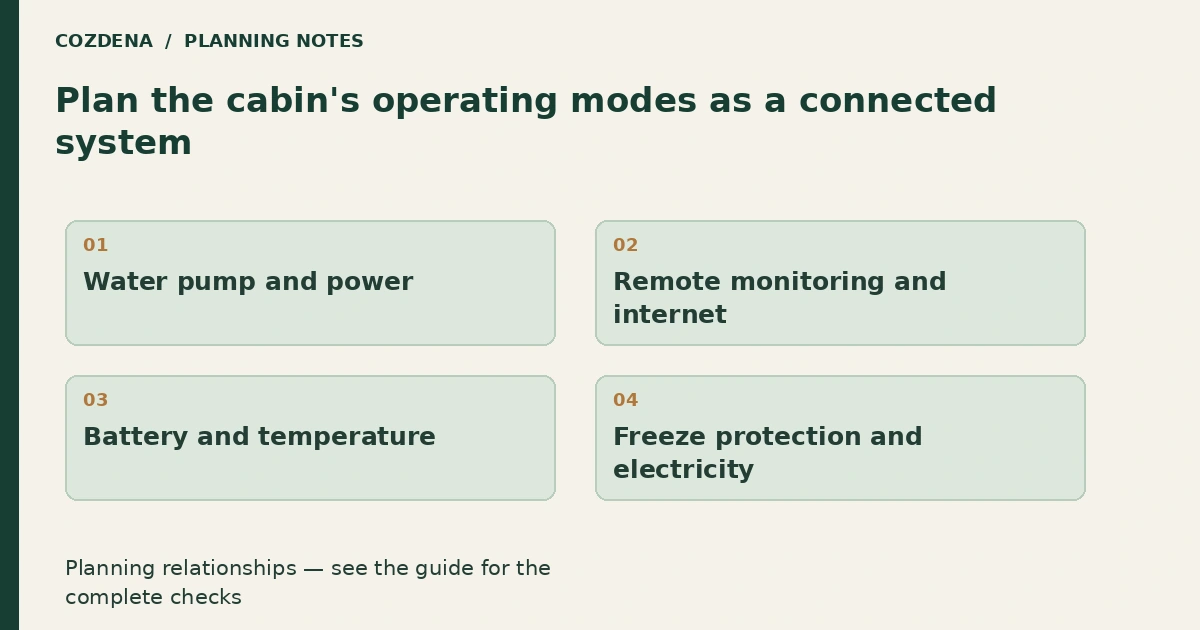
Plan the cabin's operating modes as a connected system
List what happens during an occupied weekend, a short absence and a seasonal closure. Power, water, communications and heating depend on one another, so separate equipment lists need a shared operating plan.
| Dependency | Example question |
|---|---|
| Water pump and power | What supply remains when battery energy is limited? |
| Remote monitoring and internet | Can an alert leave the cabin during an outage? |
| Battery and temperature | Are charging conditions within the exact product limits? |
| Freeze protection and electricity | What is the approved response if power is unavailable? |
For each function, identify the normal supply, the limitation and the person who responds. Do not count a remote alert as a repair or a backup power source.
Read battery temperature limits before deciding where equipment belongs. Keep inverter power separate from stored battery energy, then turn the approved system instructions into arrival and shutdown cards. These links connect the design choices to the practical task of leaving a cabin unattended.
Decide who keeps the systems working
Write down inspection routines, consumables, replacement parts and service contacts. Consider what happens while the cabin is empty and how you will respond to a fault. A system you can maintain reliably is more useful than one selected only for a claim of independence.
Use the project checklist to keep the outstanding service decisions visible. Choose the cabin model after those decisions are far enough along to inform its space and budget.