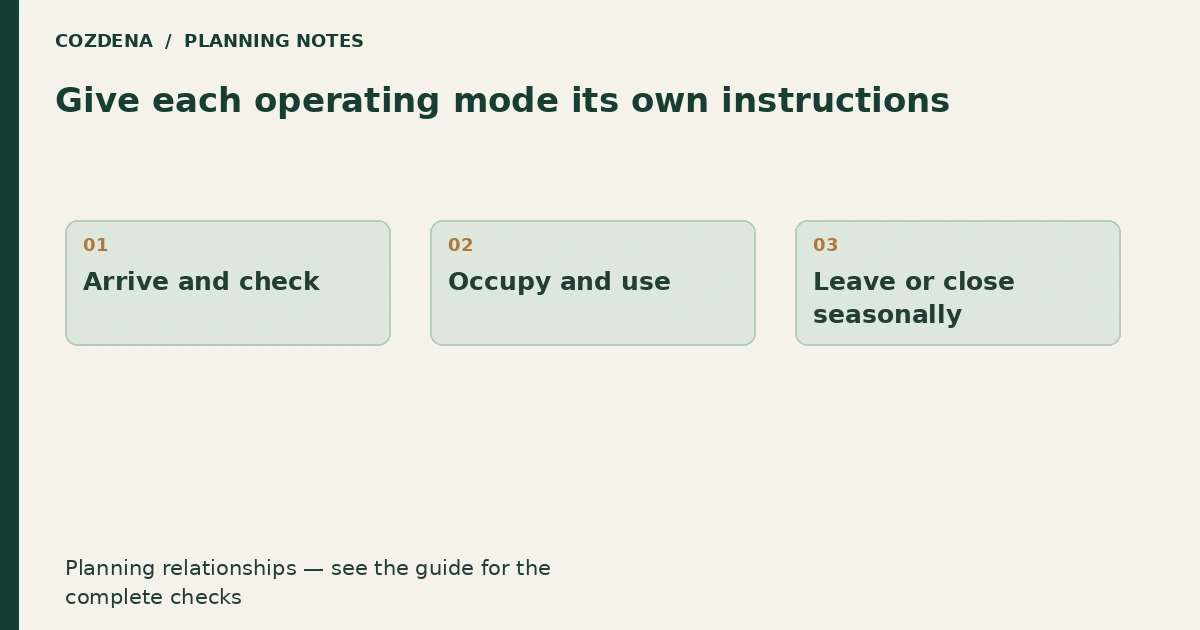
Planning diagram. Examples and assumptions are explained below.
In this guide
Create separate instructions for arrival, normal occupancy and departure. A weekend exit and a full winter shutdown are different operations and should not share an ambiguous “turn everything off” note.
Define the intended modes
Work with the installers to identify which systems stay active, which controls a visitor may use and which actions require a trained person. Include any dependence on electricity, internet or a water supply. Never infer a safe shutdown sequence from equipment names alone.
| Mode | What the instructions should establish |
|---|---|
| Arrival | Checks needed before normal use |
| Occupied | Everyday controls and expected operation |
| Short absence | Systems intentionally left running |
| Seasonal closure | Approved separate procedure and responsible person |
Use location-based instructions
Replace “check the valve” with a labelled location and an appropriate photograph. Keep passwords and sensitive access details in a private record. Include who to call when the observed condition does not match the instruction.
An example short-absence card might ask the owner to confirm the agreed thermostat mode, check for visible leaks and verify that remote alerts are communicating. It should use the actual system settings supplied by the installer, not a generic temperature copied from another cabin.
Walk through the cards with another person
Ask someone unfamiliar with the cabin to locate the controls while you supervise. Ambiguous names become obvious quickly. Review the cards whenever equipment, valves or controls change, and date the current version.
Keep emergency instructions visible and concise. Detailed maintenance manuals belong in a separate folder so a simple arrival check does not become a technical textbook.
Connect the house manual, winter plumbing plan and unattended cabin checks. Use the project checklist to schedule the seasonal work.