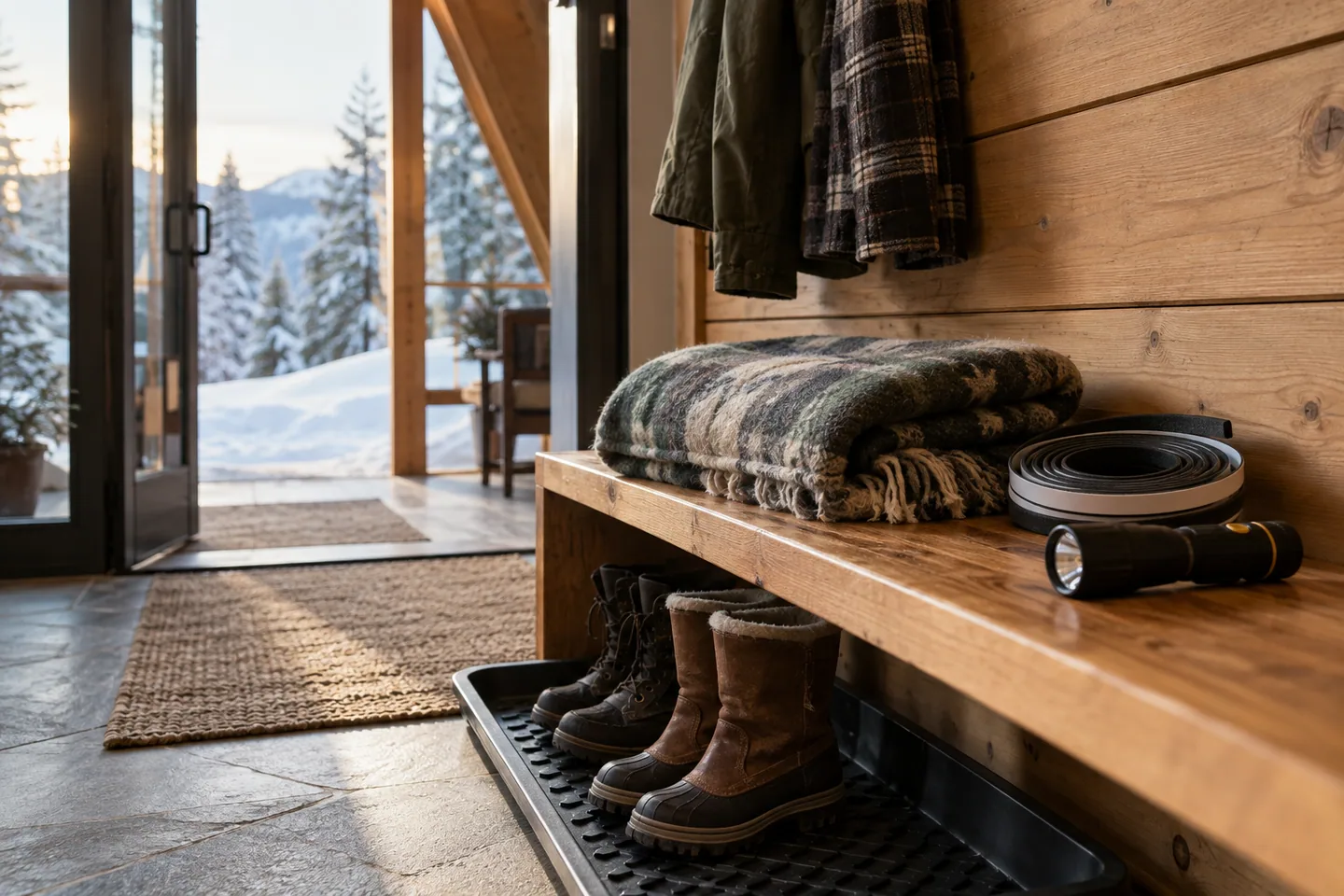
AI-generated cabin concept, used for illustration.
In this guide
Prepare the cabin around how it will be used in winter. An occupied home, an intermittently visited cabin and a professionally winterized empty building need different operating plans. Follow the instructions for the systems actually installed.
Decide who checks the cabin when you are away
Write down the expected visit pattern and the person who can respond locally if something goes wrong. Keep contact details for the relevant service providers together with information needed to identify the property and equipment.
If you use remote monitoring, test the alerts and understand what happens when power or connectivity is lost. A device being installed does not prove that someone will receive and act on a warning.
Arrange heating and water protection
Have the heating system serviced according to its instructions and ask the installer how it should operate during absences. Do not invent a shutdown or temperature regime for unfamiliar equipment.
Ask a plumber to explain the water system's protection and any winterization procedure appropriate to it. The American Red Cross guidance on frozen pipes identifies exposed and unheated areas as concerns. Use it as general context; obtain a plan suited to your cabin rather than attempting an incomplete drain-down from memory.
Label the controls you may need in an incident and keep the instructions accessible. People looking after the property should know where the approved operating information is stored.
Review access before the first difficult journey
Agree who clears the approach, where cleared snow can go and how pedestrians reach the entrance. Check that maintenance access to equipment remains available. Ask suppliers what access is required for any regular delivery.
Include the route beyond your boundary in the plan. A cleared front step is not enough if the last section of road is impassable or its maintenance responsibility is unresolved.
Observe the outside from a safe position
Look for visible damage, displaced finishes, blocked drainage and changes around doors or windows. Record anything that needs a professional inspection before severe weather. Do not climb onto a steep roof to complete a checklist.
For the specific snow questions, read A-frames in snowy climates. That guide separates roof appearance, structural design and the areas affected by falling snow or ice.
Keep the indoor routine practical
Create a place for wet outerwear, check how ventilation should operate and leave access to controls and equipment. Review installed alarms according to their manufacturers' instructions and applicable requirements. If the cabin uses fuel-burning equipment, include its maintenance and CO provisions in the review; CPSC provides general CO information.
Store operating instructions where a visitor or caretaker can find them without searching through personal files. Explain normal settings and which changes they should leave to the responsible service provider.
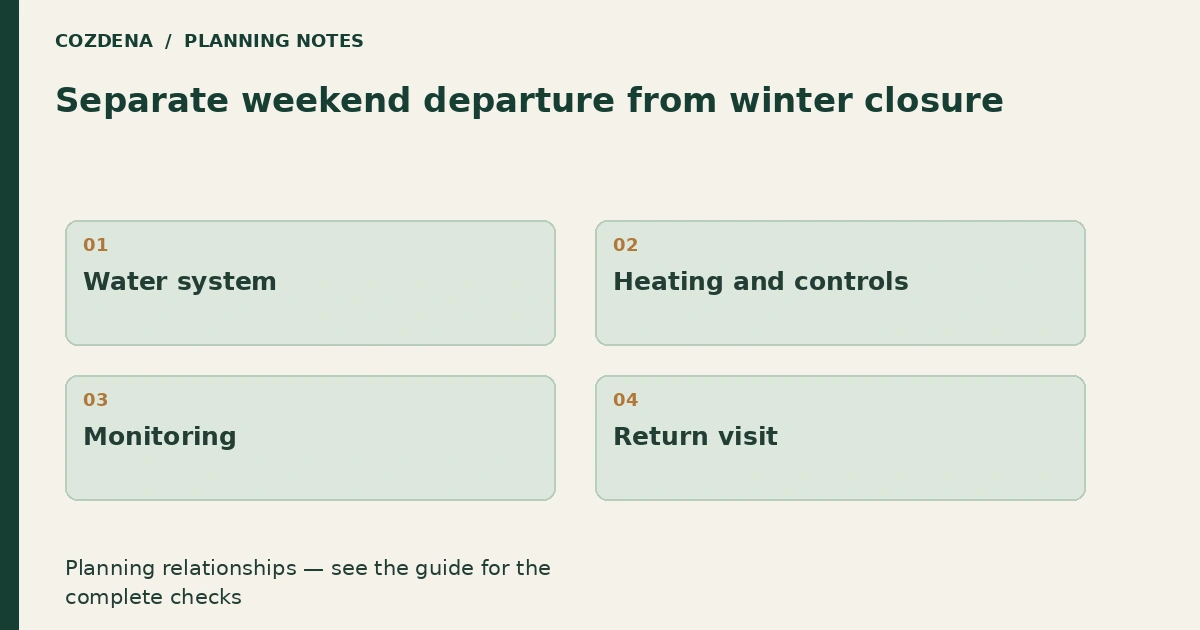
Separate weekend departure from winter closure
Create two checklists if the cabin will sometimes remain operational between visits and sometimes be closed for the season. Mixing the two can lead to the wrong action on water, heating or controls.
| Decision | Short absence | Seasonal closure |
|---|---|---|
| Water system | Follow the approved operating arrangement | Follow the specific winterization procedure |
| Heating and controls | Confirm the agreed unattended mode | Confirm equipment-specific closure instructions |
| Monitoring | Check communication and response contact | Record which alerts remain meaningful |
| Return visit | Ordinary arrival checks | Approved reopening procedure |
The correct settings and steps depend on the installed systems and local conditions. Have the installers define them; do not use a generic list as a drain-down procedure.
Include the consequences of a power interruption in the plan, especially where freeze protection depends on electricity. The rainwater freezing plan addresses tanks and exposed components, while operating-mode instructions help make the agreed procedure clear to different cabin users. Date the completed closure record and keep the reopening checks with it.
Keep a dated record
Use a list with the item, person responsible, check date and next action. Photograph relevant changes so the next inspection has a comparison. A completed list is useful only if it reflects the cabin's current condition.
The planning checklist can hold notes and export them. For work throughout the rest of the year, use the maintenance-calendar guide to build a schedule around your actual materials and equipment.