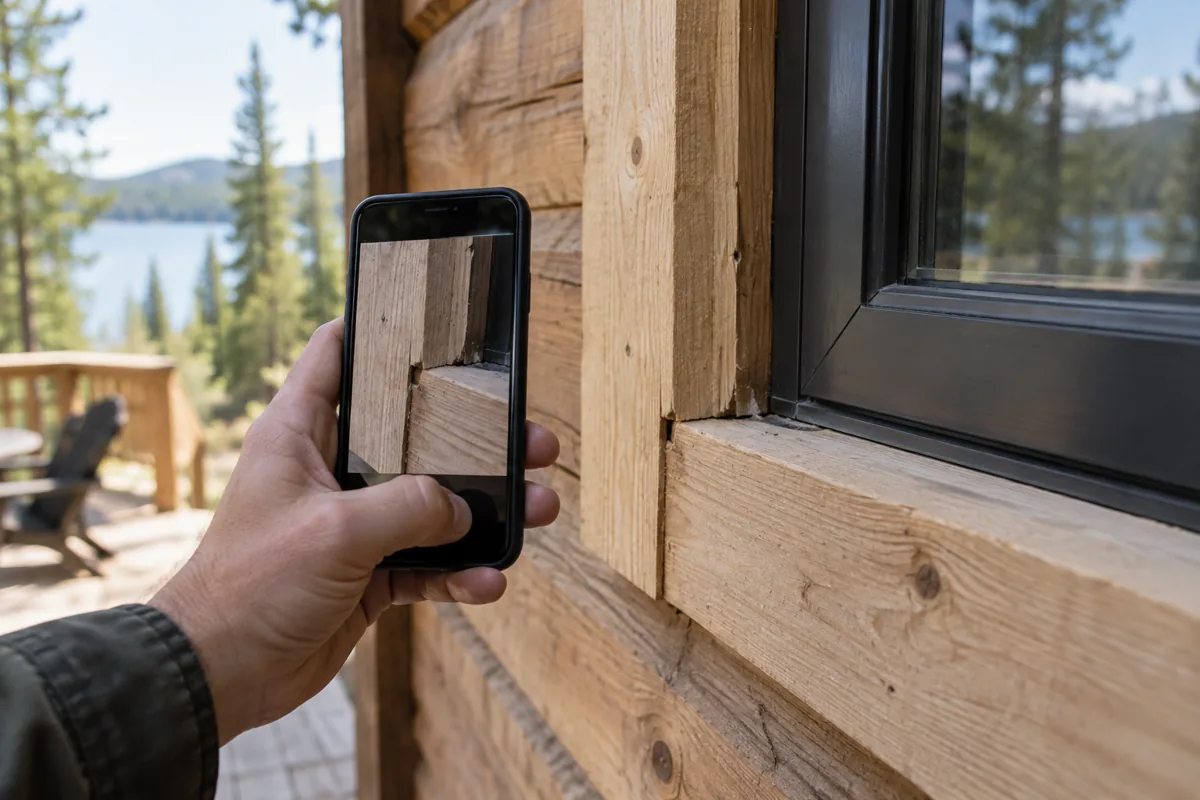
AI-generated cabin concept, used for illustration.
In this guide
Take a wide photo showing the location and a close-up showing the issue. Add the date, room, observation and whether it is changing, so the contractor can understand what needs investigating.
Describe the observation first
Write “damp patch below the left roof window after overnight rain” rather than declaring a failed flashing without inspection. A symptom can have several causes. Record weather or equipment use only when known, keeping guesses separate.
For anything suggesting immediate danger, restrict access as appropriate and contact the relevant emergency service or qualified professional. A photo log is not a reason to wait on an urgent problem.
Keep a simple repair record
| Field | Example of useful information |
|---|---|
| Location | Bedroom, left window, lower corner |
| First noticed | Date and circumstances |
| Evidence | Wide image, detail image, measurement if safe |
| Agreed next step | Contractor inspection booked |
| Completion | Work described, date and follow-up observation |
Avoid inspecting roofs, live electrical parts or inaccessible cavities to improve a photograph. Let the person qualified to investigate choose the appropriate access method.
Compare like with like
For a changing mark, repeat the photo from the same safe position with similar lighting. Preserve the original images rather than only annotated copies. Send a concise set that shows the issue clearly, not dozens of unlabelled pictures.
Record when the contractor says the work is complete and what was actually done. A repaired finish alone may not establish that a moisture source has been resolved.
Use the punch-list guide for handover issues, roof leak versus condensation guide for useful observations and project checklist for dates and follow-up actions.