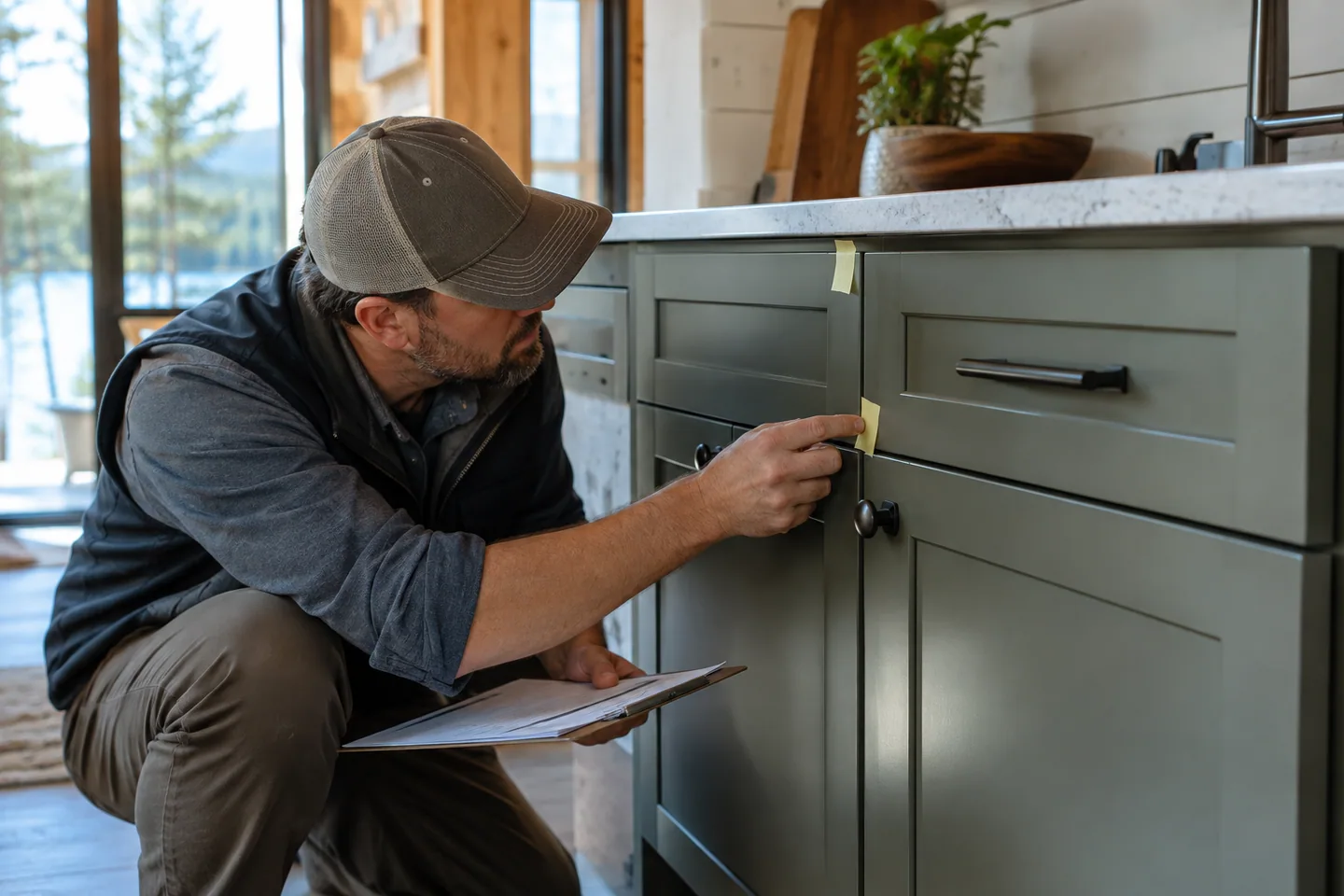
AI-generated cabin concept, used for illustration.
In this guide
A cabin punch list works best when each entry describes one observable issue in one location. “Finish the bathroom” leaves too much room for different interpretations.
Give each item a clear record
Use an identifier, location, observation, photograph if useful, responsible party and agreed next action. Keep contractual decisions and completion requirements with the professionals handling the project.
For example, an illustrative note could say: “Bathroom cabinet: left door contacts the neighboring panel when opened.” That gives the contractor a specific condition to inspect. Avoid diagnosing the hidden cause unless it has been established.
Separate incomplete work from changes you now want to add. A new preference is not automatically an unfinished contractual item.
Agree how closure is checked
Record the proposed remedy and how the completed work will be reviewed. Keep the original observation so there is a clear link between the problem and the response.
The FTC: avoiding home improvement scams supports using written scopes and records in US home-improvement work. Payment and completion decisions should follow the applicable contract and local advice.
Group visits efficiently without losing individual entries. Several small items may be handled together, but each should retain its status.
The goal is a finite, understandable list. A clear punch list helps the team finish work and helps you recognize when it is finished, without repeatedly rediscovering the same issue during another walkthrough.