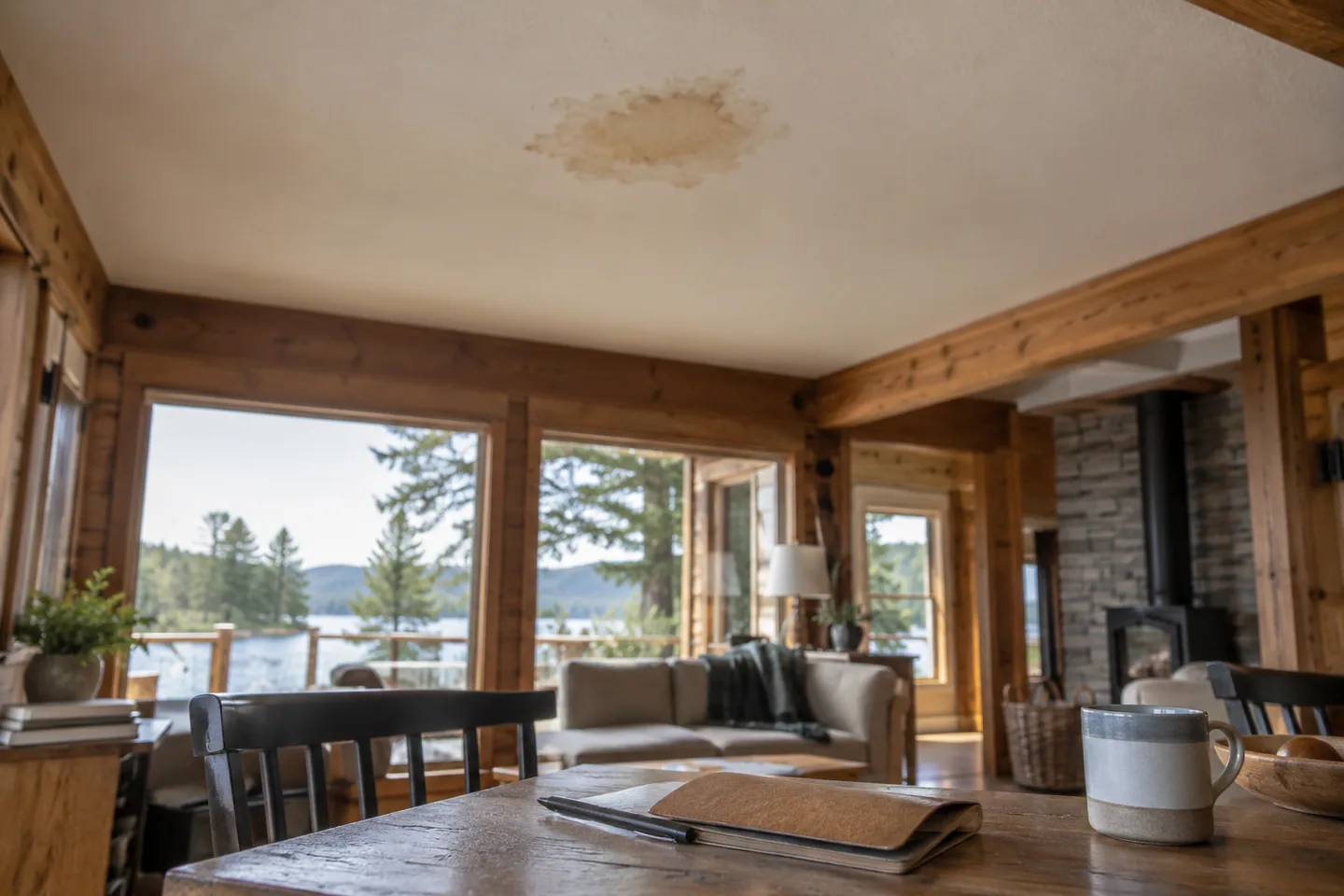
AI-generated cabin concept, used for illustration.
In this guide
An interior damp patch can have more than one possible cause. Record where and when it appears, then arrange an appropriate assessment instead of assuming every mark means a roof-covering leak.
Keep a short symptom log
Photograph the location and note whether the mark follows rain, a cold period, showering or the first occupied days after a closure. Record whether it grows, dries or returns in the same pattern.
Your Home: condensation explains that condensation can occur on surfaces and within assemblies. That makes it a possible consideration, not a diagnosis of your cabin.
If water is near electrical equipment or a surface appears unstable, keep clear and seek appropriate help. Do not climb onto a steep roof or open a suspect assembly just to collect more evidence.
Give the assessor the relevant history
Provide roof age if known, previous repairs, window or flue details and recent changes to heating, ventilation or occupancy. Explain which facts come from documents and which remain uncertain.
An illustrative pattern after wind-driven rain may lead to different questions from moisture appearing during cold occupied nights. Both still need the actual building examined.
Ask the contractor to explain the evidence for the proposed repair and how it addresses the identified cause. Keep before-and-after records and monitor the same location afterward. Covering a stain or applying sealant without an established cause can leave you unable to tell whether the real problem was resolved.