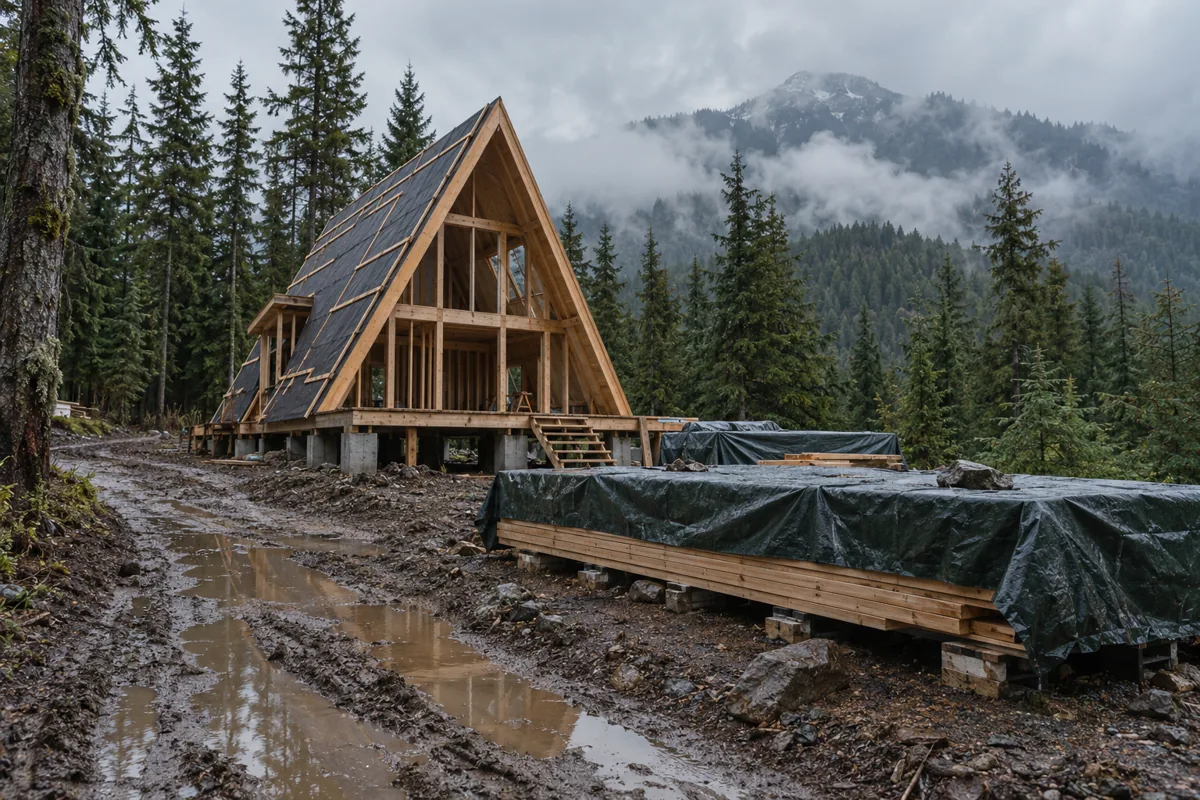
AI-generated cabin concept, used for illustration.
In this guide
Identify which tasks depend on weather and usable site access, then agree how a delay changes deliveries and follow-on work. A single completion date does not show those dependencies.
Separate access from installation conditions
Rain might affect the approach road even when a particular indoor task could continue. Wind can affect lifting arrangements. Materials may also have specified storage and installation conditions. Ask the builder and suppliers to state the actual constraints for your project rather than adopting a generic number of spare days.
Use a dependency table
| Planned activity | Dependency to discuss | Follow-on effect |
|---|---|---|
| Kit delivery | Vehicle access and unloading arrangement | Crew and storage booking |
| Roof work | Suitable conditions and approved working method | Weather protection and interior sequence |
| Interior finish | Building and material conditions | Cabinet and furniture delivery |
This is a planning table, not permission to work under unsafe conditions. The contractor remains responsible for the appropriate working method.
Agree the communication process
Name who records the delay, who contacts suppliers and who issues an updated programme. Keep dated observations and agreed decisions rather than relying on memory. Discuss contract treatment with the relevant local adviser if responsibility or costs are unclear.
For a remote project, ask about redelivery, temporary storage and remobilisation before they become urgent. An alternative storage location may solve one problem while adding handling and damage risk.
Review the next practical decision
When a task slips, ask which upcoming commitment is now at risk. Rebooking a delivery before it leaves the depot may be more useful than circulating another optimistic completion date.
Connect this plan with site access, remote construction costs and the project checklist. Keep actual delays separate from future allowances in your budget record.