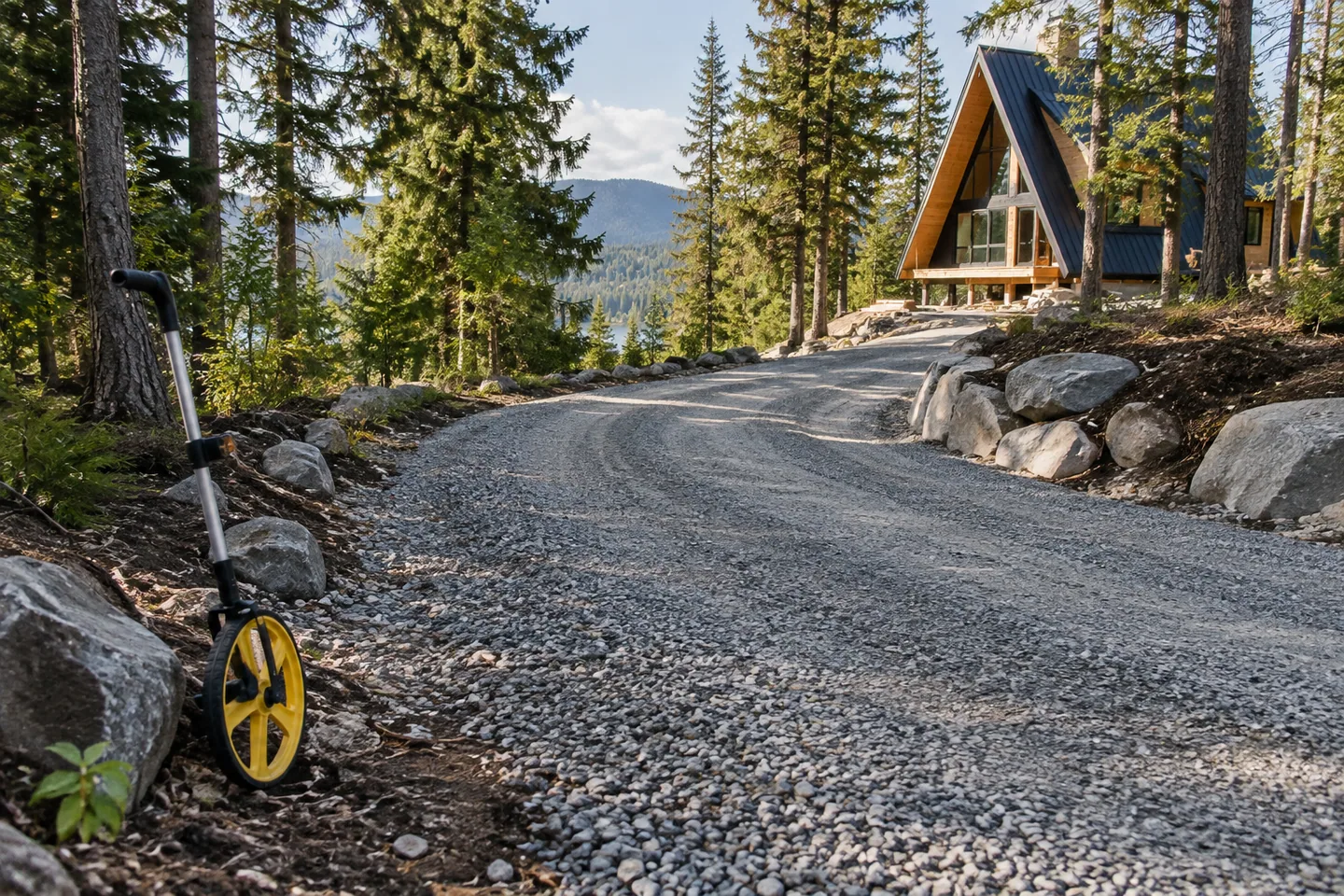
AI-generated cabin concept, used for illustration.
In this guide
A driveway that works for your car may not work for the truck delivering your cabin. Plan access around the largest necessary vehicle and the worst season in which you need to use the property.
Trace the whole route
Start at the public road, not the cabin clearing. Ask the supplier for vehicle dimensions, unloading method and access requirements. Send photographs and a route sketch showing narrow sections, gates, bridges, overhead obstacles and the proposed unloading area.
Then ask the site contractor to assess that actual route. Avoid choosing a universal slope or turning radius from an online article: the vehicle, surface and site determine what is workable.
An illustrative delivery problem: the truck reaches the property entrance but cannot turn into the last bend. The kit still needs another unloading location, equipment and a transfer plan. None of those costs disappear because freight was included in the purchase price.
Plan for ordinary ownership too
Separate construction access from the driveway you will maintain afterward. Consider where snow, fallen branches or standing water could interrupt access, where visitors turn, and how maintenance equipment reaches the cabin.
Your Home: choosing and using a site includes access among the factors to consider when selecting land. Its Australian context is useful for planning questions, while the applicable local road, drainage and emergency-access requirements need local confirmation.
Before ordering, keep a written delivery acceptance from the supplier and a priced scope from the driveway contractor. If access remains conditional, keep the delivery date conditional too.