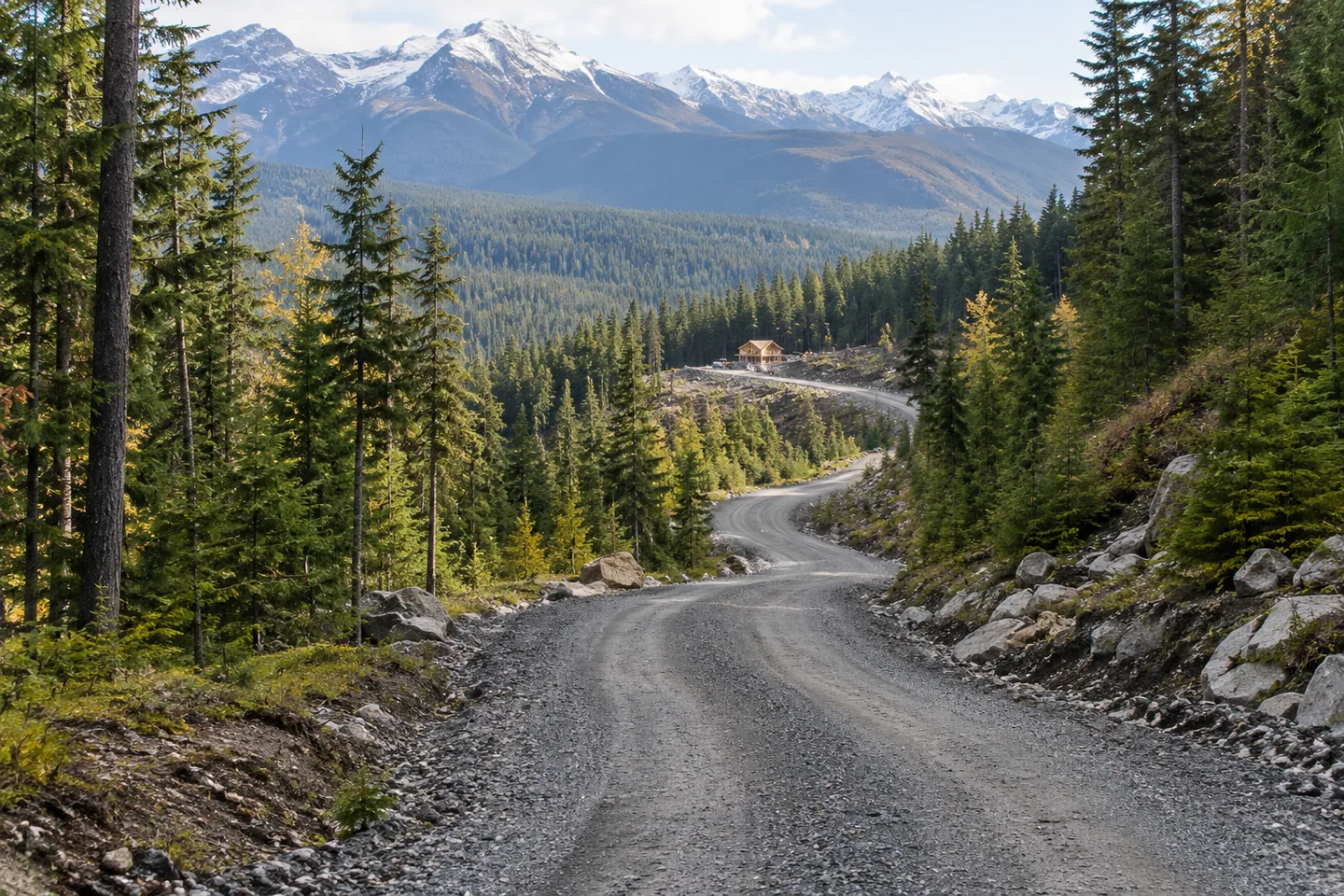
AI-generated cabin concept, used for illustration.
In this guide
A remote cabin may use a familiar design while requiring an unfamiliar logistics plan. Ask bidders to price how people, materials and equipment reach the site, rather than assuming those costs are absorbed into the building price.
Walk through a working day
Where will workers park, store tools, obtain water and use sanitation facilities? How will they communicate when mobile reception is unreliable? How long does a supply run take? Put those questions into the site brief so bidders respond to the same conditions.
Record seasonal limits. A road that works during a dry visit may behave differently after rain or snow. Have the carrier and relevant site professionals assess access for their vehicles and loads.
Price repeated journeys
An arithmetic example: an extra two hours of travel for a four-person crew equals eight person-hours on that day. Whether and how that time is charged depends on the agreement. The example shows why travel deserves a written assumption; it is not a regional labor-rate estimate.
Ask separately about equipment transport, call-out minimums, accommodation, waste removal and return visits after failed inspections or missing components. A lower daily rate can be offset by more journeys.
Reduce avoidable trips
Freeze important selections before ordering, check quantities against current drawings, and group deliveries where doing so is practical. Keep a named contact for approving substitutions. Stockpiling everything early is not always the answer if storage is insecure or materials are weather-sensitive.
The goal is a realistic sequence that bidders can price. Use Your Home: choosing and using a site for wider site-selection considerations and obtain actual logistics conditions from your contractor and delivery providers.