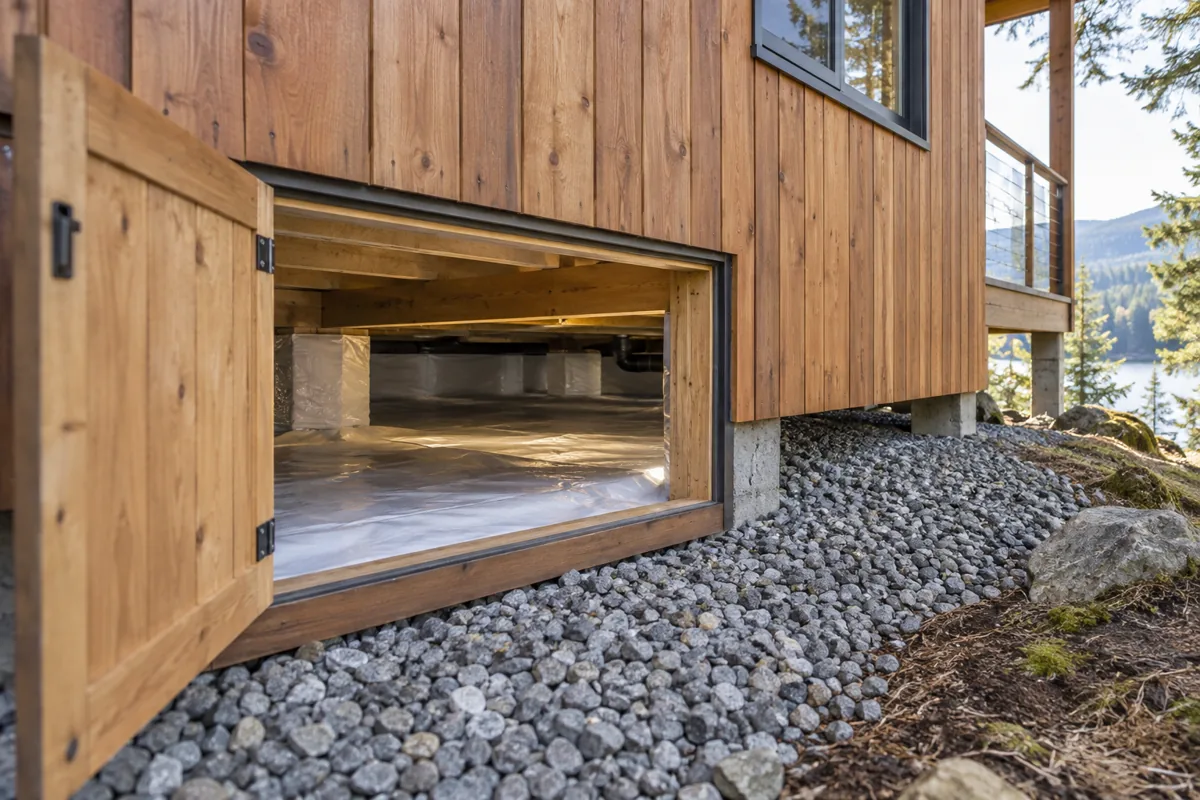
AI-generated cabin concept, used for illustration.
In this guide
Find where the moisture comes from before choosing a crawlspace treatment. Rain entering at the perimeter, damp ground, leaking plumbing and humid air can call for different responses.
Begin with observations from safe access
Record when you noticed the problem and whether it followed rain, a plumbing event or a seasonal change. Photograph visible staining from an accessible position. Do not enter a flooded, contaminated or structurally questionable space to collect better pictures.
Draw a simple plan of the cabin footprint. Mark the slope of the surrounding ground, downpipe discharge points, visible puddles and nearby plumbing. A sketch that links conditions outside to locations beneath the floor is more useful than a folder of unlabelled close-ups.
Separate the possible paths
| Observation | Question for the inspector |
|---|---|
| Wetness after storms near one edge | Is surface or roof water reaching the crawlspace? |
| Damp soil over a broad area | What ground-moisture control is present? |
| Local wet patch below a fixture | Is a supply or waste connection leaking? |
| Condensation on a cold pipe | What are the air and surface conditions? |
The table helps organize evidence. It does not establish a diagnosis. The EPA moisture guide emphasizes fixing the water problem as part of dealing with mold; covering the evidence alone does not resolve its source.
Ask for a coordinated repair
A proposal should explain drainage, ground covering, insulation, air sealing and the intended ventilation or conditioning strategy together. Ask how the approach fits your climate and existing foundation. “Open every vent” and “seal every vent” are not interchangeable universal instructions.
If the work changes ground coverings or airflow, ask whether radon testing should be coordinated with it. Have combustion appliances and their air requirements assessed where relevant.
Inspect the scope before accepting a price
For a hypothetical cabin with water at one downhill corner, ask the contractor to distinguish the price for finding the entry path from the price for an agreed repair. Does the offer include managing external runoff, drying affected materials and checking the result after rain? Which findings could change the scope?
Keep the initial photographs and the completed-work photos from the same positions. Add an agreed follow-up inspection to the project checklist. The site-drainage observations guide and cold-floor guide help connect the work to conditions around and inside the cabin.