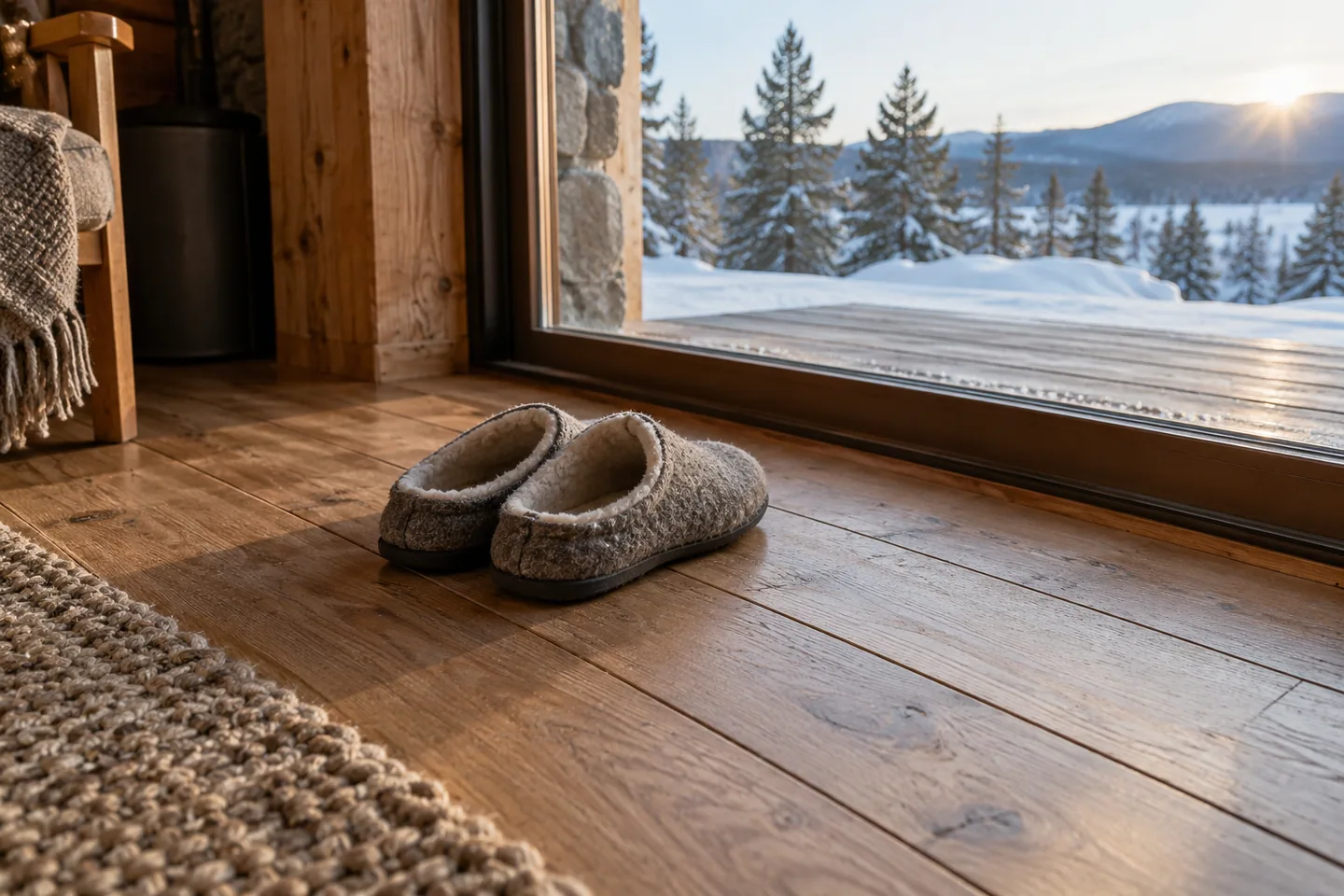
AI-generated cabin concept, used for illustration.
In this guide
A cold cabin floor deserves a closer look before you buy more heating equipment. The floor finish, underlying assembly, leakage and room conditions can contribute in different ways.
Describe the pattern
Record whether the discomfort affects the whole floor, the perimeter or one area. Note weather, heating operation and whether the cabin has just been opened after a long absence. Compare the same locations on several visits.
Collect any drawings or photographs showing the floor construction. Tell the assessor whether the underside is over ground, an enclosed space or outdoor air. Do not enter an unsafe or inaccessible underfloor area to investigate.
Your Home: insulation provides background on considering floors as part of the building's thermal envelope.
Separate comfort measures from repairs
A rug can change the immediate experience underfoot, but it does not establish that the underlying building issue has been resolved. Likewise, extra heat may mask a problem without explaining it.
Ask a qualified assessor what evidence supports the proposed improvement and how moisture and ventilation will be handled if the assembly changes.
For an illustrative decision, a cabin with discomfort mainly near one exterior edge may need a different investigation from a cabin whose entire uninsulated floor is exposed below. The symptom points to a question, not a ready-made detail.
Keep the agreed scope specific: which area will change, why, and how the completed work will be checked. That is a better starting point than ordering insulation by floor area alone.