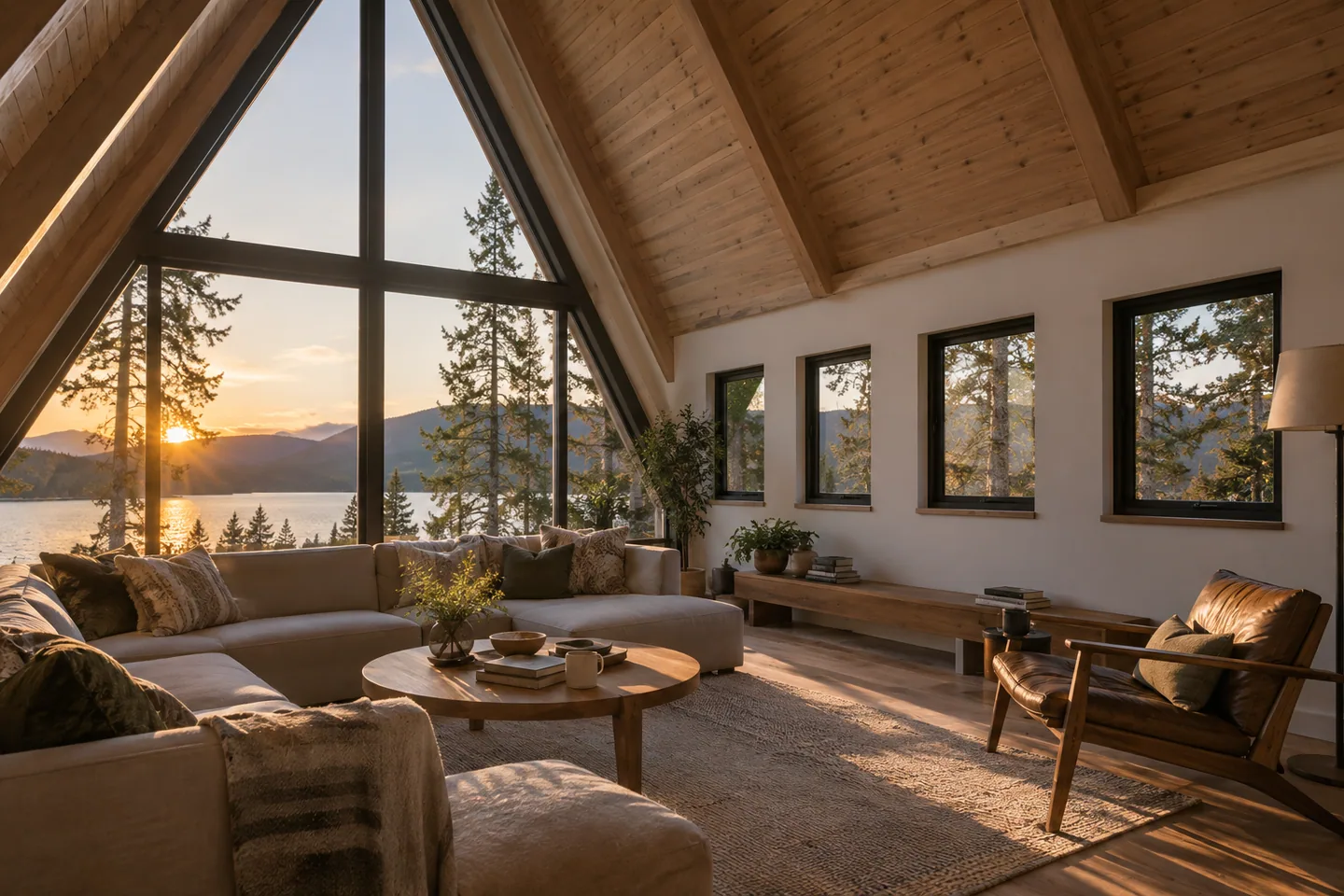
AI-generated cabin concept, used for illustration.
In this guide
A large glazed front can make the view central to the room. Smaller windows can let you distribute openings while preserving more wall positions for other uses. Choose after testing furniture, privacy and the complete glazing proposal.
Decide which part of the view matters
From the proposed sofa, dining seat or bed, mark the view you want to keep. The useful sightline may occupy a smaller part of the façade than the photograph suggests. Conversely, a broad landscape might be a priority worth planning the rest of the room around.
Check the near view as well as the distant one. Paths, neighbours and a driveway affect privacy. Test the arrangement in daylight and with the interior lit at night.
Compare how the room works
| Question | Large glazed front | Several smaller openings |
|---|---|---|
| View | Can emphasize a broad visual connection | Can frame selected views from different positions |
| Furniture and storage | Limits where tall items can stand against that façade | May leave more usable wall sections between openings |
| Privacy | May need different treatments across the glazing | Can be considered opening by opening |
| Shading | Needs a coordinated proposal for the shape and orientation | Still needs orientation-specific consideration |
| Access for care | High or unusual panes require a practical maintenance plan | Depends on their height, position and operation |
These are design trade-offs, not predictions of energy performance. Ask the designer and supplier to assess the actual glazing, orientation and shading together.
Compare the whole window schedule
Record fixed panes, opening sections, doors, frame materials and the performance information relevant to the project. Ask the supplier to explain the differences between the proposed systems in plain language and identify which assumptions the quote uses.
More separate windows also mean separate installation details to coordinate. A large custom unit has its own handling and installation questions. Avoid assuming either arrangement is automatically cheaper or easier without comparable offers.
Include the things purchased afterwards
Add shading, privacy coverings, controls and cleaning or maintenance access to the comparison. A large triangular front might look affordable in the glazing quote while its chosen coverings remain unpriced. Smaller openings may suit different products, but obtain actual dimensions and offers before counting on that advantage.
Ask what replacement would involve if a component fails. Keep warranty terms and service arrangements alongside the initial price; the lowest supply figure is not the entire ownership decision.
Test a mixed approach
You do not have to choose between glazing everything and making every opening small. Test a view-focused main opening with carefully placed side windows, or a façade where only selected areas need privacy treatment. Let the activities and sightlines guide the arrangement.
The privacy and glare guide helps separate those needs. Add the complete installed proposals to the budget planner once you know which items are already included in the building package.
Choose the option that lets the room work as you intend throughout the day. The view should be part of that decision alongside the practical details that keep it comfortable to use.