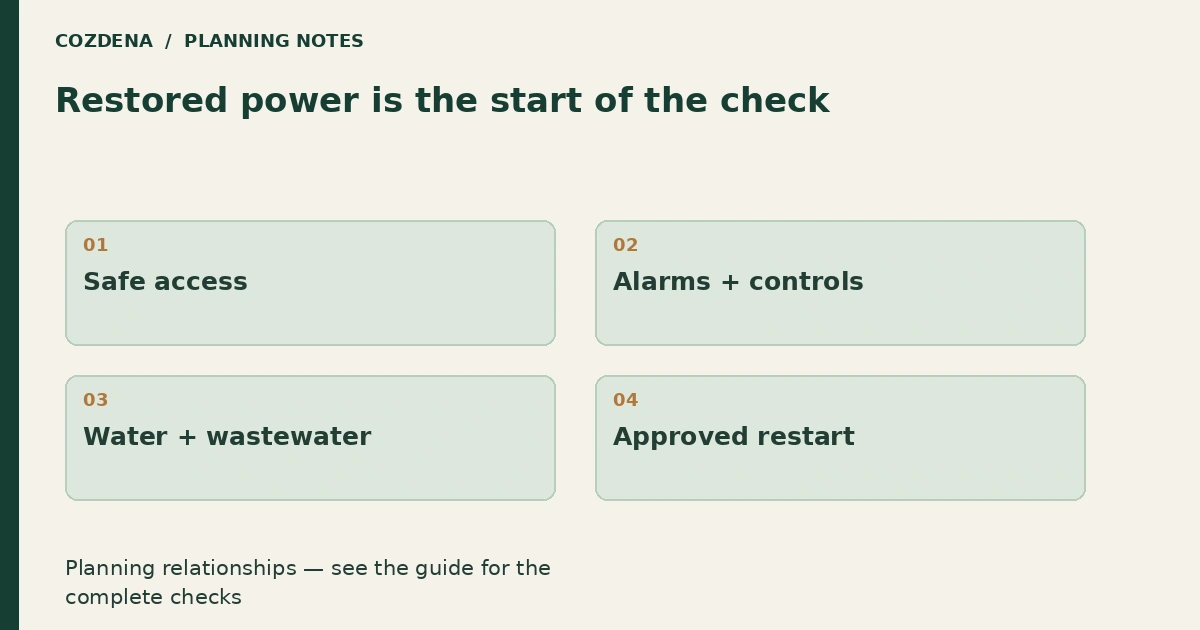
Planning diagram. Examples and assumptions are explained below.
In this guide
Check the cabin’s condition before assuming that restored electricity means every system is ready. Follow official emergency advice and the operating instructions for equipment affected by the outage.
Establish whether access is safe
Before travelling, check local alerts and access conditions. Do not approach damaged electrical lines or enter a building with an unresolved electrical, structural or flood hazard. Ask the appropriate utility or emergency service for guidance.
Once safe access is established, record the known outage period and any temperature or alarm history. A missing remote reading may indicate lost communications rather than a reliable record of indoor conditions.
Review systems in a useful order
| System | Question before normal use |
|---|---|
| Alarms and communications | Are they functioning and reporting correctly? |
| Heating and controls | Did they restart as intended, with no fault indication? |
| Plumbing and water supply | Is there damage, leakage or a restriction on use? |
| Wastewater equipment | Does any powered system need service or reset? |
| Food storage | Is food safe under official time-and-temperature guidance? |
| Battery or backup system | What does its approved recovery procedure require? |
Have uncertain faults assessed by the relevant professional. Do not repeatedly reset a tripping protection device or restart suspect equipment to see whether it behaves better.
Keep backup-power risks separate
The CPSC's carbon-monoxide guidance says portable generators must operate outdoors, at least 20 feet from homes, with exhaust directed away. Never operate one inside a cabin or garage, even with openings left open.
Use professionally installed transfer arrangements where required. This checklist does not describe connecting a generator to building wiring.
Test the normal operating routine
After systems have been cleared for use, check the settings you rely on when away. Confirm alert delivery, time schedules and the named contact for future outages. Some clocks or controls may need attention according to their instructions.
For a hypothetical weekend cabin, record an unresolved pump alarm as an open item and arrange service before hosting guests. A working living-room light does not close that issue.
Save the return record in the project checklist. The critical-load backup guide helps improve the next outage plan, and water leak sensors can support monitoring once their own power and network behavior are understood.