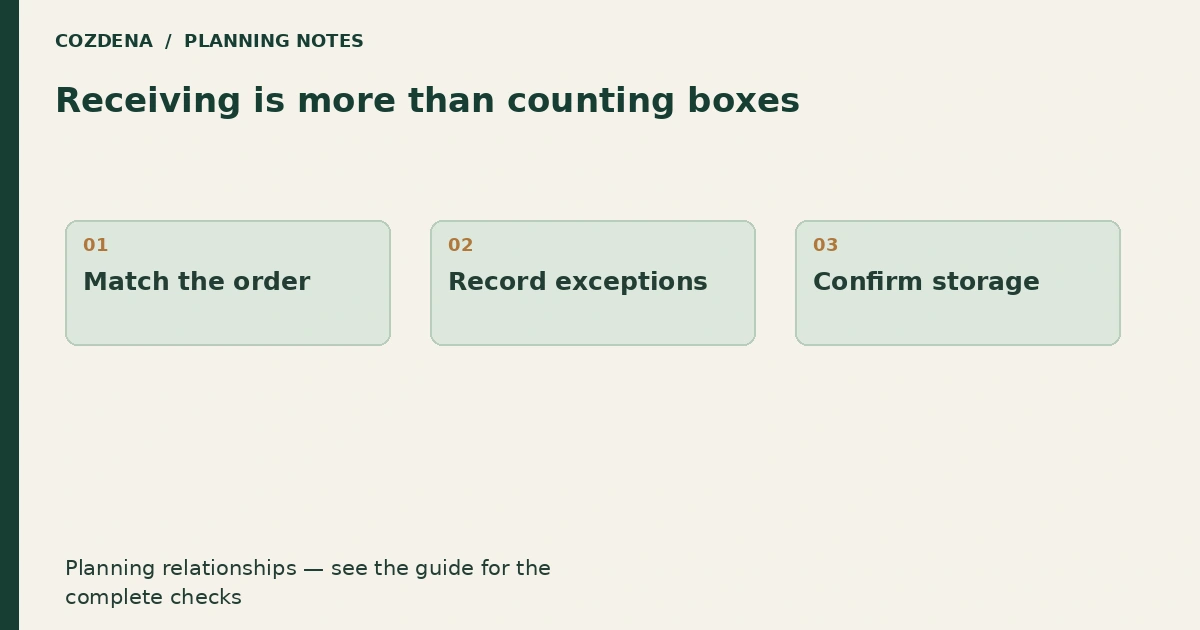
Planning diagram. Examples and assumptions are explained below.
In this guide
Match each delivery to the order and record visible condition before installation. A package count alone does not confirm that the correct product, revision or quantity arrived.
Prepare the record before the truck arrives
Have the order, packing list, current drawings and supplier contact available. Agree who can accept deliveries when the owner is absent. Check access and the unloading arrangement with the contractor so inspection does not depend on standing in an unsafe unloading area.
| Record | What to capture |
|---|---|
| Identity | Product, order number, model or batch where relevant |
| Quantity | Packages and the contents that can be checked safely |
| Condition | Visible packaging and material damage |
| Exceptions | Missing, wrong or unverified items |
| Storage | Location and manufacturer's storage instructions |
Keep uncertainty visible
If packaging cannot be opened immediately, record that the contents remain unchecked. Do not convert “delivered” into “verified complete” in the project schedule. Follow the supplier's process and time limits for reporting issues; obtain project-specific advice if a dispute arises.
Take context photos and close-ups, preserving labels without exposing private delivery details publicly. Link them to the purchase record.
Resolve substitutions before use
An item with similar dimensions may have different performance or compatibility. Ask the responsible designer or installer to review any substitution against the specification. Keep affected materials identifiable while the question is resolved rather than allowing an accidental installation.
For an A-frame kit, reconcile the supplier's component references with the assembly documents before work reaches the missing piece.
Use the material substitution guide, kit quote comparison and project checklist to carry the record from purchase through installation and handover.