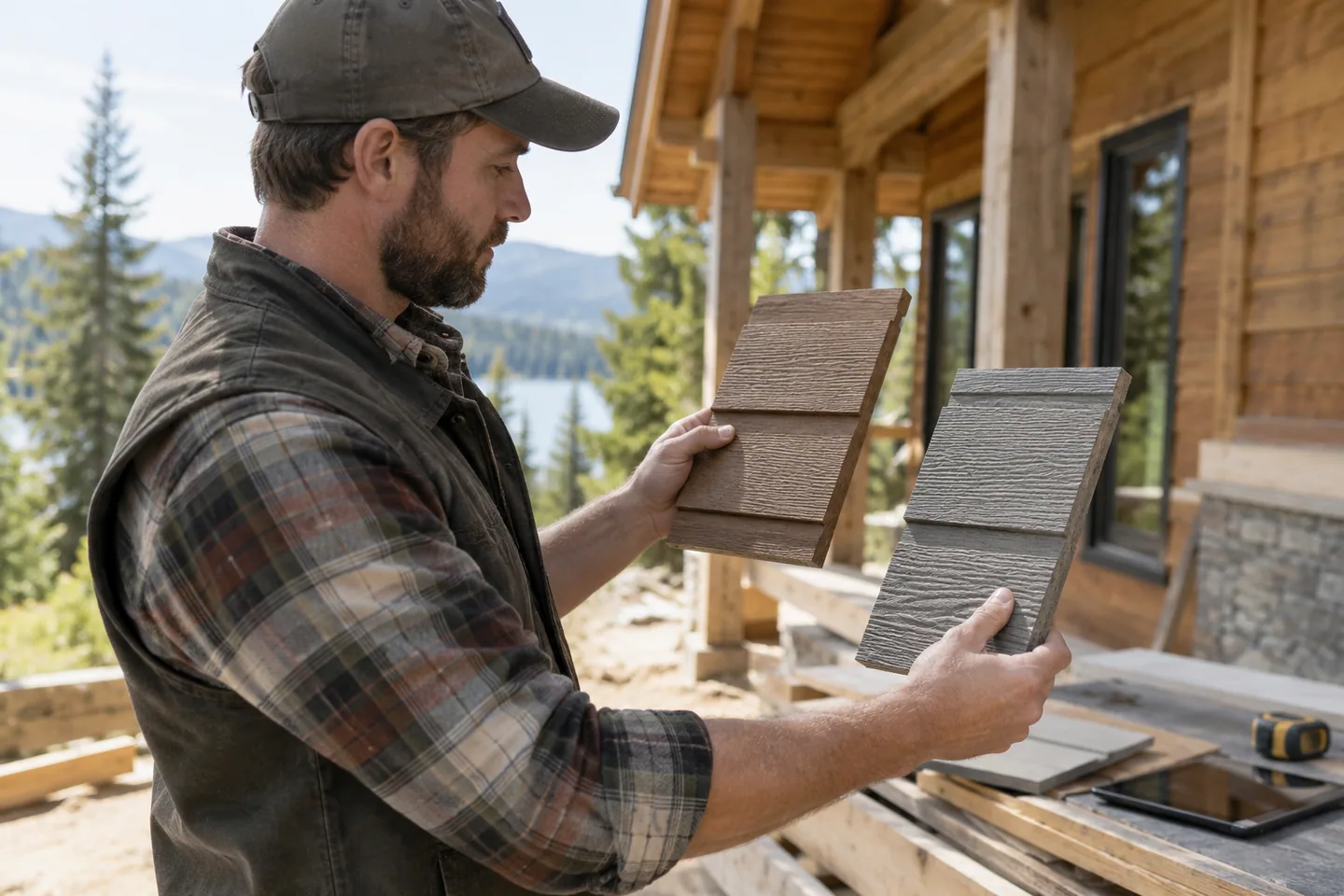
AI-generated cabin concept, used for illustration.
In this guide
A material substitution should be reviewed before installation. A similar appearance or lower price does not establish that the alternative suits the same design.
Ask for a side-by-side proposal
Request the originally specified product, the proposed replacement and the reason for the change. Attach current technical information for both. Ask the responsible designer or specialist which properties must be compared.
The relevant questions vary. A window change may affect dimensions and performance. An insulation change may affect thickness and assembly details. A finish change may alter maintenance or substrate requirements.
Your Home: building a house provides general construction-process context. Use the professionals responsible for the actual specification to decide whether a proposed change is acceptable.
Record the consequences
Keep cost, schedule, warranty and installation implications in the same decision. A readily available product can still create extra work if surrounding details must change.
For an illustrative example, a replacement fixture might fit the nominal opening while requiring a different connection or clearance. Ask who checks and pays for the resulting work before accepting the headline saving.
Write down the approved product and update the relevant drawing or schedule. Do not leave the original specification active in one document and the substitute agreed only in a message.
At handover, retain the actual installed product information. Future maintenance depends on what was used, not what appeared in the first quotation. This small recordkeeping habit can prevent repeated confusion years after the initial saving is forgotten.