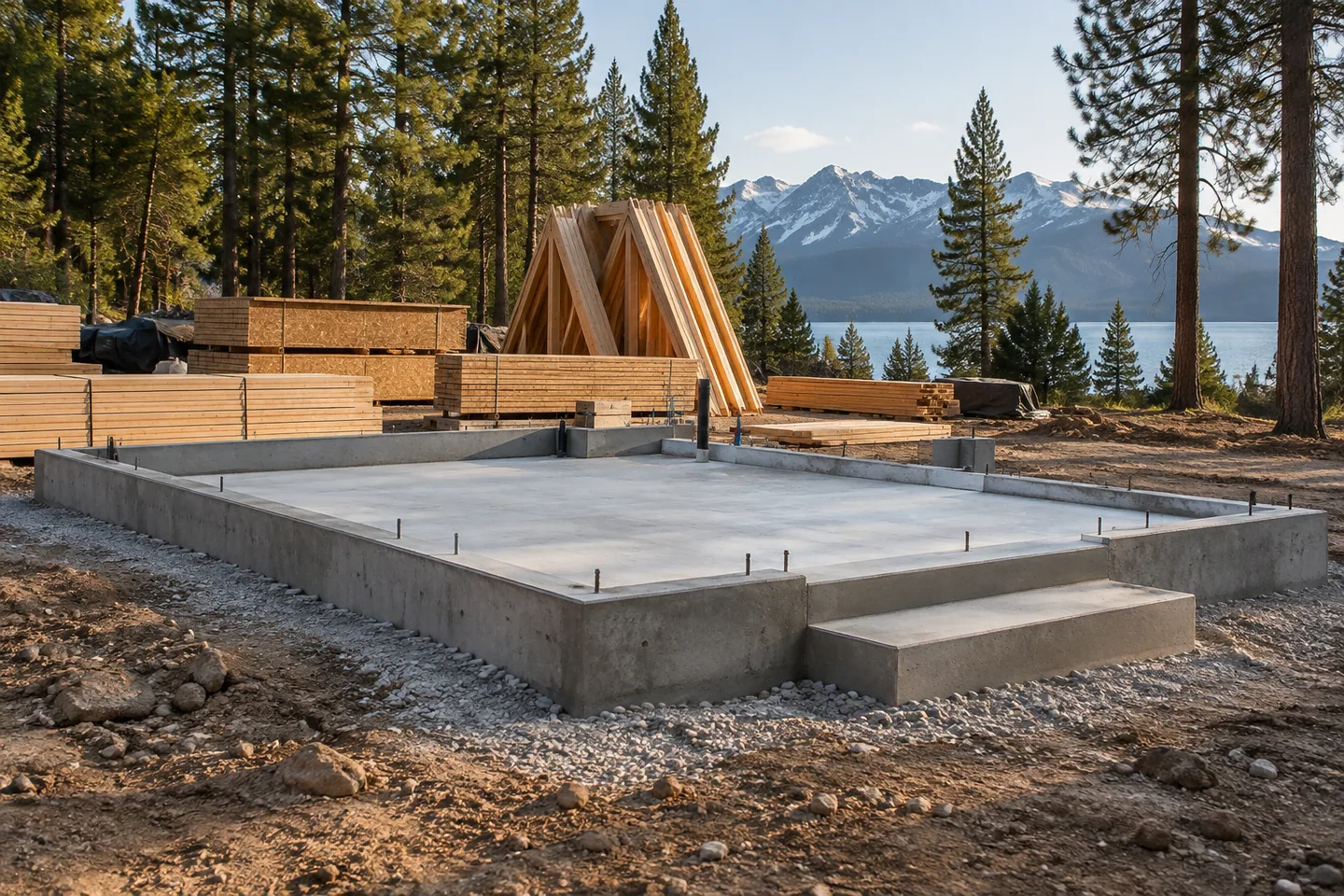
AI-generated cabin concept, used for illustration.
In this guide
A project can fit your total budget and still demand money earlier than expected. Build a payment calendar alongside the cost plan, using the actual supplier and contractor agreements rather than dividing the total into equal monthly amounts.
Separate factory and site milestones
A kit supplier may need payment before manufacturing or shipment, while site contractors may invoice for completed stages. Record both schedules. Identify who confirms each milestone and which document supports the invoice.
Include freight, unloading equipment and other costs that fall around delivery. Having enough money for the kit does not mean you can receive it safely or keep the site work moving.
Test one crowded month
For illustration, three commitments of $12,000, $5,000 and $3,000 in the same month require $20,000 then, even if your annual budget has plenty of room. Put the dates on one calendar and identify any dependency on funds becoming available.
If financing is involved, ask the lender how their inspection and release process aligns with those dates. Do not assume a promised loan amount is immediately available cash. Obtain the timing and conditions directly from the lender.
Agree evidence before payment is due
Keep invoices, delivery records, approved changes and milestone sign-offs together. Ask in advance how incomplete or defective work is handled under the contract and applicable local rules. Avoid inventing a universal deposit limit: requirements differ by place and agreement.
The US FTC advises against paying an entire home-improvement job up front and recommends a written contract. See FTC: avoiding home improvement scams for that consumer guidance. Use this calendar to organize questions and commitments; it does not determine your legal rights or a lender's terms.