AI-generated cabin concept, used for illustration.
In this guide
Before buying cabin land, confirm that the specific parcel can support the cabin and the way you intend to use it. A nearby house, an old driveway or the phrase “recreational land” in a listing does not settle that question.
Build a parcel file
Start with the parcel number and boundary information. Use the same identifier in every conversation so that the planning office, utility provider and seller are discussing the same property.
Your file should answer five questions:
- Is your intended use allowed, including year-round occupancy if needed?
- Is there documented access from a public road?
- Where could the building, water supply and wastewater system fit?
- Which site investigations remain outstanding?
- What written restrictions or ongoing obligations attach to the land?
Record who supplied each answer and what remains conditional. “The seller thinks so” belongs in the unresolved column.
Test the decision before committing
Sketch a rough site arrangement rather than choosing a detailed floor plan first. A beautiful clearing may leave no workable space for wastewater, delivery vehicles or required separation distances.
Use Your Home: choosing and using a site for the broader site-selection process; the guide is Australian, so its planning references do not replace your local requirements. In the US, start parcel-specific questions with the relevant county or municipal office.
Take the unresolved list to the professionals handling your purchase. Ask which investigations and contractual protections are appropriate before your commitment becomes final. The useful outcome is a documented route to building, with known gaps, rather than a reassuring collection of verbal answers.
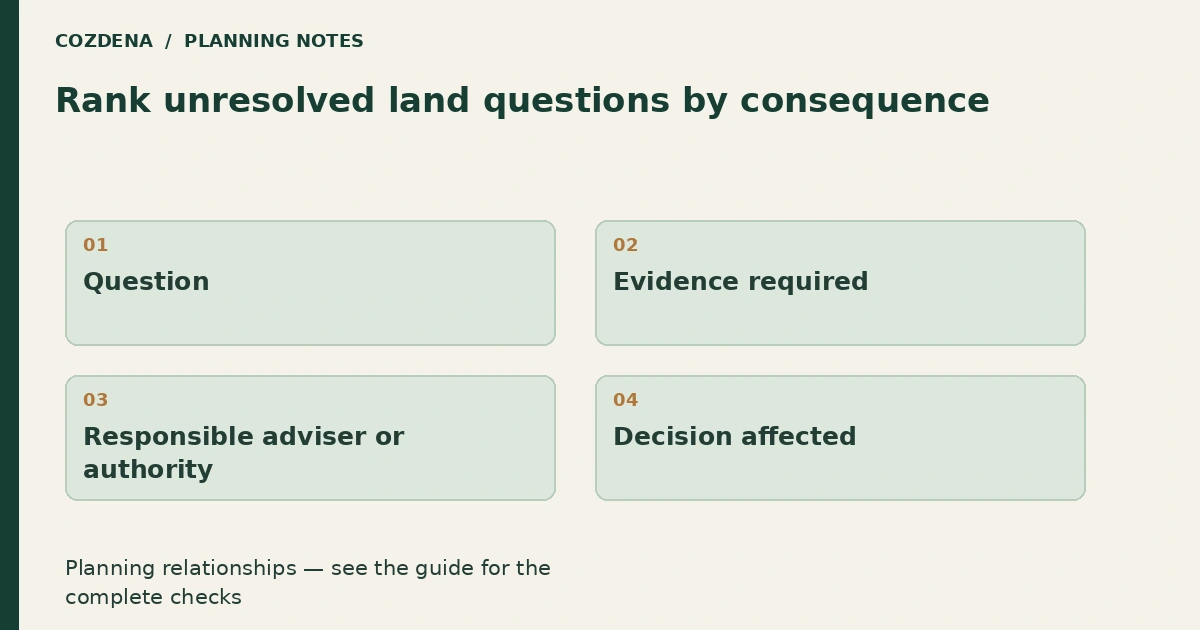
Rank unresolved land questions by consequence
Treat an unknown differently when it can change the entire project. A small landscaping preference can wait; an unresolved access right, buildable envelope or wastewater constraint may invalidate the proposed location.
| Record field | What it prevents |
|---|---|
| Question | Vague notes such as “check services” |
| Evidence required | Treating an informal statement as confirmation |
| Responsible adviser or authority | Sending the question to the wrong person |
| Decision affected | Spending on a design before the dependency is resolved |
Keep each finding tied to the parcel and the proposed use. Information from a neighbouring property can be useful context but does not establish the same result on your land.
Before committing to a kit, check whether the delivery route and seasonal access assumptions have been investigated at the necessary level. Use the weather-delay plan and long-lead schedule to see which purchases depend on those answers. Local professionals and authorities must establish the relevant legal and technical conclusions; the register makes their answers easier to act on.