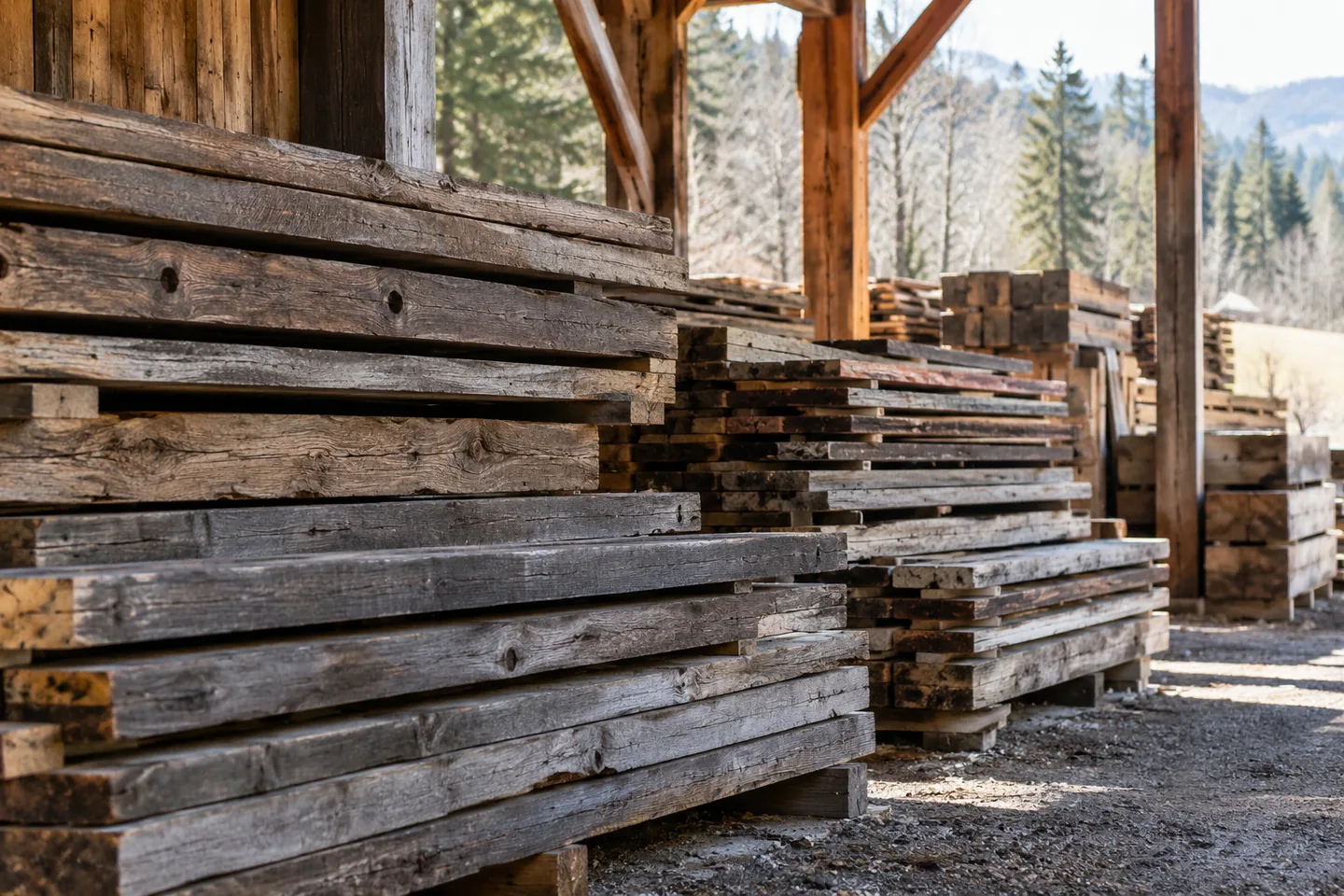
AI-generated cabin concept, used for illustration.
In this guide
Reclaimed materials can make sense when their condition and specifications match a defined use. A low purchase price is only part of the comparison. Include inspection, transport, adaptation, installation and the consequences if the item cannot be used.
Choose the use before the bargain
Loose furniture and decorative finishes have different consequences from structural components or weatherproofing products. Ask the relevant designer or installer what documentation and condition are acceptable before acquiring critical building materials.
For a window, record its dimensions, operating method, glazing information and installation requirements. A unit that almost fits may trigger changes to the opening and surrounding finishes that erase the purchase saving.
Inspect the whole item
Check completeness: hardware, seals, handles, tracks and required accessories. Ask whether replacement parts remain available. Do not assume a used product retains a transferable warranty or meets your project's applicable performance requirements.
Older materials can also raise hazardous-material questions. Obtain appropriate assessment before disturbing suspect coatings, boards or insulation. This is especially relevant when a “free” item requires demolition to recover it.
Calculate the usable saving
An original example: a $150 door needing $120 transport and $230 adaptation costs $500 before ordinary installation. Compare that complete amount with a suitable alternative on the same basis. The example is arithmetic, not a current price guide.
Keep reclaimed purchases outside the critical path until acceptance is confirmed. It is easier to design a shelf around a sound salvaged board than to redesign an entire cabin around undocumented windows. Your Home: designing a house provides broader design-process context for reconciling selections with the brief.