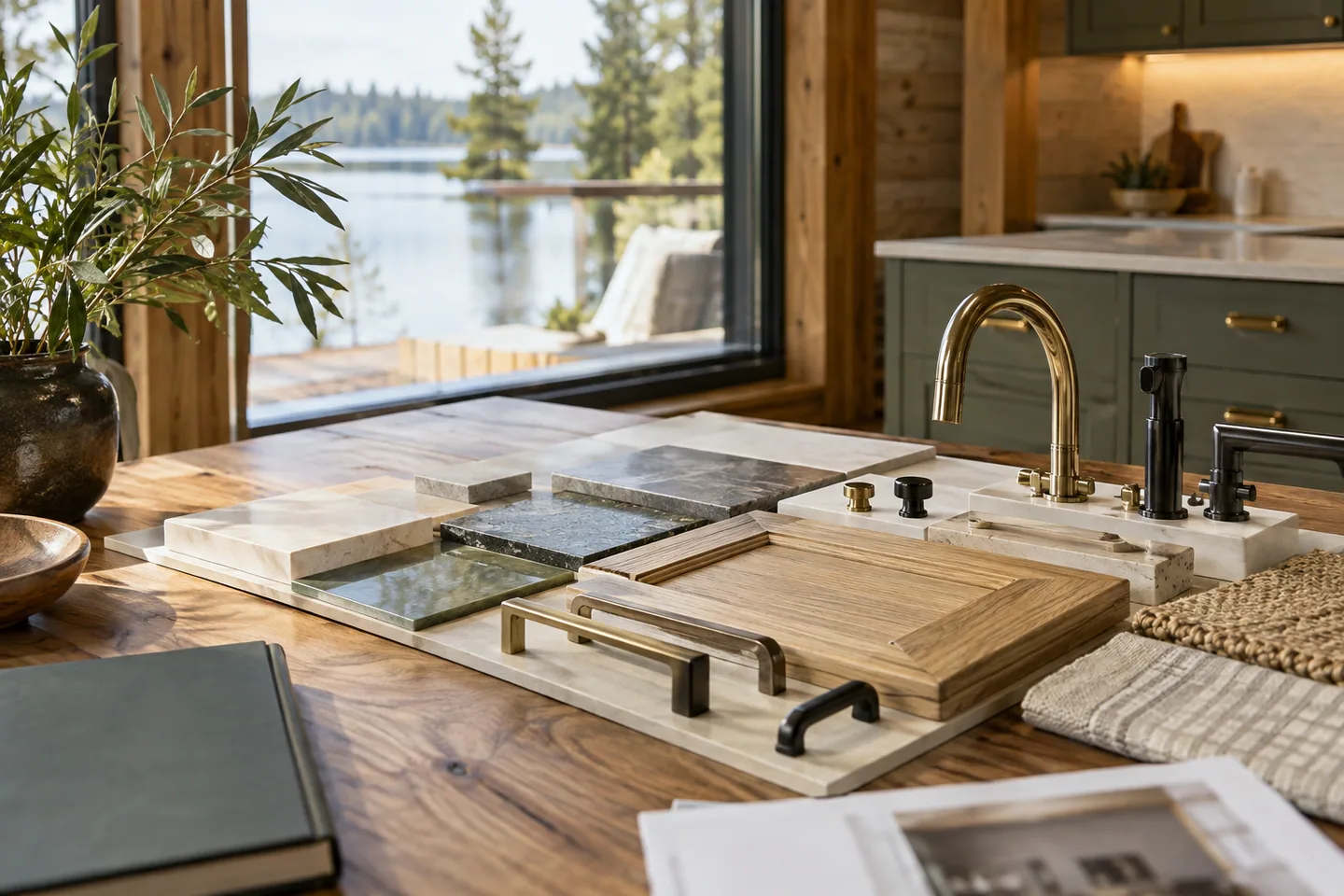
AI-generated cabin concept, used for illustration.
In this guide
An allowance is a placeholder whose meaning depends on the quote or contract. Ask which product or work it covers, which costs sit outside it and how the final amount will be reconciled once you choose.
Identify what the allowance actually buys
A bathroom allowance might cover fixtures only, or fixtures and installation. A kitchen figure may omit appliances, delivery or changes to services. Request a written boundary for every allowance large enough to influence your decision.
Then test whether your intended selection fits it. Keep an actual product specification or supplier quote beside the allowance. A number that cannot buy the level of finish shown in your brief is likely to create a later decision.
Work through an overrun
Suppose a quote carries a $2,000 fixture allowance and your selected fixtures cost $2,600 on the same tax basis. The apparent difference is $600. Confirm whether delivery, installation changes or an agreed contractor margin add anything further. These invented figures illustrate the comparison, not typical fixture prices.
A cheaper selection should also have a clear reconciliation method. Ask how credits are recorded and whether associated work changes. Avoid assuming that the price difference alone tells the whole story.
Keep a selection deadline
Record when each choice is needed to maintain procurement and construction progress. A late decision can affect sequencing even when it stays within the allowance. Give the contractor a single approved specification rather than several links to possible products.
Written estimates and contracts help reduce ambiguity; see FTC: avoiding home improvement scams for US consumer guidance. For your cabin, the useful output is a dated schedule showing allowance, selected cost, known extras and remaining decisions.