
AI-generated cabin concept, used for illustration.
In this guide
For a steady electrical load, divide watts by 1,000 and multiply by operating hours to get kilowatt-hours. Multiply those kilowatt-hours by the applicable energy price. The challenge is choosing an operating pattern that reflects the device you are estimating.
Know what the power figure means
Use the device's electrical input, not a different performance rating. A heater's delivered heat and a heat pump's heating output are not interchangeable with the electricity drawn from the supply. If the label is unclear, ask the supplier which figure is appropriate.
For devices that cycle or vary their power, a full-rated-power calculation is a scenario rather than an exact prediction. Reliable measured consumption can give you a more useful input. Any measuring equipment must be suitable for the device and used according to its instructions.
Calculate one clear scenario
Take an illustrative device drawing 1,000 watts for six hours a day over 30 days. Its assumed energy is:
1,000 ÷ 1,000 × 6 × 30 = 180 kWh.
At an invented tariff of €0.25 per kWh, the energy charge is €45. This is a worked arithmetic example, not a claim about a real cabin's bill or a current local tariff.
The general watts-and-hours approach is also explained by The College of New Jersey's energy program. Use your supplier's bill or tariff documentation for the price that applies to you.
Use the load percentage carefully
The electricity cost calculator includes an average-load percentage for the period you describe as operating. At 50% of the example's rated input, the energy becomes 90 kWh and the illustrative charge becomes €22.50.
Avoid reducing the same usage twice. If you already measured that the device draws its full load for only three hours in a six-hour period, enter either three hours at full load or six hours at the appropriate average. Do not halve both without a reason.
Add devices without confusing time patterns
Create a row for each major load: device, input, operating hours, days and basis of estimate. A refrigerator, occasional cooking appliance and space-heating system may need very different assumptions. Keep those assumptions visible instead of applying the same daily schedule to all of them.
Do not treat average energy as a system-sizing result. The power needed when several devices operate at once is a separate question for the electrical or off-grid system designer.
Split the bill by operating pattern
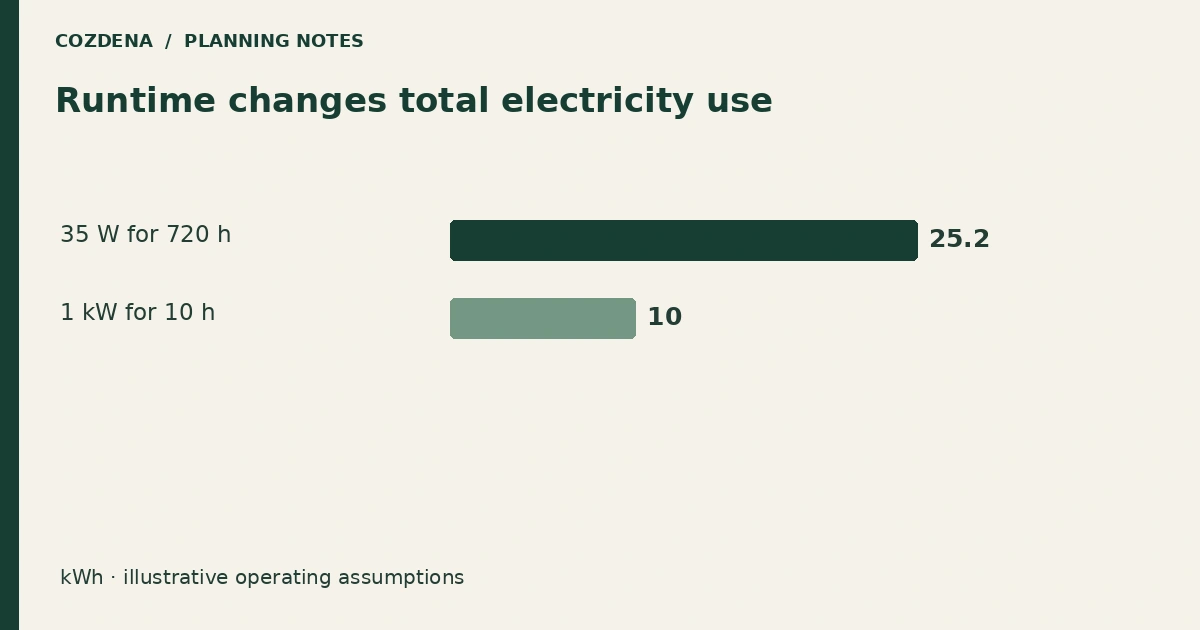
Estimate occupied use and always-on loads separately. A small device running throughout the month can use more energy than a larger appliance used briefly during a weekend.
| Illustrative load | Calculation | Energy |
|---|---|---|
| 35 W continuous equipment | 0.035 kW × 24 h × 30 days | 25.2 kWh |
| 1 kW appliance, 10 hours total | 1 kW × 10 h | 10 kWh |
These are invented operating assumptions, not a statement about a particular appliance. Use measured or documented input power and realistic runtime. Where power varies during operation, an appropriate energy measurement is more useful than treating maximum rated power as continuous use.
Apply the actual tariff structure after estimating energy. Fixed charges, taxes and time-dependent rates need separate treatment. For a time-of-use tariff, split the relevant kWh across periods rather than multiplying every unit by the cheapest rate.
Compare the result with bills over the same dates, then investigate the standby load if the empty cabin uses more than expected. Do not disconnect essential equipment just to reduce an unexplained number.
Compare the estimate with the bill
An electricity bill can include standing charges, taxes and different rates at different times. The tool estimates the energy charge for one tariff; it does not reproduce a whole billing contract. Use separate runs or a more detailed worksheet if your rates vary.
After occupying the cabin, compare the assumptions with actual readings. Change the estimate when your usage changes instead of carrying an early guess forward as a fact. For heating decisions, read the A-frame heating and cooling guide before using a low running-cost scenario to select equipment.