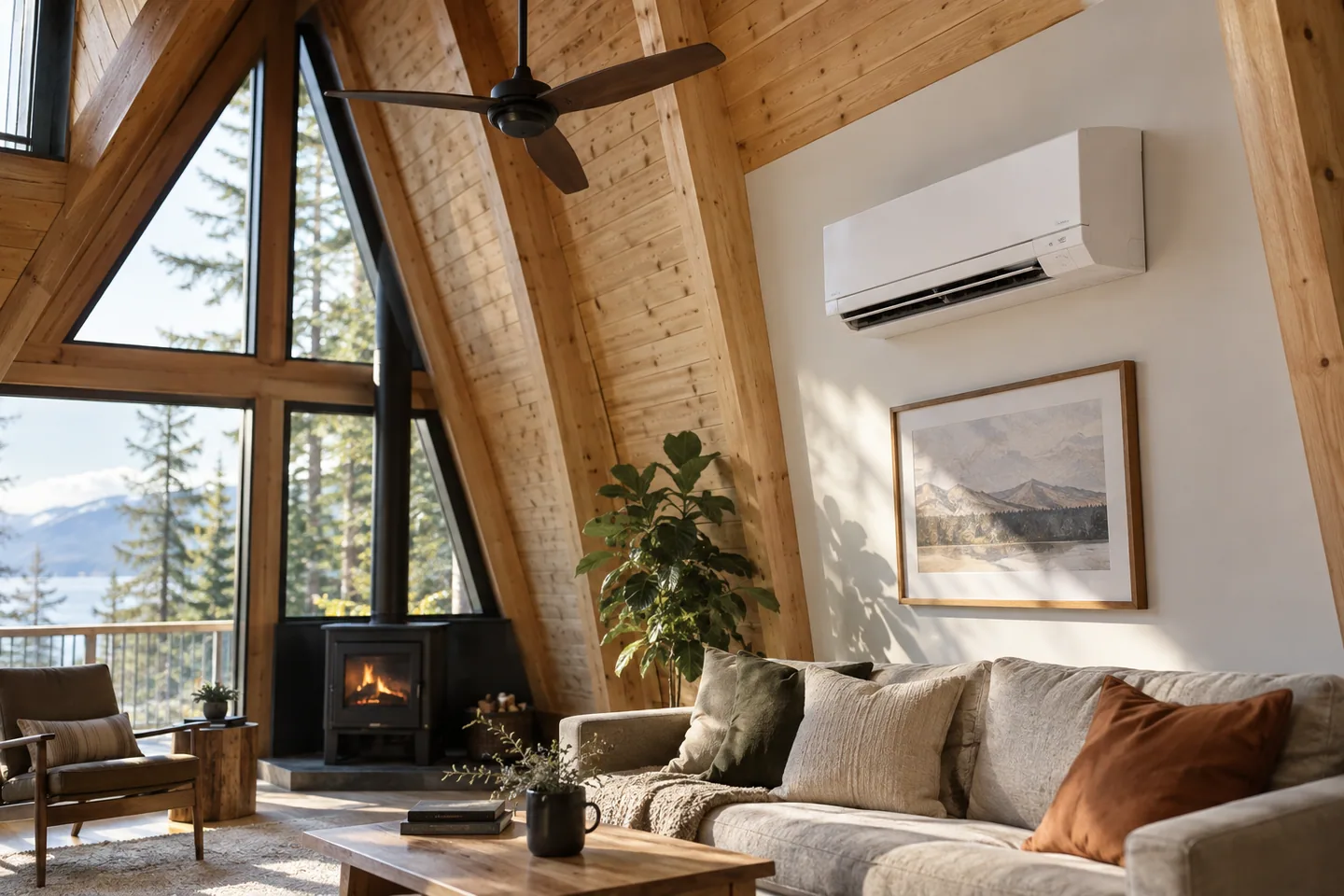
AI-generated cabin concept, used for illustration.
In this guide
Start with the cabin’s heat loss, summer gains and room arrangement. Then have the system designed for those conditions. A floor-area rule of thumb cannot describe every tall, glazed A-frame or how its loft will feel.
Give the designer a useful brief
Explain whether this is a permanent home or a cabin you visit on weekends. A building kept comfortable all week has a different operating pattern from one that you want to warm up after arriving on Friday night. Include the number of people, which rooms need separate control and how you plan to use the loft.
Provide the drawings, glazing specifications and intended roof and wall build-ups. If you are renovating, describe what is known and what needs investigation. Guessing that an old roof contains enough insulation gives the designer a poor starting point.
Compare systems on the same job
ENERGY STAR describes air-source heat pumps as equipment that can provide heating and cooling. Whether a particular model suits your cabin still depends on the design conditions, installation and distribution.
Ask the installer for the equipment's relevant low-temperature performance, where indoor and outdoor units would go, how noise will affect sleeping areas and how condensate will be handled. Ask what happens during maintenance or an interruption to the power supply. These details are more useful than choosing from a headline efficiency figure alone.
Treat the loft as a real part of the plan
An upper sleeping area can respond differently from the room below it. Ask where the thermostat will sense temperature and whether it represents the space you most need to keep comfortable. If bedroom doors close, check the intended air paths and controls under that condition too.
For an existing cabin, take a few days of upstairs and downstairs readings. The hot-loft guide explains what to record before asking someone to investigate.
Include operation and maintenance
Leave access to filters, equipment panels and controls. A unit hidden above built-in joinery may look tidy but be awkward to maintain. Ask how the system should be operated during long absences and how you will know if a fault develops.
If a proposal includes a combustion appliance, arrange the appropriate professional installation and safety provisions. The US Consumer Product Safety Commission's carbon monoxide information explains why fuel-burning equipment and CO protection need attention. Follow the applicable local requirements and the appliance instructions.
Estimate the cost of running the chosen option
Use electrical input power or measured energy consumption, not heating output, in the electricity cost calculator. Try a few operating-hour assumptions and keep the tariff visible. The result helps with your budget after a suitable system has been identified; it does not replace the design work.