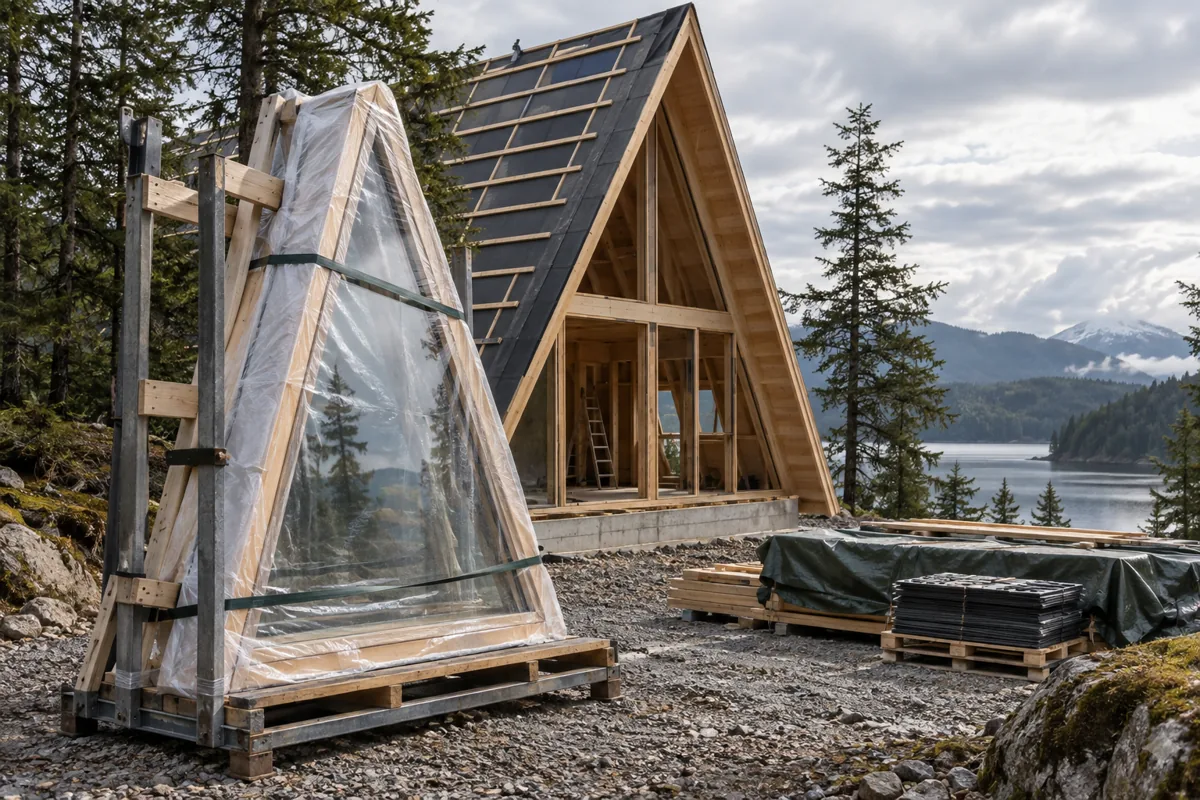
AI-generated cabin concept, used for illustration.
In this guide
Track the decision date as well as the delivery date for each long-lead item. Ordering early helps only when the specification, dimensions and installation dependencies are settled.
Work backward from installation
For windows, a kit package or custom stairs, ask the supplier for the current production and delivery assumptions in writing. Record what starts the lead time: deposit, approved shop drawings, final measurement or another condition. Lead times change, so a general website estimate is not your project schedule.
| Item | Before release | Before delivery |
|---|---|---|
| Custom glazing | Approved dimensions and performance specification | Protected handling and storage arrangement |
| Stair | Coordinated finished levels and opening | Installation access and supporting work ready |
| Kitchen | Equipment and service positions confirmed | Dry, suitable room and agreed sequence |
Separate a reservation from production approval
Ask what a deposit reserves and what can still change. Keep cancellation, storage and redelivery terms with the order. Have contractual questions reviewed locally; this worksheet does not determine your rights.
A hypothetical window promised eight weeks after drawing approval will not arrive eight weeks after your first enquiry if approval remains unresolved. Record the approval date and recalculate the required-on-site date when it changes.
Update the schedule when design changes
A wider doorway may affect a window beside it, structure above it and the material order. Link the procurement register to the drawing revision register so an outdated dimension does not become an expensive order.
Review the most time-sensitive items at each project meeting, identifying the next action and its owner. Use kit delivery planning, build timeline planning and the project checklist to connect purchases with site readiness.