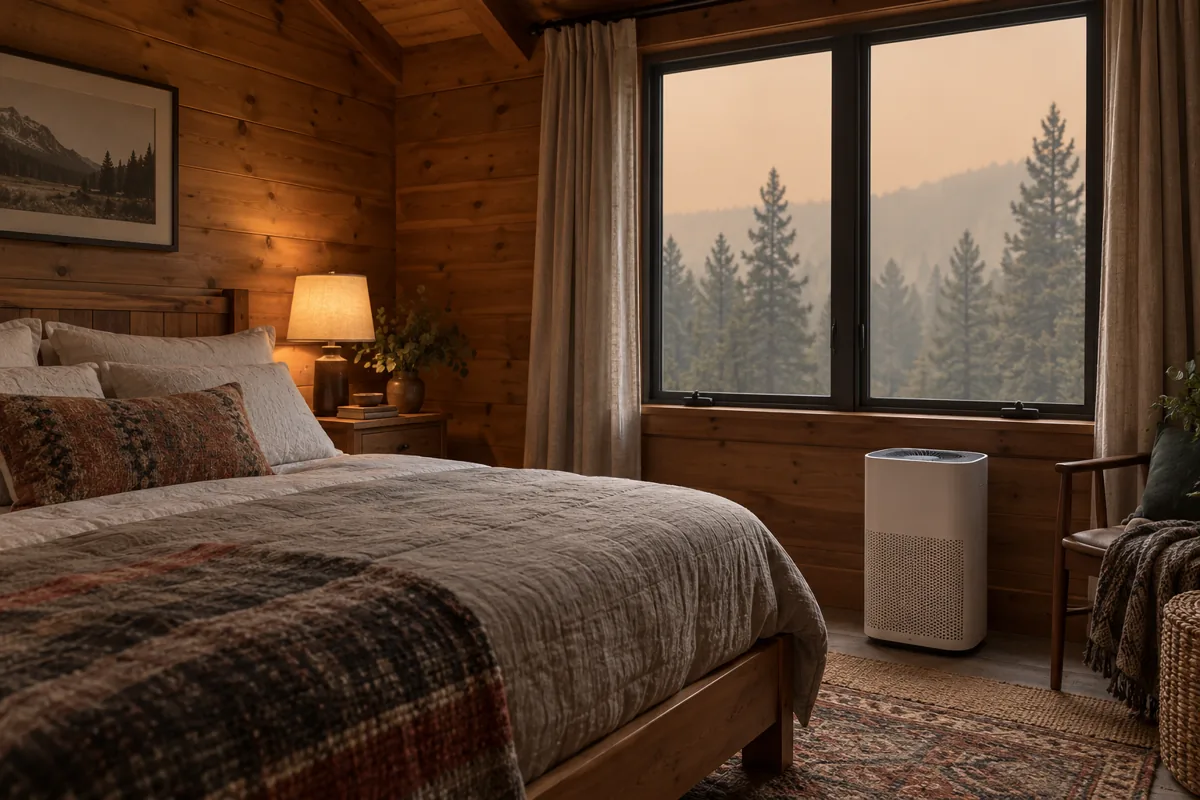
AI-generated cabin concept, used for illustration.
In this guide
Choose a room that everyone can comfortably use, that can be closed off from smoky outdoor air, and that can stay cool. A cleaner-air room is a preparedness measure while it is safe to remain; it does not replace evacuation advice.
An open loft may be hard to isolate
Look at the cabin plan before buying an air cleaner. A loft open to the kitchen and living room is part of a larger connected volume. A product sized for a small bedroom may not suit that whole space.
An enclosed ground-floor room may be easier to manage, but check comfort, space for occupants and an unobstructed exit. A room that becomes dangerously hot is not a suitable refuge simply because its windows close.
The EPA's clean-room guidance recommends an appropriately sized portable air cleaner that does not produce ozone, limiting indoor particle sources and following local conditions and evacuation advice.
Make a room-specific checklist
Record the room's dimensions, whether the door closes, window condition, cooling arrangement, available outlets and the proposed filter model. Ask the supplier to confirm suitability for the actual connected room volume and operating conditions.
Before smoke season, test whether everyone can sit or sleep there with the equipment in place. Keep the exit clear and route cables away from walking paths. Store the correct replacement filters where you can find them.
Know which controls affect outdoor air
Ask the HVAC or ventilation installer to explain the appropriate smoke-event settings for your exact system and how normal operation is restored afterward. Do not permanently block required vents or disable equipment based on a generic diagram.
Create a short control note using the labels actually visible on the equipment. A guest should not have to guess whether a switch marked “fresh” refers to outdoor air or a fan speed.
Plan for the room to become unusable
Identify another place to go if power fails, smoke continues entering or cooling is inadequate. Follow emergency alerts and leave when instructed. People with relevant health conditions should discuss smoke-event planning with their health professional.
Write the room and relocation arrangements into the project checklist. Read the wildfire site-planning guide for the wider property, and review heatwave preparation because smoke and heat can occur together.