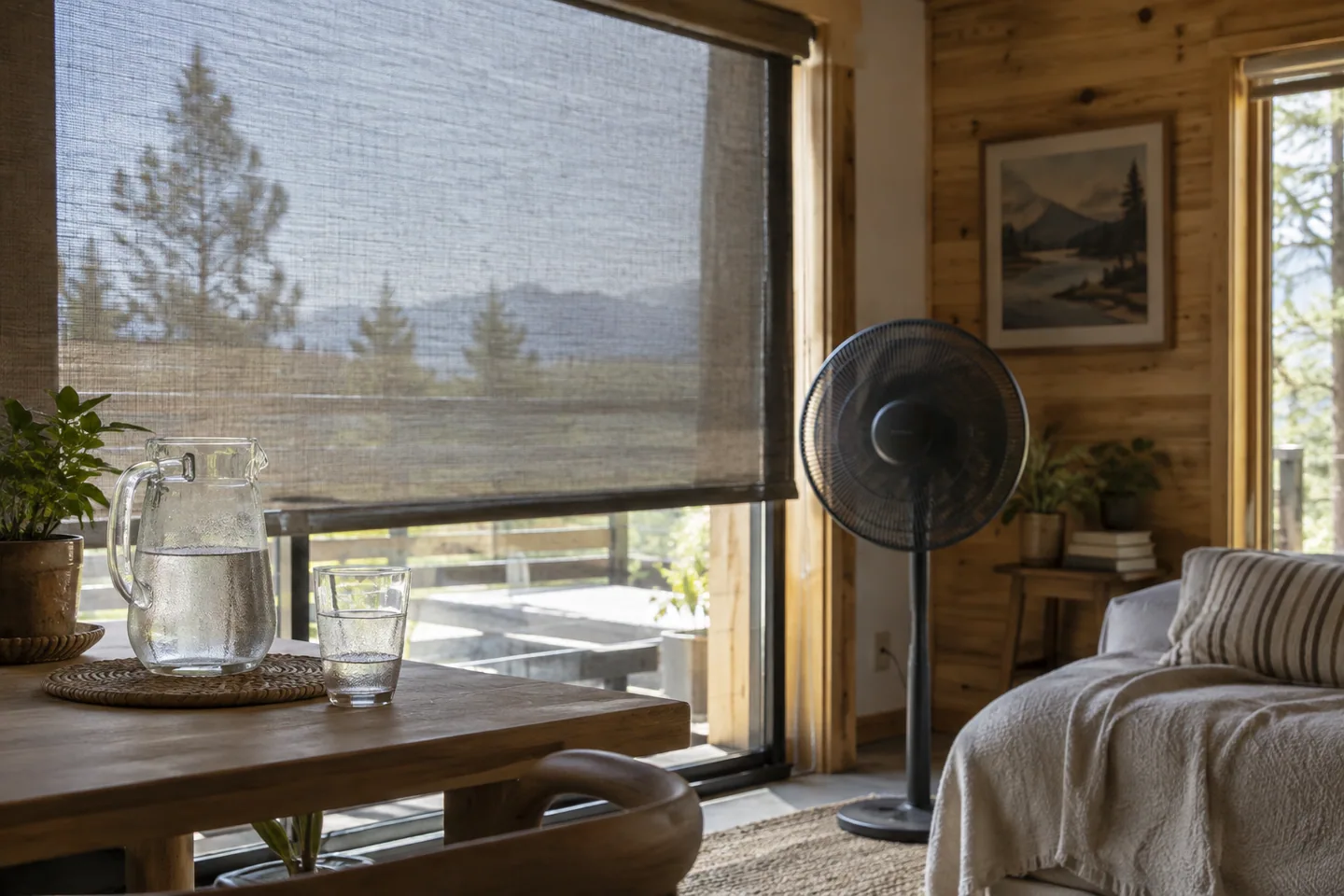
AI-generated cabin concept, used for illustration.
In this guide
Check current local heat warnings before a cabin stay and confirm the cooling arrangement can support the occupants. A mountain setting or an attractive shaded photograph does not guarantee comfortable indoor conditions.
Confirm the practical limits
Ask whether the cooling equipment has been maintained and whether power is dependable. Consider the actual sleeping areas, especially a loft that behaves differently from downstairs.
The National Weather Service: Heat safety explains that extreme heat can affect anyone, with some people more vulnerable. Follow official local guidance and individual medical advice where relevant; do not use a cabin comfort article as medical guidance.
Keep an alternative available
Know where the group can go if the cabin becomes unsuitable or power fails. Do not make a fan, remote thermostat or an untested passive-cooling idea the only contingency.
Use existing shading and equipment according to their instructions. If the building repeatedly overheats, arrange a design or system assessment after addressing the immediate needs of the occupants.
An illustrative planning failure is checking the living-room temperature during a short daytime viewing while assuming the loft will be comfortable overnight. Ask about the spaces and times you will actually use.
Record persistent comfort problems for a later assessment, but do not remain in unsafe conditions to collect data. The priority for the visit is a workable place to stay and a response to current warnings; long-term building improvements can then be planned with better evidence.