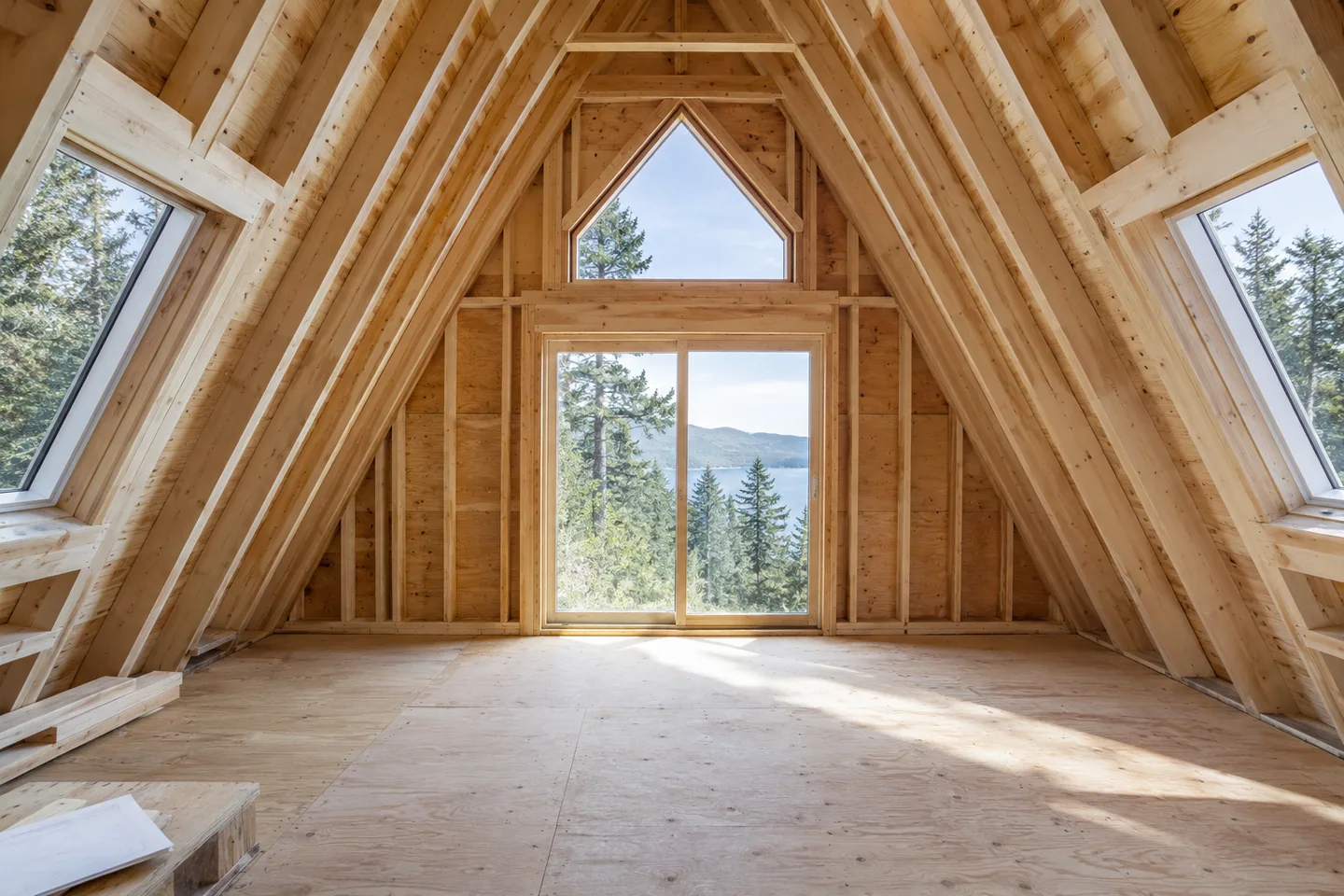
AI-generated cabin concept, used for illustration.
In this guide
Evaluate an unfinished cabin by the documented route to completion. The visible percentage finished is not a reliable measure of the cost, approvals or coordination still required.
Establish what exists
Request drawings, permits, inspection records, product information and the history of the work. Arrange appropriate condition and specialist assessments, including any exposure while construction has been paused.
Ask the relevant local office and transaction professionals how the current status affects the intended completion and use. This guide does not determine legal status or financing eligibility.
The FTC: avoiding home improvement scams provides US guidance for evaluating providers and written work scopes as you obtain completion proposals.
Price the remaining interfaces
List incomplete systems and identify what must be verified before another trade can finish them. New contractors may need to assess existing work rather than simply continue where someone else stopped.
For an illustrative gap, purchased windows may be onsite but their suitability, condition and installation scope remain unresolved. Counting them as fully completed value assumes too much.
Compare the asking price plus assessed completion work, uncertainty and ownership costs with other feasible options. Use current local proposals, not a general percentage for finishing a shell.
Keep unresolved items visible in the purchase decision. An unfinished cabin may suit someone prepared for the project, but the useful question is whether the remaining work is understood and manageable. A low purchase price cannot answer that by itself.