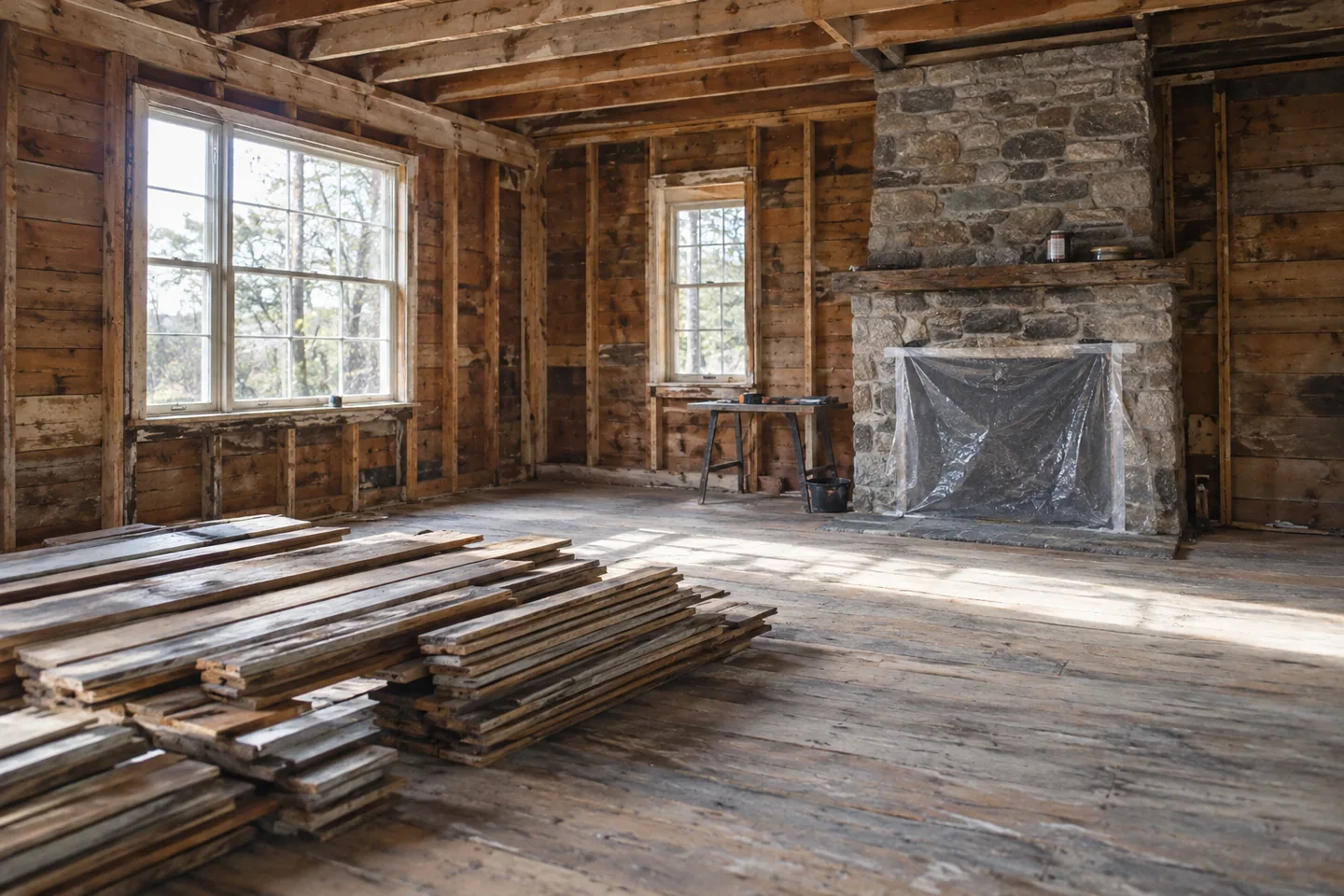
AI-generated cabin concept, used for illustration.
In this guide
Budget an older cabin renovation from assessed conditions, not only the appearance you want afterward. Separate confirmed work from unresolved questions before allocating money to finishes.
Create three cost groups
List work supported by an inspection or defined scope, work that depends on further assessment, and optional improvements. Keep provisional assumptions clearly labelled.
For each item, note who supplies the next answer and whether other work depends on it. A roof concern may affect interior finishing; a service upgrade may affect walls you planned to close.
The FTC: avoiding home improvement scams provides US guidance on written estimates and contractor checks. Obtain current local quotes for the actual scope rather than borrowing a cost from another cabin's renovation story.
Review the sequence with the team
Ask which tasks should be coordinated to avoid reopening completed work. Include access, temporary protection and disposal where relevant.
An illustrative budget error is pricing new interior paneling while leaving the source of dampness unresolved. The finish number may be accurate but premature.
Keep a separate record of changes after work begins. Every approved change should show its effect on the total and on the remaining contingency; do not let small decisions disappear into informal messages.
The useful budget is a living scope with visible uncertainty. It should help you decide what can responsibly proceed now and what needs another answer before money is committed.