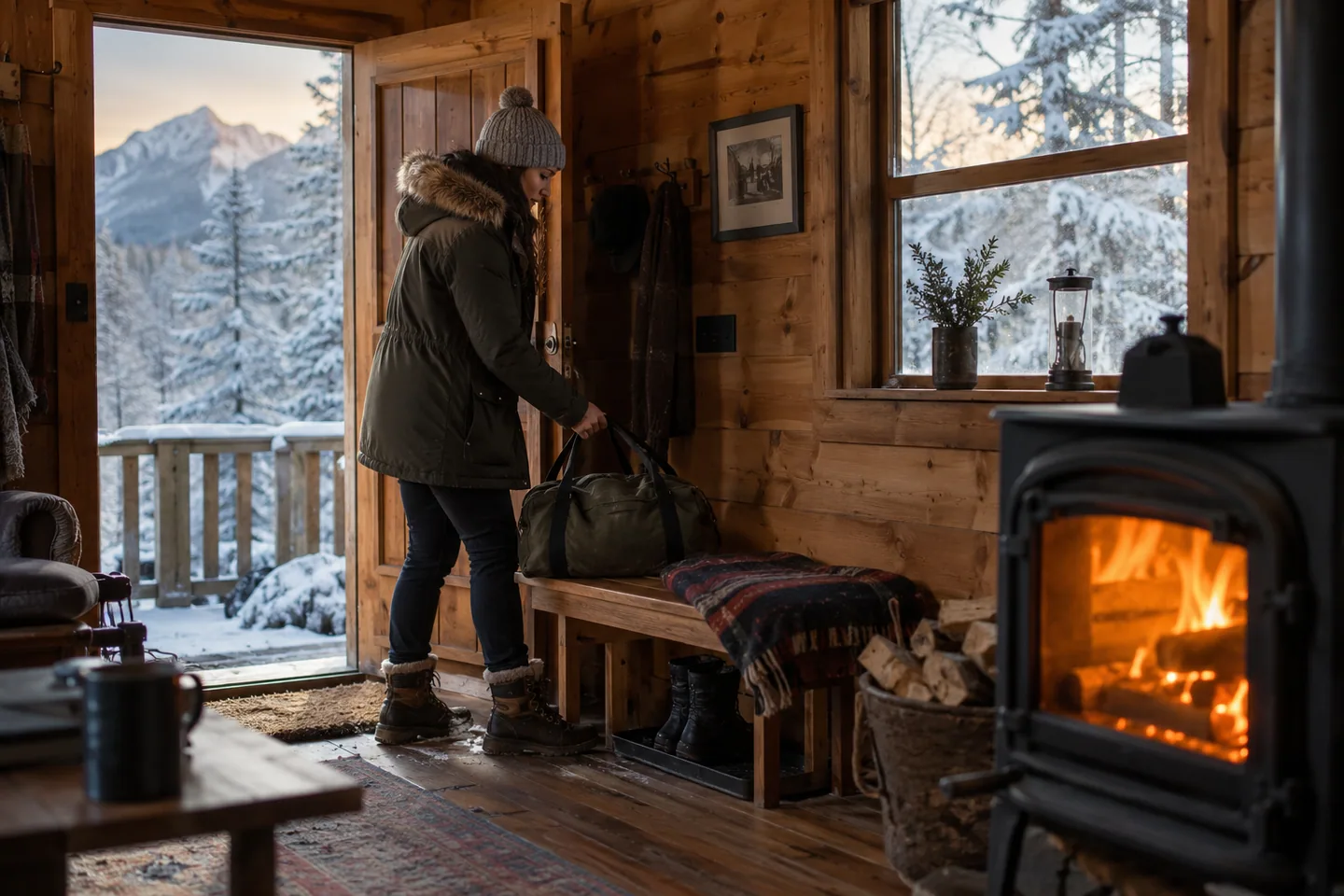
AI-generated cabin concept, used for illustration.
In this guide
Plan a cold-cabin arrival around the installed heating system and its instructions. Turning every control to an extreme setting is not a substitute for understanding how the building is meant to warm up.
Ask the installer about intermittent use
Explain how long the cabin may be empty and the conditions it may reach. Ask how the approved operating strategy handles arrival, comfort and any connected services.
Your Home: heating and cooling discusses the relationship between the building, use and heating system. The actual startup procedure and suitable settings need to come from the installed equipment and local professional advice.
Do not improvise indoor heat with outdoor cooking equipment or other unsuitable devices. If the normal system fails, use the established service and alternative-accommodation plan.
Record a few normal arrivals
Note the starting conditions, system settings and how different rooms become comfortable. Keep weather and occupancy with the record. That information can help the installer investigate an unexpectedly slow or uneven result.
For an illustrative observation, the living area may feel ready while a closed bedroom remains uncomfortable. That is a useful distribution question, not automatic evidence that the whole system needs a larger unit.
Coordinate any remote-start feature with the power, internet and unattended-operation plan. A successful app command does not prove every part of the cabin is ready for use.
The useful routine is repeatable and understood by the people arriving. It should include what to do when the expected warm-up does not happen, rather than relying on increasingly improvised fixes.