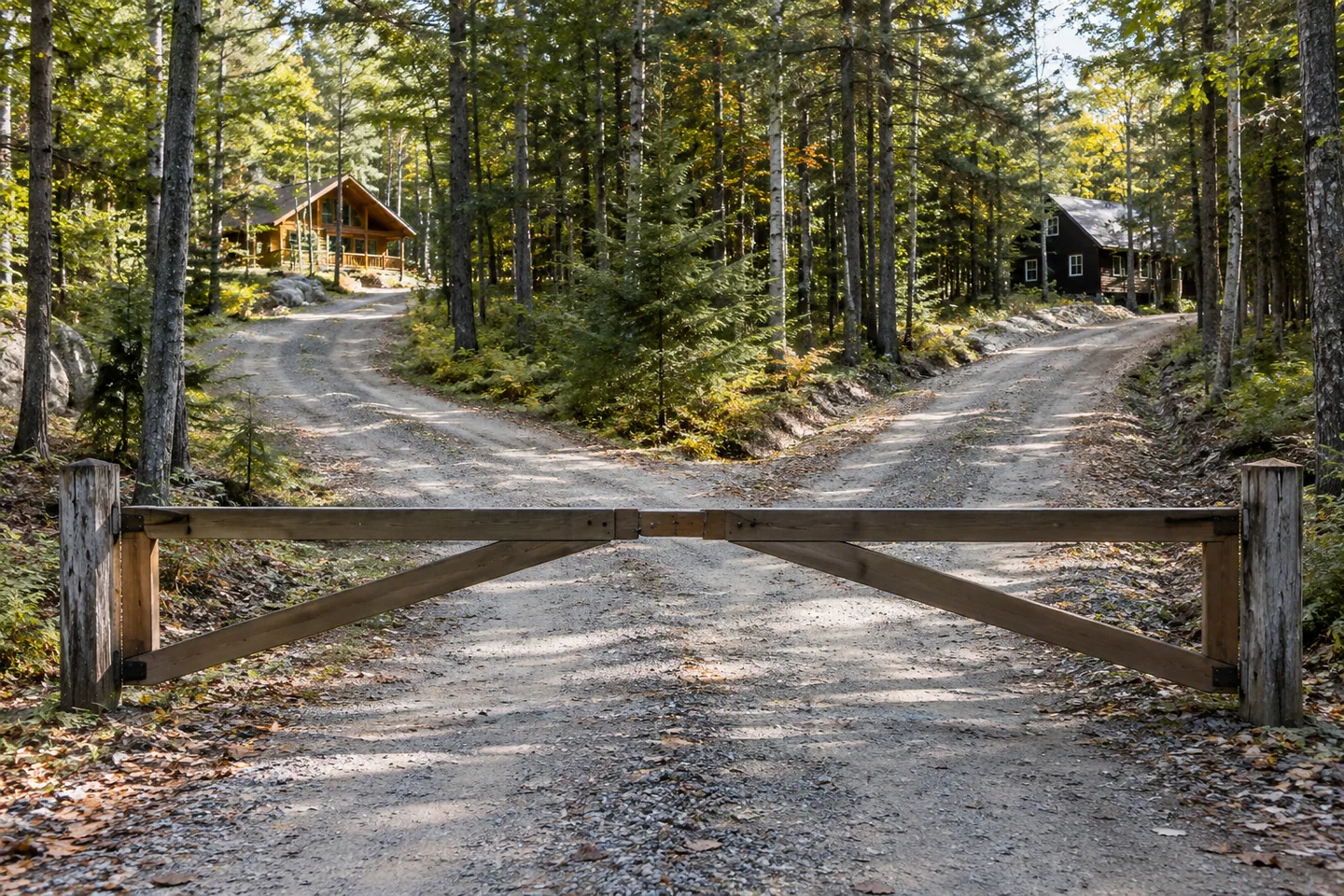
AI-generated cabin concept, used for illustration.
In this guide
A shared road creates two separate questions: whether you have the necessary right to use it, and who keeps it usable. Resolve both before treating the property as ready for a cabin.
Put the documents beside the practical questions
Ask the professional handling the purchase to explain the recorded access documents and any agreement affecting the road. Do not infer the scope of your rights from visible tire tracks or a neighbor's informal permission.
Prepare a short list for that review:
- Which part of the route crosses other property?
- Does the documented access support the intended use?
- Who pays for ordinary repairs and major work?
- How are decisions and disagreements handled?
- Are there separate arrangements for gates or winter clearing?
This is a document-review checklist, not a conclusion about your legal rights. Those depend on the property and jurisdiction.
Ask how the road works in practice
A useful conversation with neighbors covers recent repairs, seasonal closures and contractor access. Compare those observations with the written agreement rather than allowing one to substitute for the other.
Your Home: choosing and using a site offers a general framework for examining access when choosing land. For the purchase itself, use local property advice and the actual recorded documents.
For example, a maintenance budget may cover gravel grading but leave snow clearing to individual owners. That distinction changes the practical cost of winter weekends. Put your expected share, any unknown major repairs and the winter arrangement into the annual cabin budget before you decide.