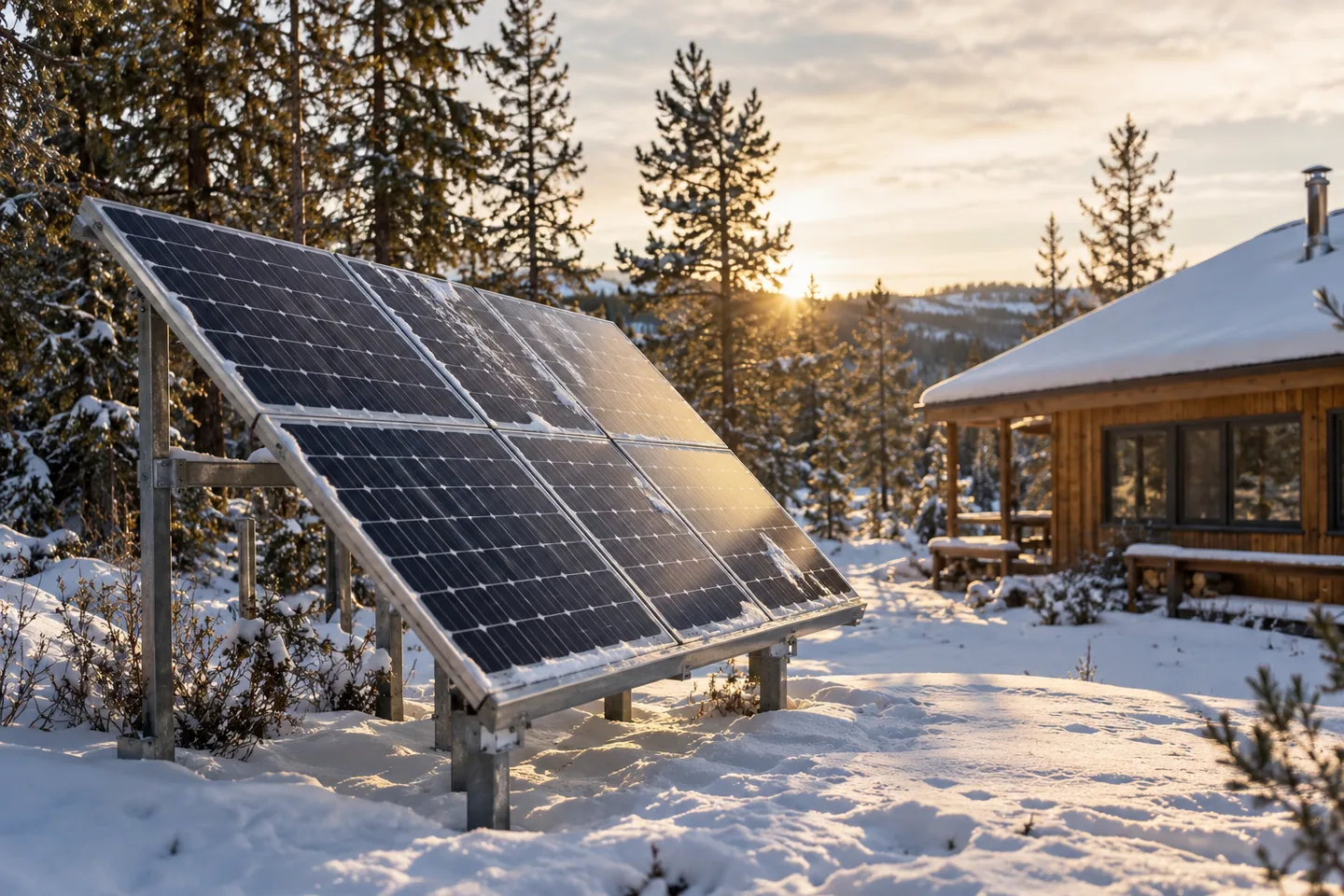
AI-generated cabin concept, used for illustration.
In this guide
Size the planning discussion around the season when you need the cabin. An annual or summer energy estimate can hide the period that matters most to your use.
Compare demand and supply over the same period
Create separate load lists for warm-weather visits, cold-weather visits and unattended periods. Include the equipment that changes with the season rather than reusing one daily total.
Ask a qualified solar designer for a location-specific estimate with its weather, shading and system assumptions explained. Keep the proposed array arrangement and available installation area with that estimate.
Your Home: batteries provides general storage-planning context. Storage can shift available energy in time; a proposed system still needs an adequate energy supply over the relevant operating period.
Name the difficult stretch
Discuss what happens during several unfavorable days and after an extended absence. Ask which loads remain available, what must be reduced and what backup arrangement is included.
For an illustrative planning scenario, compare a weekend with modest lighting and device use against a winter stay that also requires pumps, ventilation and other electrical equipment. Do not silently omit those loads because the building is heated by another fuel.
Keep the operating limits in the handover instructions. A clear system proposal explains the conditions it was designed around. It should not rely on a promise of year-round independence without showing how the cabin's seasonal demand and the local resource were assessed.