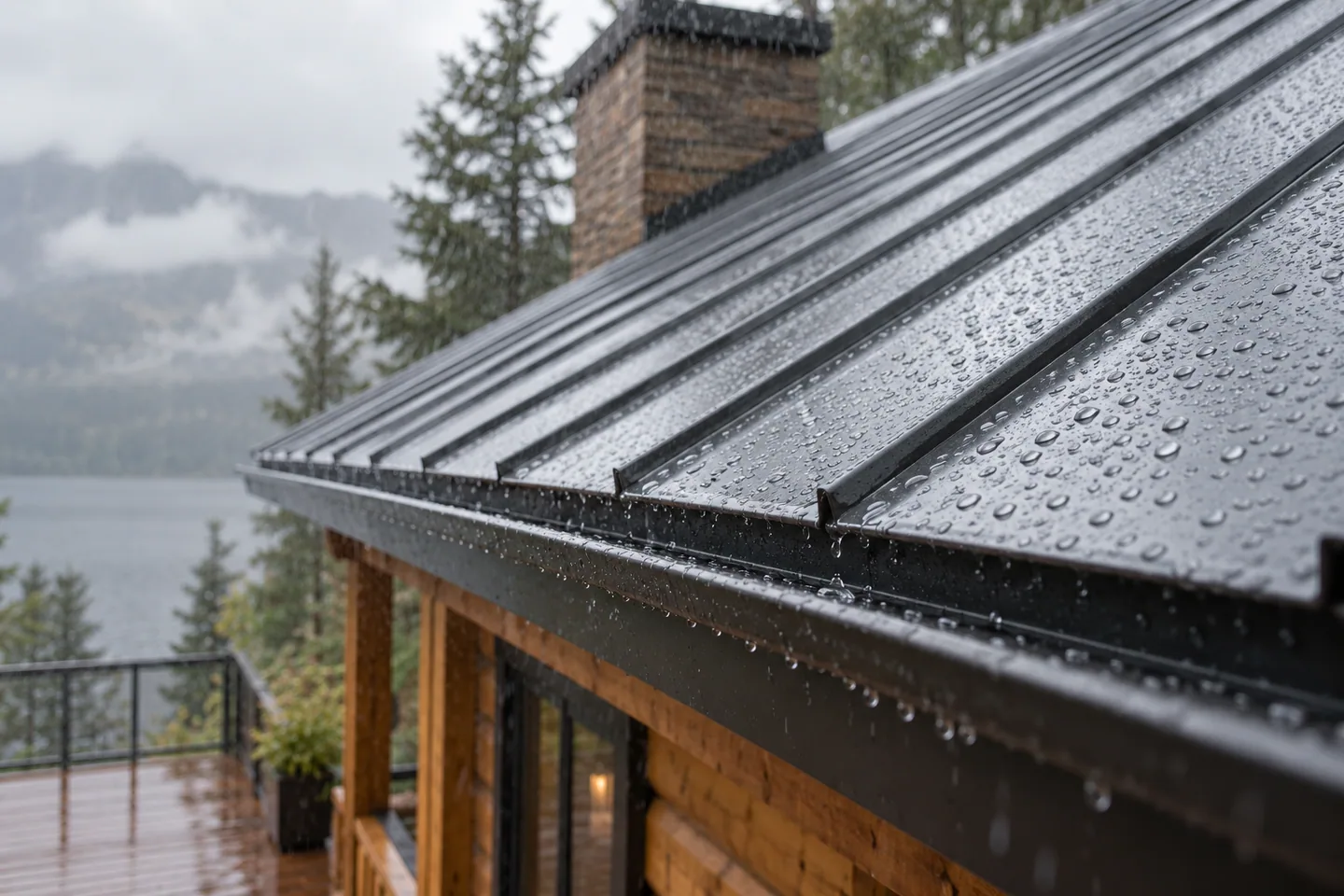
AI-generated cabin concept, used for illustration.
In this guide
A metal roof's rain noise cannot be predicted from the outer sheet alone. The complete roof and ceiling arrangement affects what you hear inside.
Ask about the assembly
Request information about the proposed layers and ask the supplier what acoustic evidence applies to that specific arrangement. An audio clip from a different cabin is an anecdote, not a performance rating for your project.
Your Home: noise control explains that sound control depends on the construction and its connections. Keep any claimed performance tied to the tested or specified system rather than a generic material label.
If possible, visit a comparable occupied building during rain or ask owners what they notice. Compare roof construction and interior finishes before assuming the experience will transfer.
Decide how you use the space
Rain sound may feel pleasant in a living area and distracting during a work call or sleep. Name the room and activity where it matters. In an open A-frame, those uses may share the same large volume.
An illustrative choice is between two otherwise suitable roof assemblies with different documented acoustic arrangements. Compare their complete installed scope, maintenance and local suitability; do not try to solve noise by adding an arbitrary material to a roof detail.
Bring the concern into design discussions before ordering. Once the roof is enclosed, a meaningful improvement may involve more than changing a decorative interior panel. Clear expectations early are easier than discovering that “quiet enough” meant something different to each person.