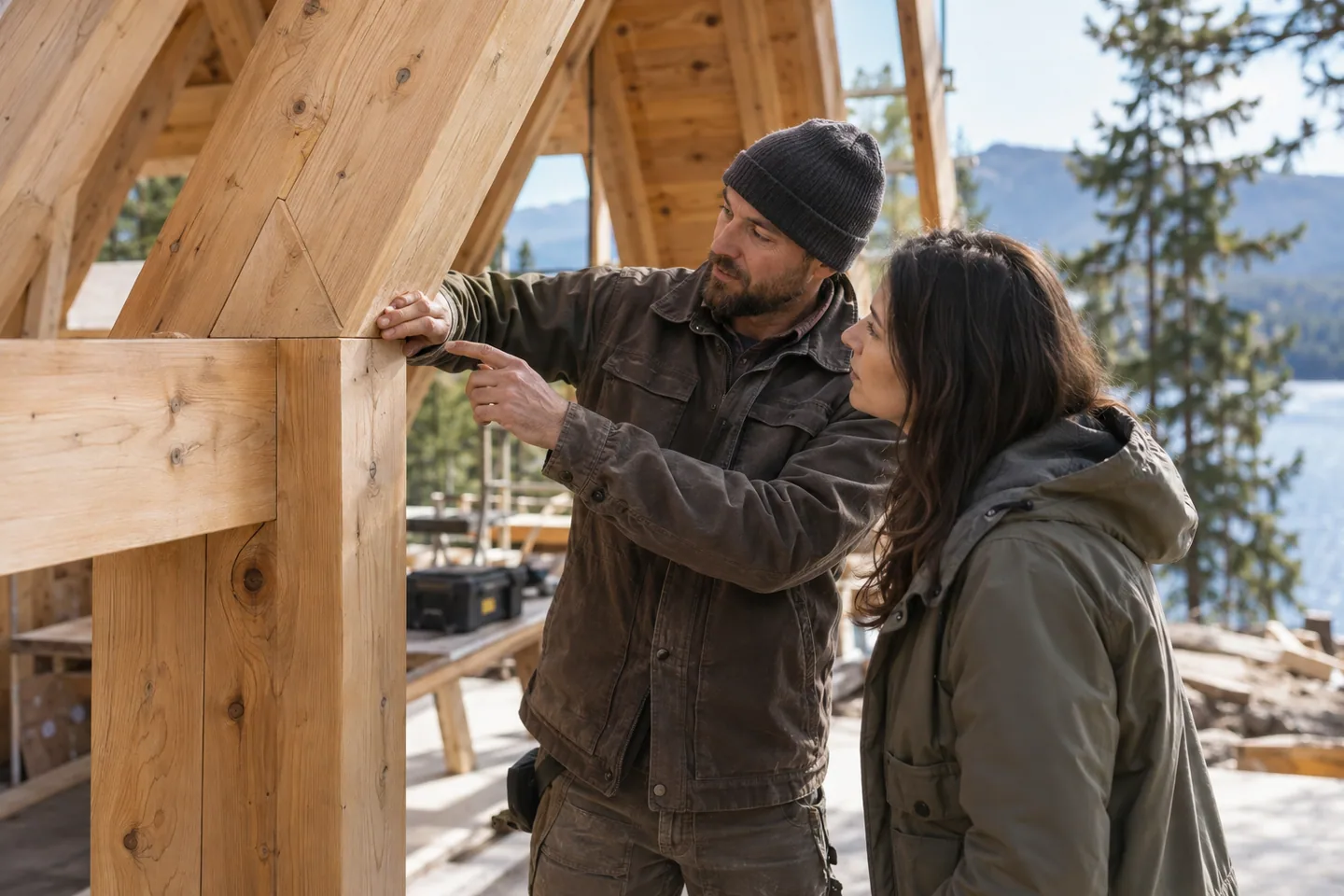
AI-generated cabin concept, used for illustration.
In this guide
Choose an A-frame builder by examining how they will deliver your particular design, not just whether their portfolio contains triangular cabins. Ask who handles the structure, weatherproofing, services and the handovers between those parts of the work.
Look for comparable work
A contractor who assembled a simple seasonal shell may have different experience from one who completed a year-round home with large glazing. Ask about projects with similar climate, access and finishing requirements. Request permission-based references and discuss how issues were resolved.
When reviewing photographs, ask what work the company actually performed. A photograph of a completed house does not explain whether they designed it, installed the kit or managed the entire project.
Discuss the difficult details
Bring three specific questions to the meeting: how the roof meets the foundation, how the large window openings are coordinated, and how high-level work will be accessed. You are looking for a clear process and the right qualified people, rather than trying to approve technical details yourself.
Ask who answers questions when manufacturer drawings and local requirements do not align. Record that responsibility before ordering the package.
Compare working arrangements
Check the written scope, exclusions, insurance, applicable licensing and communication schedule. Ask how changes, delays and incomplete work are documented. In the US, the FTC recommends verifying licensing with the relevant state or county and obtaining written estimates; see FTC: avoiding home improvement scams.
A useful comparison sheet has a column for each builder and rows for the same responsibilities. Leave unanswered questions visible. A complete, understandable offer is easier to evaluate than a low headline accompanied by assumptions that only emerge after work begins.