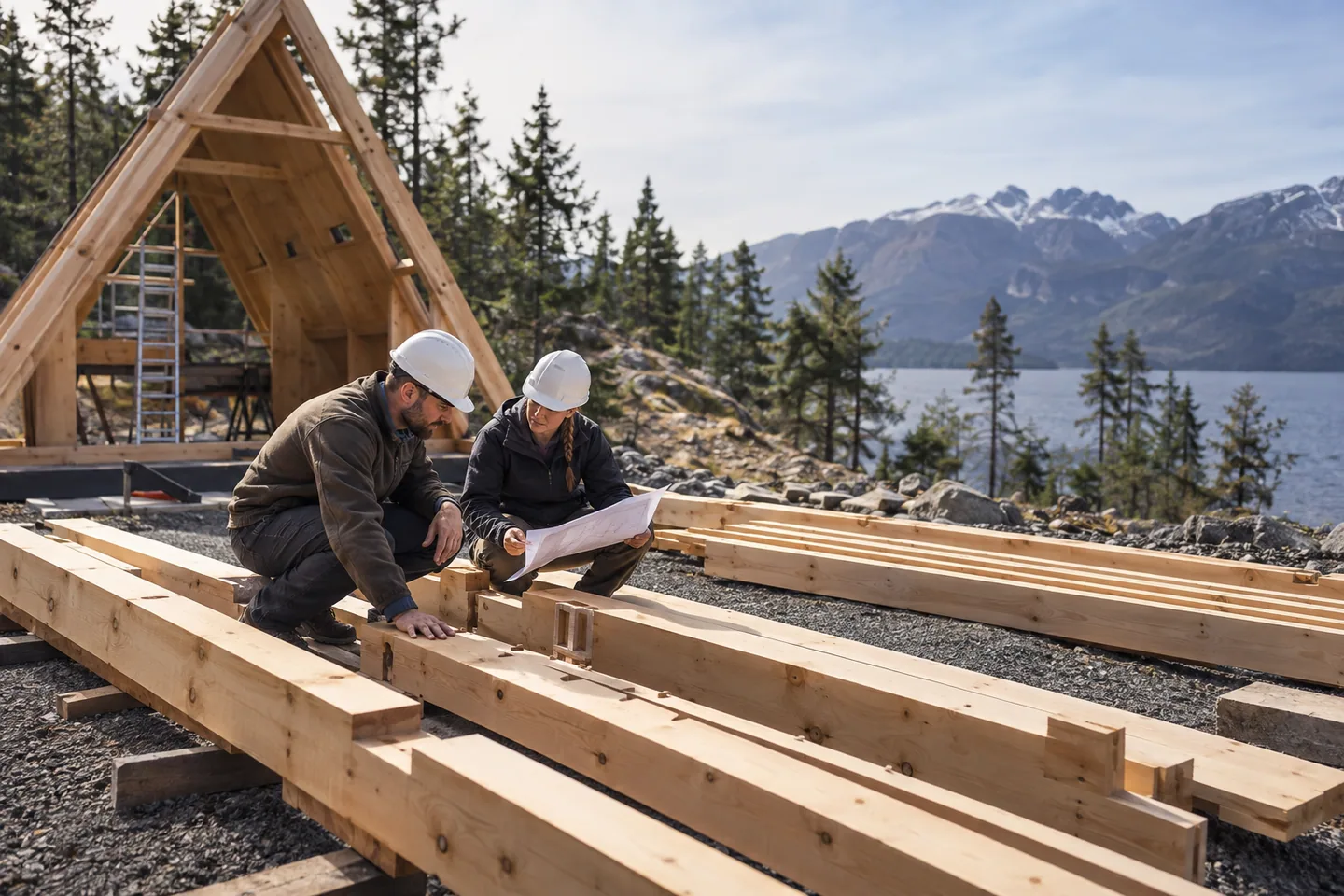
AI-generated cabin concept, used for illustration.
In this guide
Some owners take on parts of an A-frame project themselves. Whether that works for you depends on your skills, time, equipment, local requirements and the specific kit. Break the project into tasks before deciding what “build it myself” includes.
Separate making from managing
You might coordinate contractors while doing none of the structural work. You might complete selected finishes after professionals deliver a weather-tight building. Or you might undertake some assembly within an agreed design and supervision arrangement.
Those approaches need different budgets and schedules. Write down who designs, who supplies, who installs, who checks and who coordinates. If every column says “me,” examine whether you have the knowledge and time to carry out every responsibility.
Read what the supplier actually provides
Ask for the assembly documentation, equipment requirements and support arrangements before buying. Find out how missing or damaged components are handled and what work must be finished before delivery.
AVRAME's getting-started information says its kits are intended to be assembled with local labour and that it does not provide an assembly service. That is one supplier's model. Check the current written offer for the supplier and region you choose.
Make a realistic task list
| Work area | Question to resolve |
|---|---|
| Design and approvals | Which qualified people and documents does this project need? |
| Foundation and structure | Who takes responsibility for the design, installation and checks? |
| Roofing and external work | What equipment, access and specialist skills are required? |
| Electrical, heating and plumbing | Who is permitted and qualified to perform and verify the work? |
| Interior finishes | Which tasks fit your skills and available time? |
This list is for assigning responsibility. It does not authorize work that requires a licensed professional or tell you how to carry out hazardous construction activities.
Count the costs around your labour
Unpaid time still affects the project. Add tool hire, transport, storage, protective arrangements, mistakes, repeat deliveries and the time spent learning a new task. Ask how a delay in your work would affect the next contractor.
As an arithmetic example, replacing an invented €4,000 labour item with €1,200 of equipment and materials reduces the cash line by €2,800 before any other effects. That is not a predicted saving: your actual quote, ability and rework risk determine the outcome.
Set a point where you hand over
Agree which conditions mean a professional takes over a task. Do this before you are under time pressure with materials on site. Clear boundaries make coordination easier and prevent the budget from depending on completing work beyond your experience.
Use the project checklist to record responsibilities and the budget planner to keep hired work separate from your own material and equipment costs.