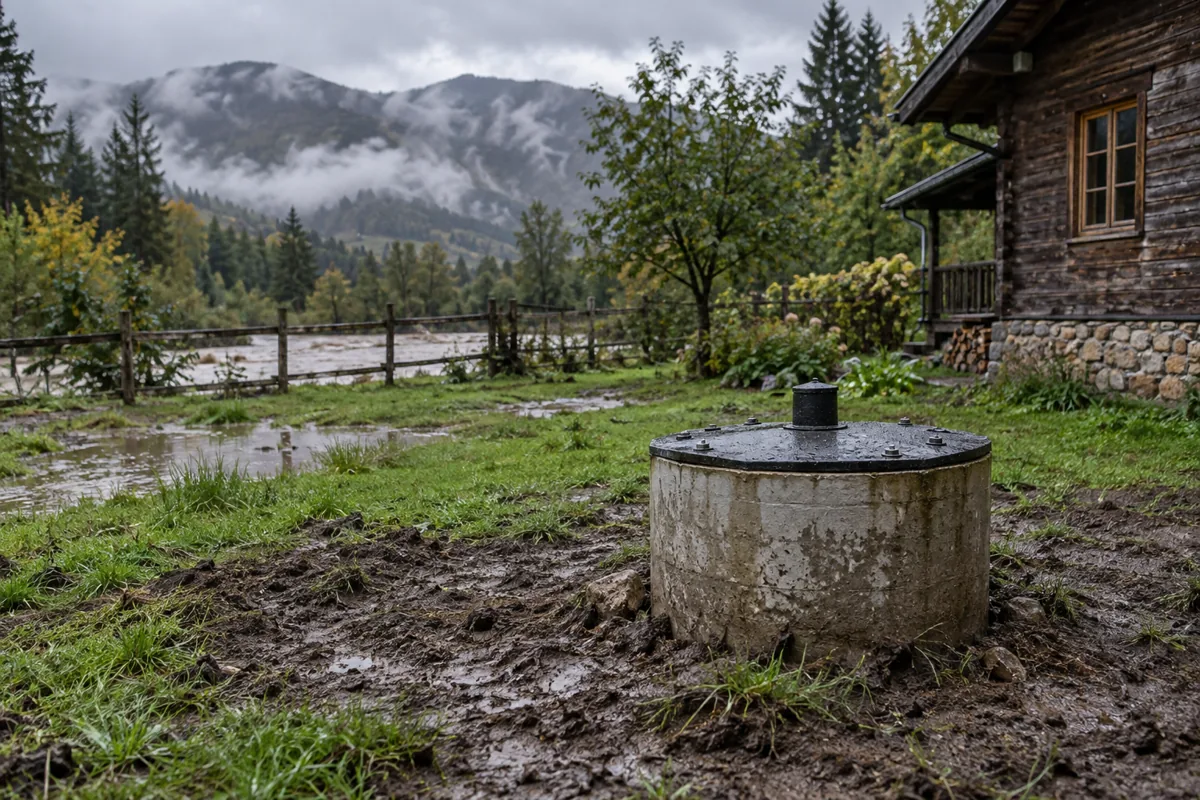
AI-generated cabin concept, used for illustration.
In this guide
Treat a flooded well as a water-safety problem and contact your local health authority and a qualified well professional. Use an approved alternative drinking-water supply until the system has been assessed and the water cleared for use.
Do not judge by appearance
Clear-looking water and a working pump do not establish safety. Flooding can affect the well, electrical equipment and surrounding conditions in different ways. Do not enter floodwater or operate suspect electrical equipment to investigate.
The EPA's post-flood well guidance provides official information on inspection, disinfection and sampling. Follow the current instructions from the relevant local authority and the professionals assessing your well; this article is a coordination checklist, not a disinfection recipe.
Give the professional a useful history
Record when flooding occurred, how high the water reached and whether it covered the wellhead or equipment. Use photographs already taken from a safe place. Add any changes in water appearance, smell or operation, without tasting suspect water.
Gather the well log, pump details, treatment records and recent water-test results. If those are unavailable, say so. Missing records are better identified than replaced by assumptions.
Separate the reopening decisions
| Decision | Person or evidence needed |
|---|---|
| Safe access to the equipment | Appropriate site and electrical assessment |
| Well and pump condition | Qualified well inspection |
| Recovery work | Site-specific professional instructions |
| Sampling and laboratory method | Health authority and certified laboratory |
| Return to drinking-water use | Appropriate results and local advice |
Ask when samples should be collected relative to any recovery work. A sample taken at the wrong point in that process may not answer the intended question.
Keep a simple recovery record
For example, list “inspection requested,” “repair completed,” “sample collected” and “results reviewed” as separate dated entries. Do not combine them into one box called “water fixed.”
Tell every intended visitor what water can be used for and what restrictions remain. If the cabin cannot supply the facilities needed for a safe stay, postpone occupancy rather than leaving guests to interpret laboratory paperwork.
Track responsibilities in the project checklist. The private-well testing guide covers the ongoing record after recovery. Also review the spring reopening plan for other cabin systems, without assuming the ordinary seasonal checklist covers flood damage.