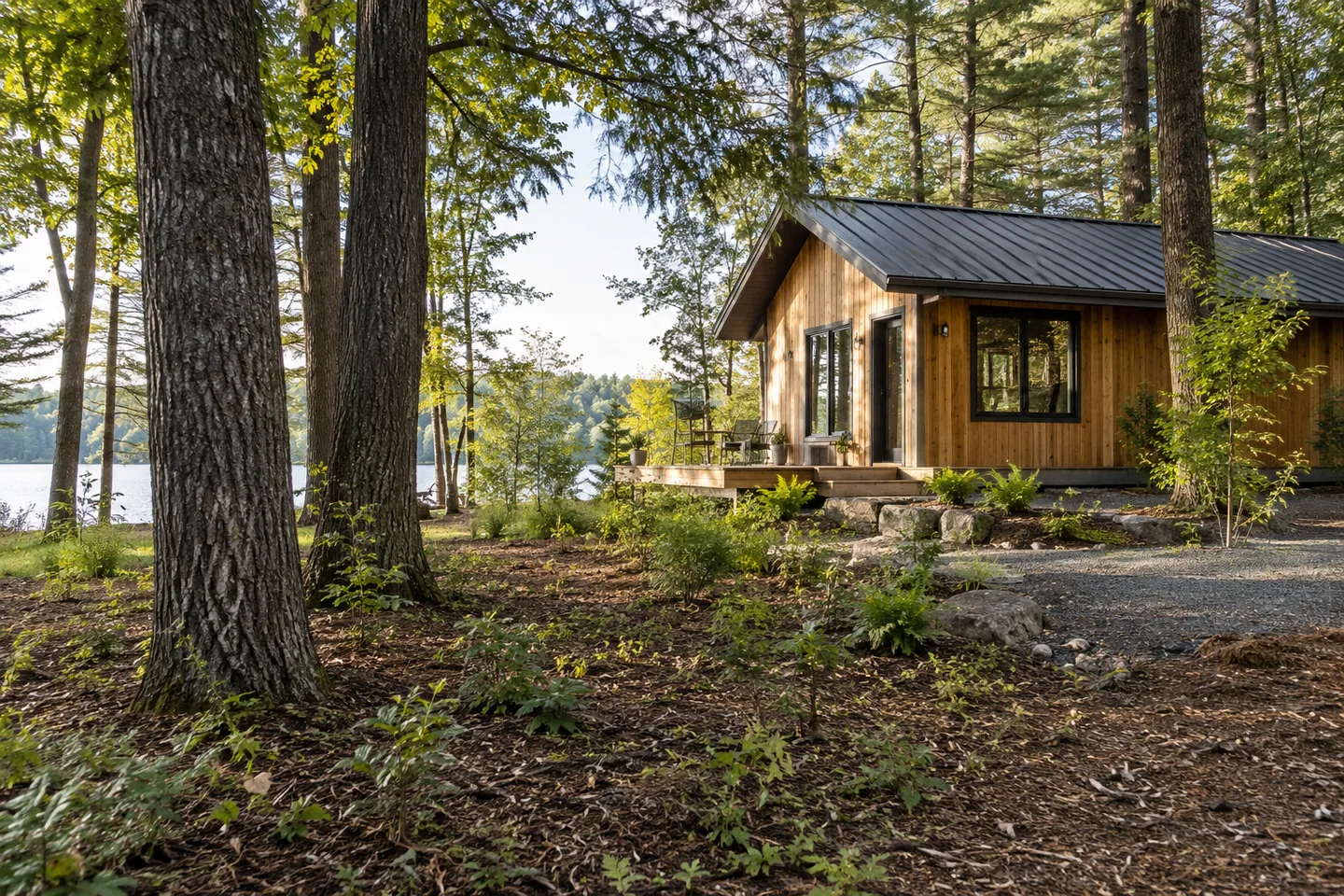
AI-generated cabin concept, used for illustration.
In this guide
Do not decide which trees to remove solely from the cabin footprint. Plan the building, construction access, services and outdoor use together, then get appropriate local advice on tree condition and protection.
Mark decisions rather than guessing safety
Walk the site and label trees on a simple plan. Record what you can observe: proximity to the proposed cabin, branches over an access route, visible damage or interference with the intended view. Those observations help an arborist assess the relevant trees; they do not establish whether a tree is safe.
Ask the local office about applicable protections or clearing requirements before work begins. A contractor's ability to remove a tree does not by itself answer whether removal is permitted.
Your Home: choosing and using a site includes existing vegetation among site-selection considerations. Climate, local ecology and the actual trees affect the decision.
Think beyond the first construction week
A tree kept for summer shade may also affect where gutters, roof access and seating fit. A tree removed to simplify truck access cannot provide that shade later. Put the tradeoff on the drawing before the machinery arrives.
Also ask the site team how retained trees will be protected during construction. Agree who marks the work limits and who has authority to change them.
Your finished plan should identify retained trees, further assessments and approved removals. Avoid a vague instruction to “clear enough space.” Clear boundaries make it easier for everyone to carry out the decision you actually intended.