Planning diagram. Examples and assumptions are explained below.
In this guide
Record relative humidity together with temperature, location and what was happening in the cabin. A single percentage without that context is a weak basis for buying equipment or changing the building.
Choose repeatable measuring points
Use a consistent position in the main room and another in a bedroom or loft if those spaces behave differently. Follow the instrument instructions and avoid placing a sensor directly above a kettle, next to a heater or against wet glass.
Relative humidity changes with temperature. The Your Home condensation guide explains that relationship and why surfaces can become wet when they are cool enough. Comparing a cold arrival reading with a warm evening reading without noting temperature can be misleading.
Log events, not just numbers
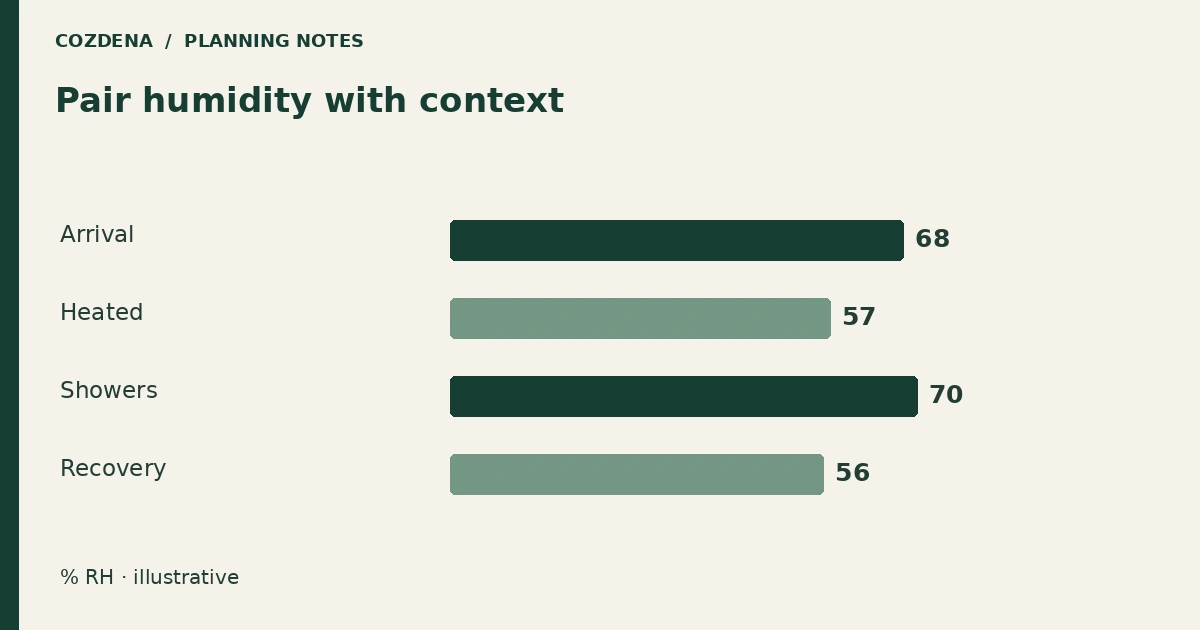
Here is an invented example showing the kind of record to keep. It is not a target range or a diagnosis.
| Time | Room temperature | Relative humidity | Event |
|---|---|---|---|
| Friday, 18:00 | 12°C | 68% | Arrival after five empty days |
| Friday, 22:00 | 20°C | 57% | Heating on; two people present |
| Saturday, 08:30 | 20°C | 70% | Two showers; bathroom door open |
| Saturday, 10:00 | 20°C | 56% | Normal ventilation restored |
Add outdoor conditions, visible condensation and whether windows or fans were operating. If a logger records continuously, mark those events in a separate note using the same clock.
Look for a question the record can answer
Does the rise follow showers? Does one room stay damp while the main room improves? Does the problem appear during unoccupied periods? These patterns help a professional choose what to investigate; they do not prove the cause on their own.
The EPA's moisture guidance advises keeping indoor humidity below 60%, ideally 30–50% where possible. That general guidance is not a guarantee against condensation on a very cold surface.
Change one thing you can track
If the agreed first step is using an existing extraction control correctly, note the change and repeat observations under comparable conditions. Do not block vents or disable essential systems to create an experiment.
Keep the log with photos in the project checklist. Compare it with a loft temperature log when overheating is involved. For damp glass, use the window-condensation guide to distinguish the observations you need before deciding on repairs.