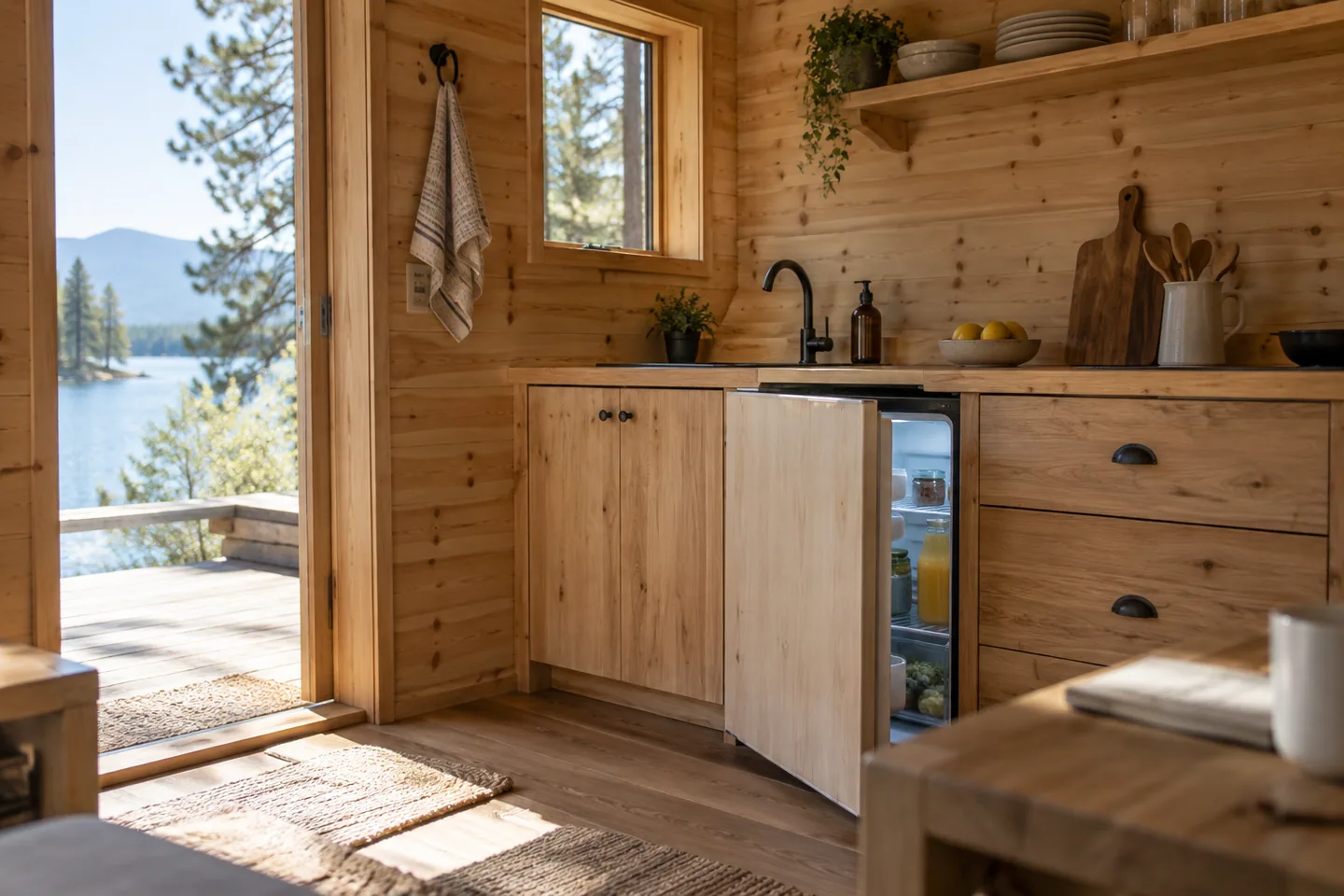
AI-generated cabin concept, used for illustration.
In this guide
A refrigerator's energy label is a useful comparison point, but it is not a promise of your exact cabin consumption. Check the test basis, product size and intended operating conditions.
Compare suitable models on the same basis
Use current manufacturer information and the relevant label for your market. Do not compare a daily measurement from one cabin with another model's annual laboratory estimate as though the conditions were identical.
An illustrative annual estimate of 365 kWh averages to 1 kWh per day when divided by 365. That arithmetic average does not describe every day or the power needed at a particular moment.
Your Home: appliances and technology provides broader guidance on appliance energy comparisons. Regional labels and testing conventions differ.
Check the installation and seasonal use
Follow the actual product's requirements for clearance, environment and electrical supply. Tell the installer or supplier if the cabin becomes unusually cold or hot while empty. Do not assume every domestic refrigerator suits every unattended cabin condition.
Include the appliance in the off-grid load review where relevant, including its operating characteristics and starting requirements. Ask the system designer which product information they need.
Keep shutdown and restart procedures with the manual. If the fridge is left running between visits, include that continuous role in the energy plan rather than counting only the days you personally occupy the cabin. The ownership pattern matters as much as the weekend routine.