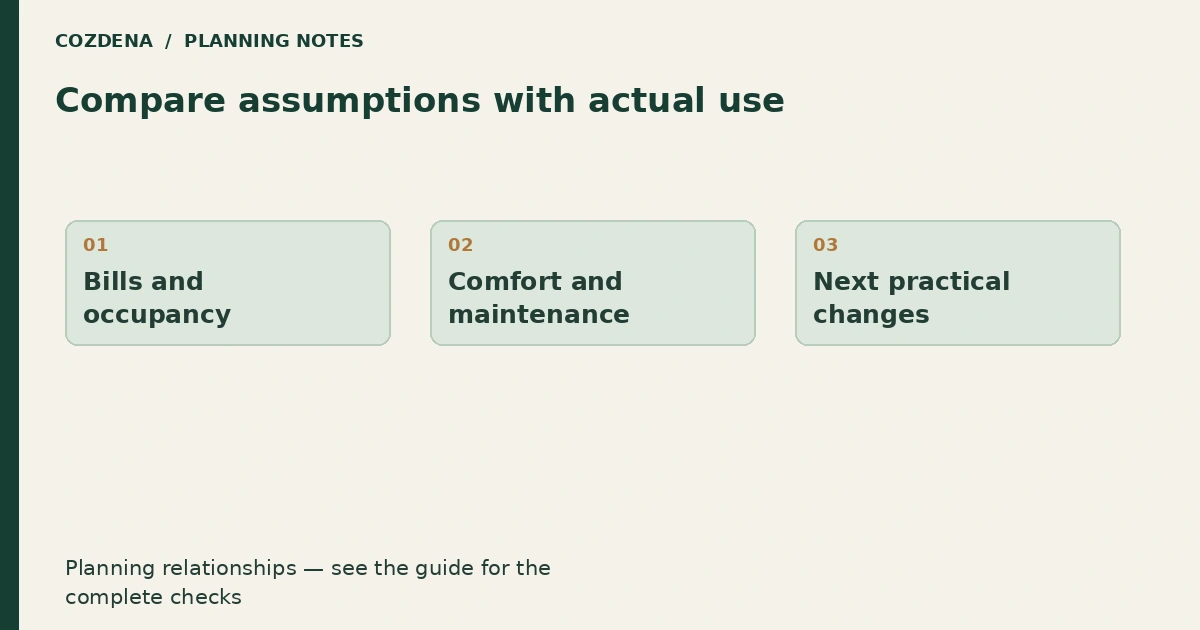
Planning diagram. Examples and assumptions are explained below.
In this guide
Review what the cabin actually costs and how it works before planning another upgrade. Keep measured results separate from memories of the best or worst weekend.
Gather a small set of records
Collect utility bills, occupancy dates, service invoices and the issues recorded during the year. Note major changes such as more guests, a new appliance or unusually long absences. Those differences matter when comparing actual costs with the original estimate.
For an illustrative cabin using 2,400 kWh across 80 occupied nights, dividing gives 30 kWh per occupied night. That figure includes electricity used while empty, so it is not a direct measure of overnight guest consumption. Compare the standby electricity record separately before drawing conclusions.
Review four questions
| Area | Evidence to compare | Possible next step |
|---|---|---|
| Cost | Bills against assumptions | Revise the annual budget |
| Comfort | Temperature or humidity logs | Investigate a repeated pattern |
| Maintenance | Visits, failures and access issues | Change the service arrangement |
| Layout | Recurring daily inconvenience | Test a reversible furniture change |
Choose improvements from repeated problems
If guests repeatedly block the entry with bags, try a revised storage arrangement before building an extension. If one room remains uncomfortable, collect the relevant observations and ask the installer to investigate before replacing equipment.
Separate urgent defects from discretionary improvements. Check the product and contract documentation for relevant reporting procedures rather than assuming a universal one-year warranty or deadline.
Update the working documents
Revise the budget, operating cards and maintenance schedule using what you learned. Preserve the original assumptions so next year's comparison remains meaningful.
Use the annual ownership budget, maintenance calendar and project checklist to turn the review into a short, prioritized set of actions with a responsible person and a date.