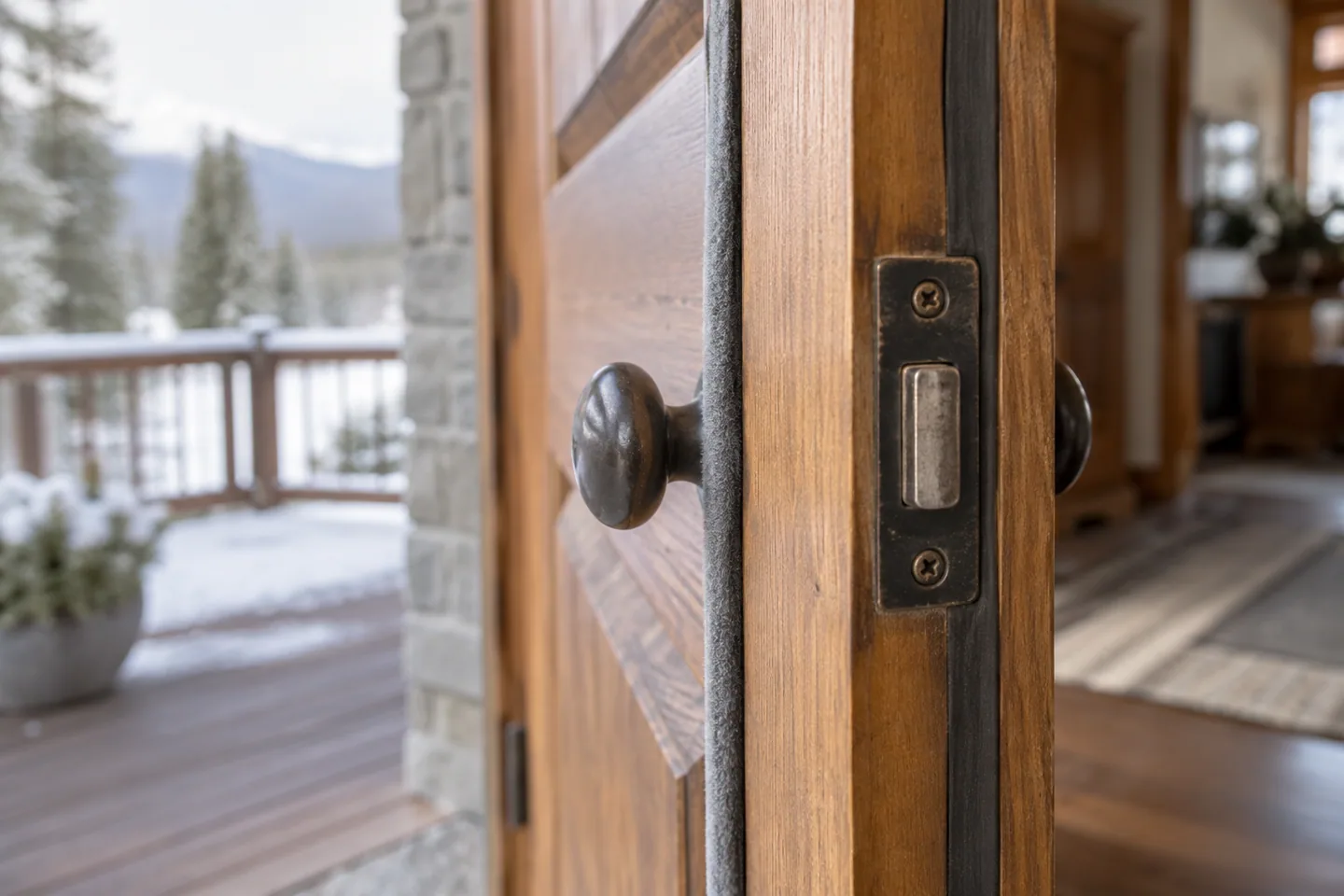
AI-generated cabin concept, used for illustration.
In this guide
A draft at the cabin entrance does not automatically mean the whole door needs replacement. Start by observing how it closes and where the problem appears, then have the appropriate repair assessed.
Record the simple evidence
Note whether the door latches normally, whether visible seals are damaged and whether the draft changes with wind direction. Photograph the threshold and frame without removing parts you do not understand.
Keep water entry and air leakage as separate observations. If both occur, tell the contractor rather than treating weatherstripping as a universal repair.
The ENERGY STAR: seal and insulate provides a US overview of air sealing and insulation. Product-specific repairs should use materials and methods suitable for the actual door assembly.
Compare repair and replacement scopes
Ask what caused the poor fit or leakage, which components would be repaired and how the work will be checked. If replacement is proposed, include the surrounding installation and finish repairs in the quote.
For an illustrative decision, replacing a worn compatible seal is a different scope from correcting a damaged frame or installation problem. The symptom alone does not tell you which one applies.
Avoid altering required vents, drainage openings or hardware to stop a draft. Ask the supplier to identify unfamiliar features.
After work, check the door in ordinary use and under the conditions that previously caused concern. Keep the product and repair records so the next maintenance decision starts from evidence rather than another guess.