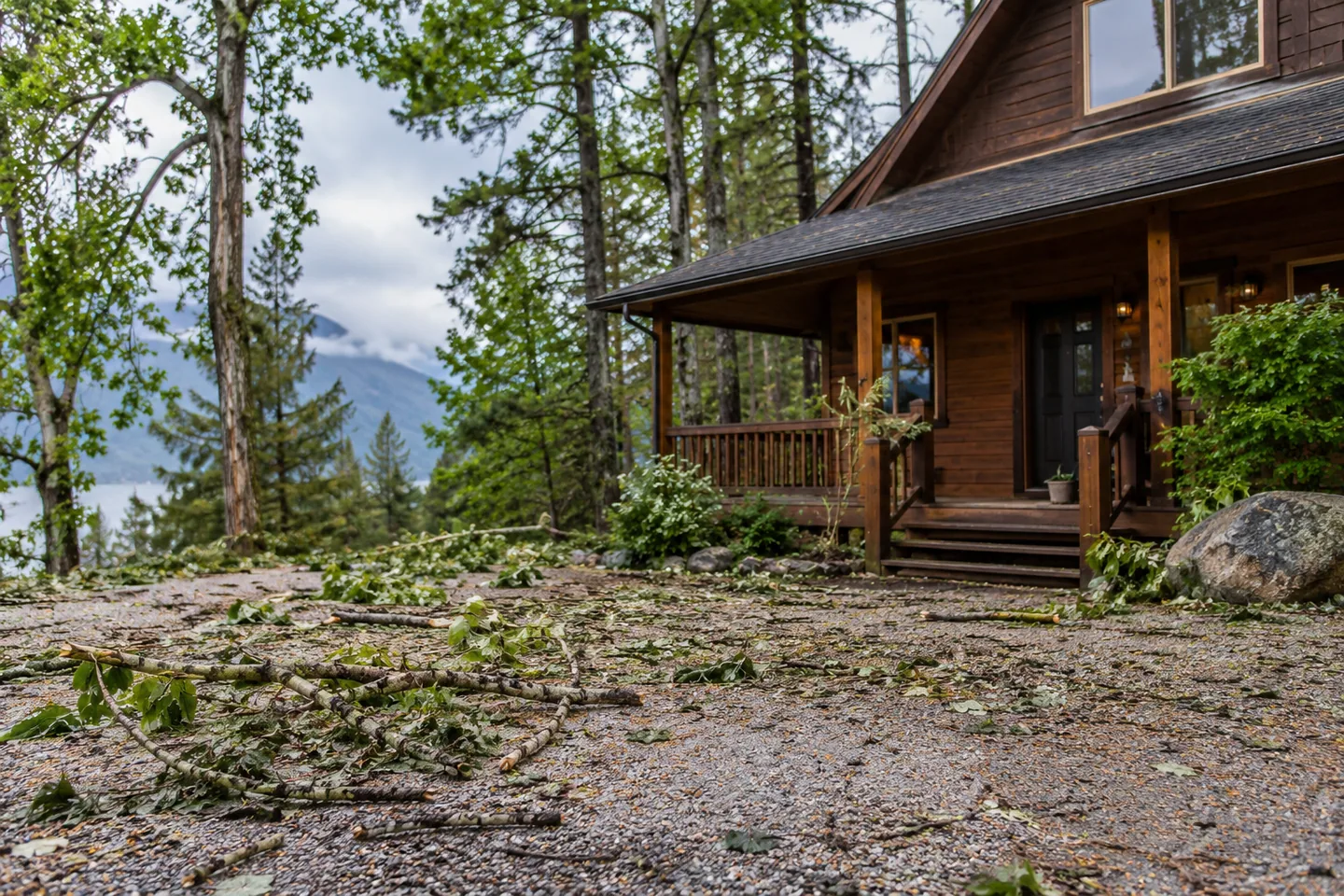
AI-generated cabin concept, used for illustration.
In this guide
Follow current local instructions before traveling to or entering a cabin after a windstorm. The fact that the building is still standing does not establish that the approach, services or interior are safe.
Keep clear of obvious hazards
The National Weather Service: After a high wind event advises staying away from downed power lines and continuing to monitor official updates. Treat damaged trees, unstable components and unfamiliar debris cautiously and obtain appropriate help.
Do not climb the roof or enter a suspect structure to document damage. Photographs are useful only when they can be taken safely from an appropriate position.
Turn observations into a service plan
Record visible changes, the time observed and which areas could not be assessed. Contact the relevant utility, service provider, insurer or local authority as appropriate to the issue and your actual arrangements.
For an illustrative record, note that a roof section could not be seen rather than marking the entire roof “checked.” That distinction prevents a later reader from assuming an inspection occurred.
Keep temporary-protection decisions and technical work with qualified providers. Ask them to document the assessed condition and completed work.
Once immediate concerns have been addressed and use is appropriate, update the maintenance and property records. The aim is a traceable route from the event to assessment and repair, not a hurried effort to make the cabin look normal before the underlying condition is understood.