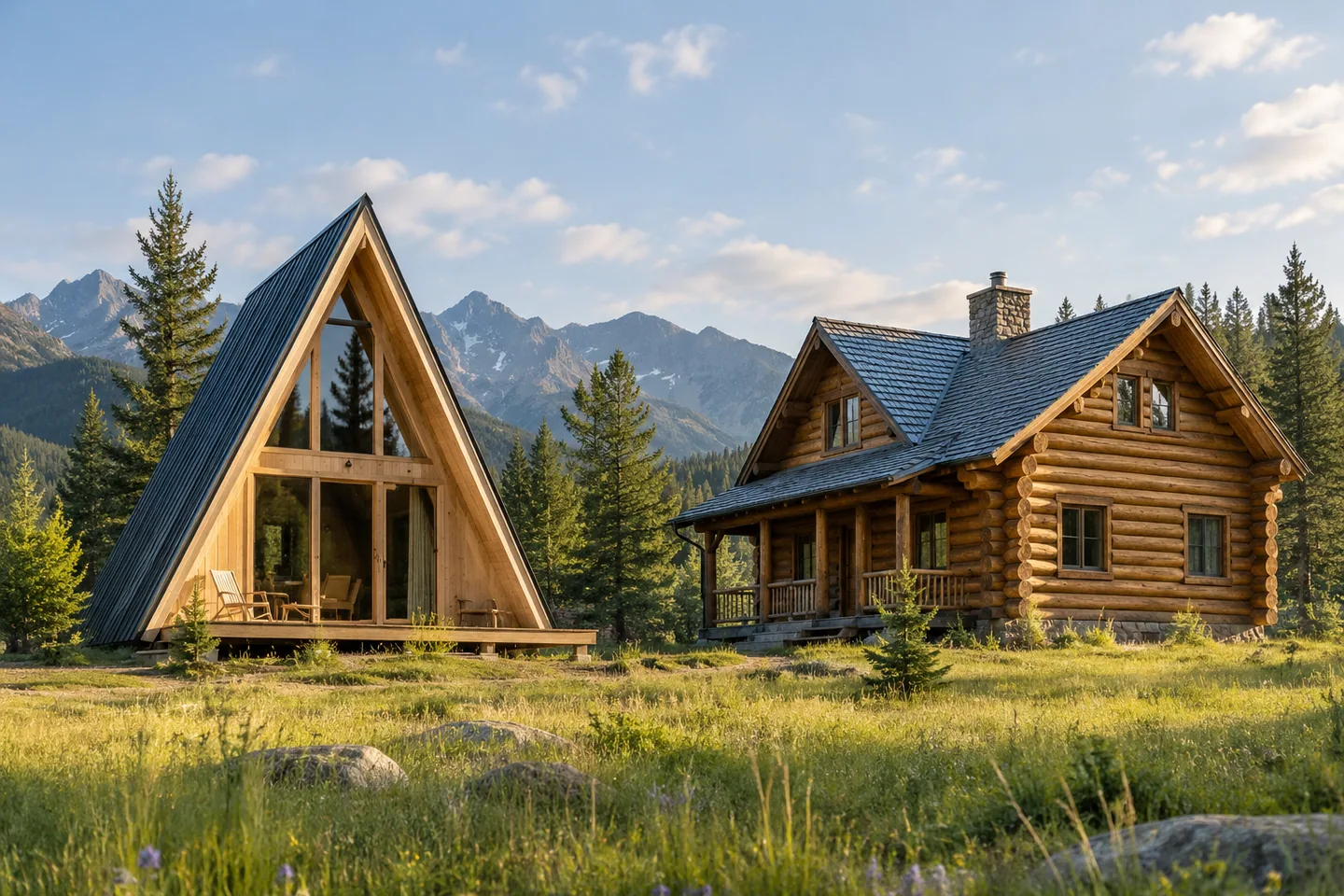
AI-generated cabin concept, used for illustration.
In this guide
“A-frame” describes a building form, while “log cabin” describes a construction approach or appearance. The labels are not always mutually exclusive, so compare the actual proposals rather than treating them as two fixed products.
Identify what each package includes
Ask for the structural system, wall and roof assemblies, finishes and installation scope. If a proposal uses log-look cladding rather than a structural log system, keep that distinction clear in the comparison.
Use the same site, room requirements and completion standard. A shell price for one option cannot be compared directly with a finished building price for the other.
Your Home: building a house provides general context for documenting the construction scope. Local design, performance and approval requirements still apply to either proposal.
Compare ownership as well as assembly
Request maintenance instructions for the actual exterior, joints, windows and roof. Avoid generic promises that one label means no upkeep or a fixed lifespan.
For an illustrative spatial comparison, place the same bed, kitchen and storage into both floor plans. The A-frame's roof slope may affect furniture placement, while the other proposal's wall thickness and arrangement may affect its usable dimensions differently.
Ask who provides local service and what product records you receive at handover. The best choice depends on the complete building and the routine you can support.
Keep the final decision tied to drawings, specifications and current local quotes. The cabin's identity matters, but its label alone cannot establish comfort, durability or total cost.