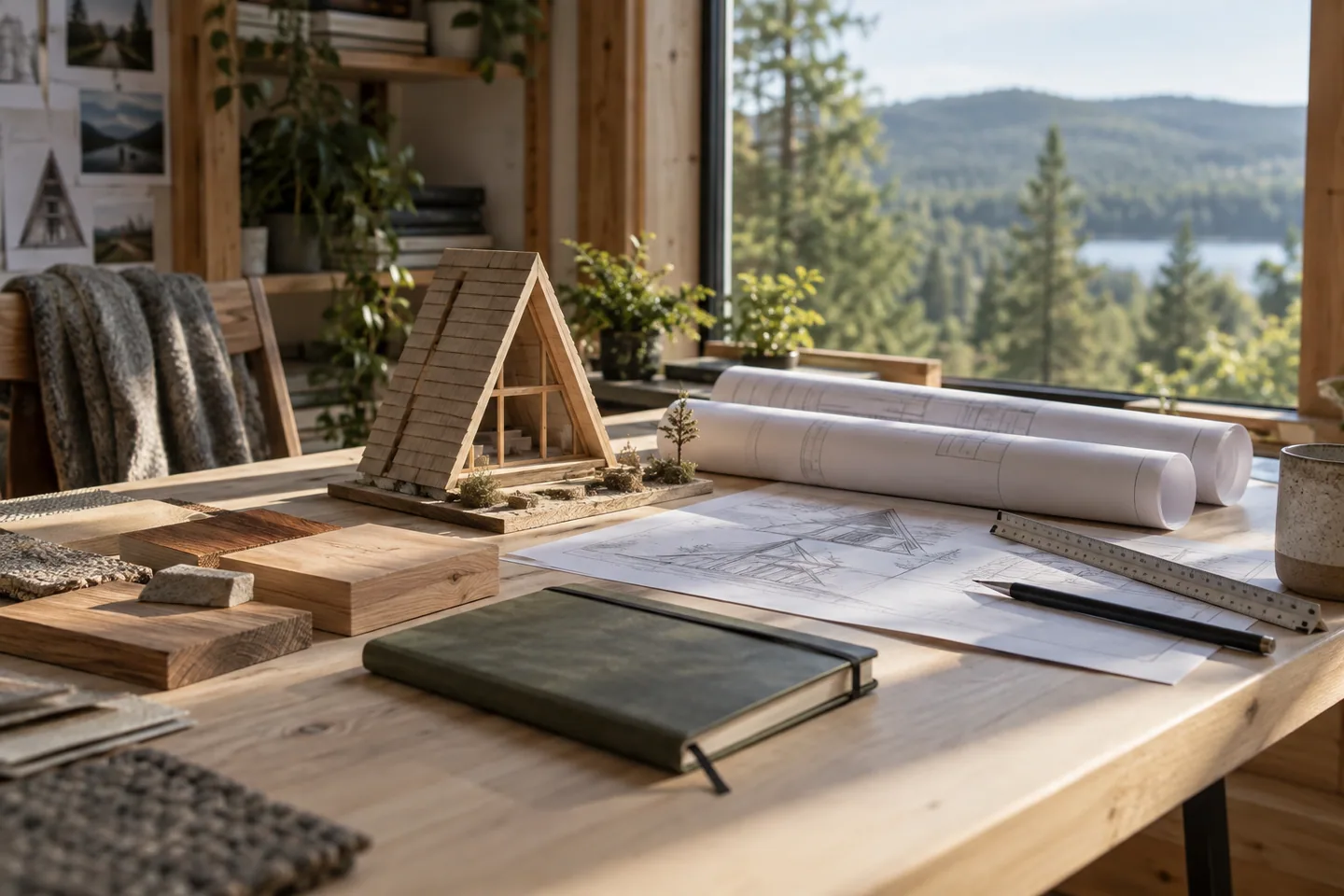
AI-generated cabin concept, used for illustration.
In this guide
Start an A-frame project with the intended use and the land, then develop the building around confirmed constraints. The shape can guide the design, but it should not force every later decision to fit an untested image.
Work through the decisions in order
- Write the brief: occupants, routines, priorities and the scope of the budget.
- Investigate the parcel: access, allowed use, water, wastewater, services and relevant site conditions.
- Compare workable layouts using real furniture, movement and roof sections.
- Coordinate the design, local requirements and responsibilities for all major systems.
- Compare complete quotes, resolve exclusions and document the change process.
- Build through the appropriate inspections and agreed quality checks.
- Collect handover records and establish the operating and maintenance routine.
These steps overlap in practice. The order is useful because an unresolved earlier decision can change the cost or feasibility of a later one.
Use the right guide for the current question
If the parcel is uncertain, begin with buying cabin land. If a kit price looks attractive, review what the package includes. If the plan feels crowded, make a headroom map.
For services, start with the actual daily demand rather than equipment shopping. The off-grid load-list example shows one way to make assumptions visible. At completion, use the handover document guide to keep the installed information together.
Your Home: designing a house provides a broader design-process reference; apply the local professional and approval arrangements for your project.
Keep a short list of confirmed decisions and open questions. Each useful next step should answer one of those questions or make a decision concrete enough for the next person to work from.