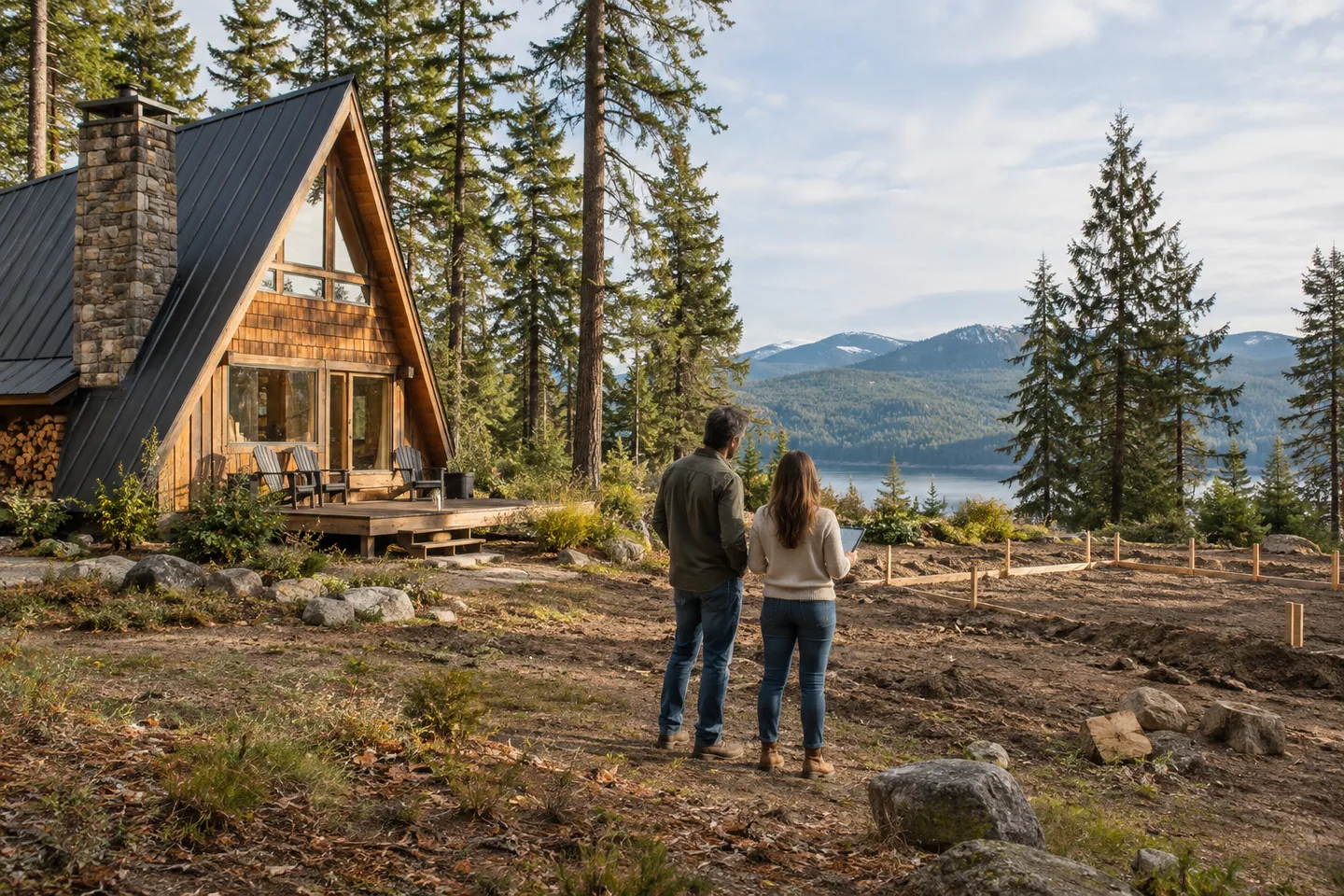
AI-generated cabin concept, used for illustration.
In this guide
Buying an existing A-frame and building a new one involve different uncertainties. Compare what you would actually own and still need to do, using the same brief for location, accommodation and year-round use.
Inspect the existing option as a project
An appealing cabin may need roof, glazing, moisture or service work. Arrange appropriate inspections and obtain records for alterations and permitted use. Ask which problems require specialist investigation before you commit.
List changes you would make immediately and those you could postpone. Distinguish necessary repairs from preferences. A new kitchen finish should not hide an unresolved water problem in the same renovation allowance.
Price the new option beyond the design
For a new build, include land suitability, design, approvals, access, services and completion. A kit quotation is not comparable with the asking price of an occupied property until those boundaries are reconciled.
Consider your own role. Building may require sustained decisions and coordination; renovating an existing cabin can also be demanding, especially if hidden conditions appear after work starts.
Compare use dates and flexibility
Record when each option could realistically serve its intended purpose, based on evidence from the seller, project team and relevant authorities. Do not assume an existing cabin is immediately suitable for a different use or occupancy pattern.
Create a decision sheet with complete cost, unresolved issues, time, fit with your needs and scope for future change. Use Your Home: designing a house for defining the brief. Obtain local professional advice for inspections, contracts and financing rather than treating this comparison as a valuation or purchase recommendation.