AI-generated cabin concept, used for illustration.
In this guide
An imported A-frame kit must work as a local building project, not just as an attractive package. Confirm that your local design team and permitting authority can use the supplied documentation before paying for manufacturing or shipping.
Ask what the documentation proves
Request the actual drawing set, material specifications and available engineering information. Ask a qualified local professional what adaptation or additional work is required for the site. Approval in the manufacturer's country does not establish acceptance in yours.
Check units, terminology and product identifiers carefully. A familiar-looking insulation or glazing number may use a different measurement convention. Have the responsible designer reconcile those differences explicitly.
Follow the shipment to your site
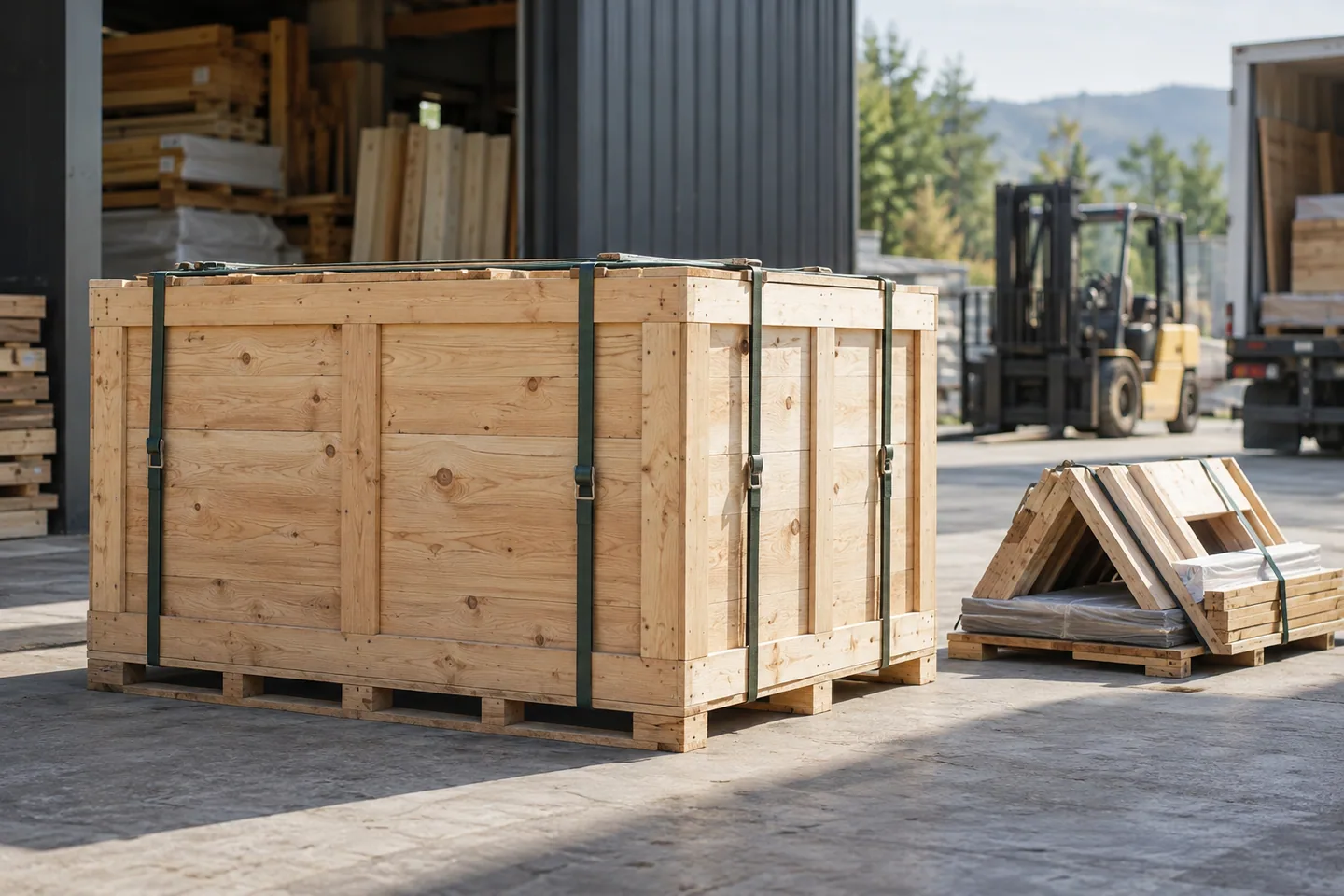
Obtain written terms for packing, insurance, customs handling, taxes, onward transport and unloading. Ask a suitable customs or logistics professional to identify the requirements for the actual origin, destination and goods. Do not rely on an old online duty estimate.
Price replacement and missing components as a process: who identifies the problem, who ships the replacement and how long the site can wait. A minor part can have a large scheduling effect if it is unavailable locally.
Keep the comparison in one currency
Record the currency and date of each quote, payment timing and who bears exchange-rate changes. Ask how cancelled orders and disputed deliveries are handled under the agreement; obtain legal advice where needed.
Use Your Home: building a house for general coordination principles. The useful decision is whether the complete imported route—including local adaptation and logistics—fits your project better than an available local alternative.