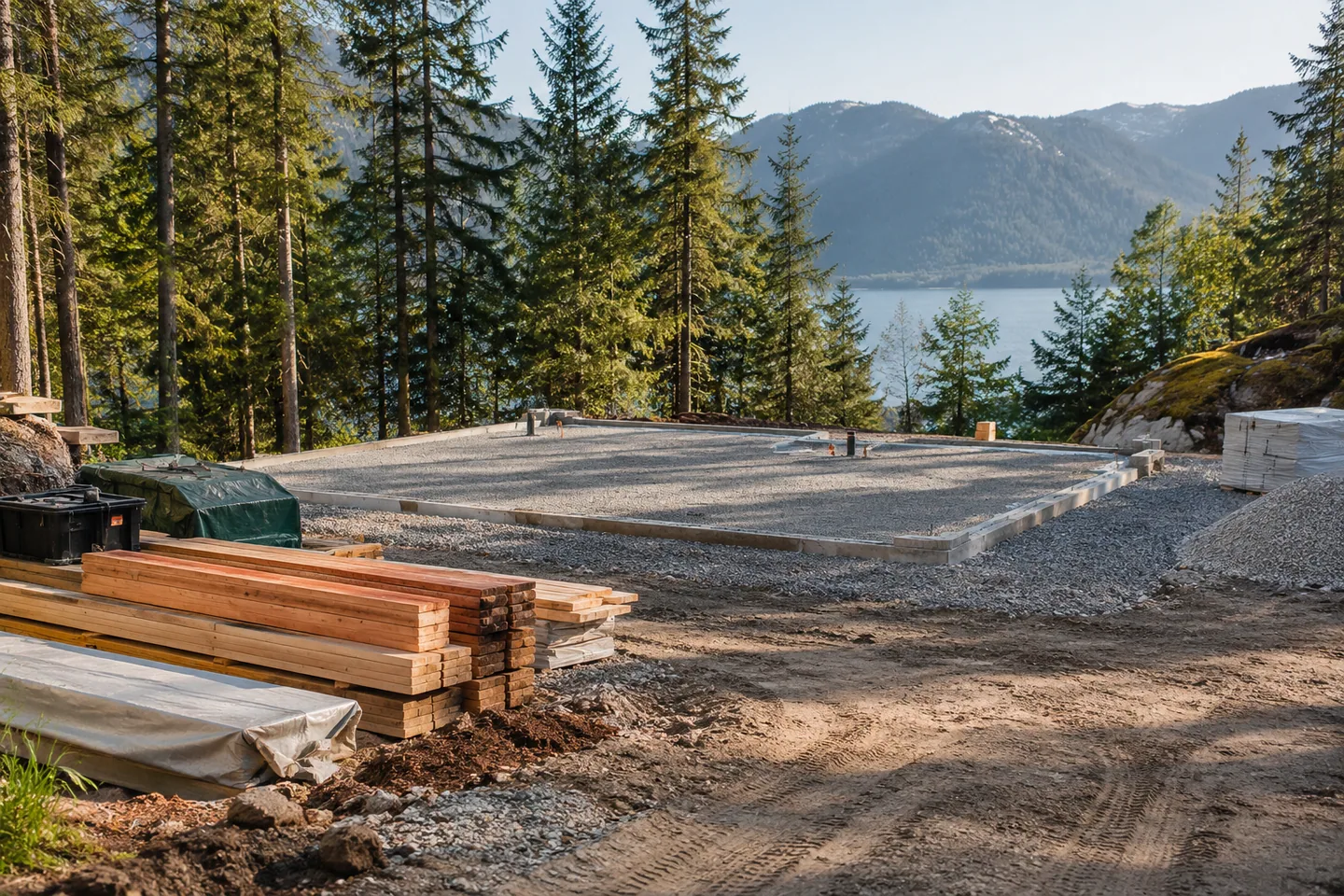
AI-generated cabin concept, used for illustration.
In this guide
An advertised assembly time usually describes one stage of an A-frame project. Your timeline also needs design decisions, local approvals, procurement, site preparation, services, finishes and completion checks. Ask which start and finish points a time claim uses.
Map dependencies before dates
Draw a simple sequence from site investigation to the intended use. Mark tasks that depend on another person's response: engineering, an authority's decision, utility work or a supplier's confirmed production slot. Ask each responsible party for their current lead time.
Identify decisions you control, such as choosing windows or approving a kitchen specification. A late selection can hold up several stages even when the structural package is ready.
Separate delivery readiness from building readiness
A kit may be ready at the factory while the foundation or access route is incomplete. Conversely, the site may be ready while a special window remains unavailable. Schedule a readiness review before shipping so storage and protection do not become improvised costs.
Keep a weather allowance grounded in local working conditions and the contractor's plan. Avoid promising that another owner's successful summer schedule will work on your mountain site.
Track the next constraint
For each stage, record responsible person, required input, expected completion and what it releases next. Review the nearest unresolved constraint at your project meetings. This is more useful than repeatedly moving the final completion date without explaining why.
Your Home's construction guidance describes the broader building process. Your actual dates must come from the team and authorities involved. Keep the supplier's assembly estimate in the schedule, clearly labeled as one component of the whole project.