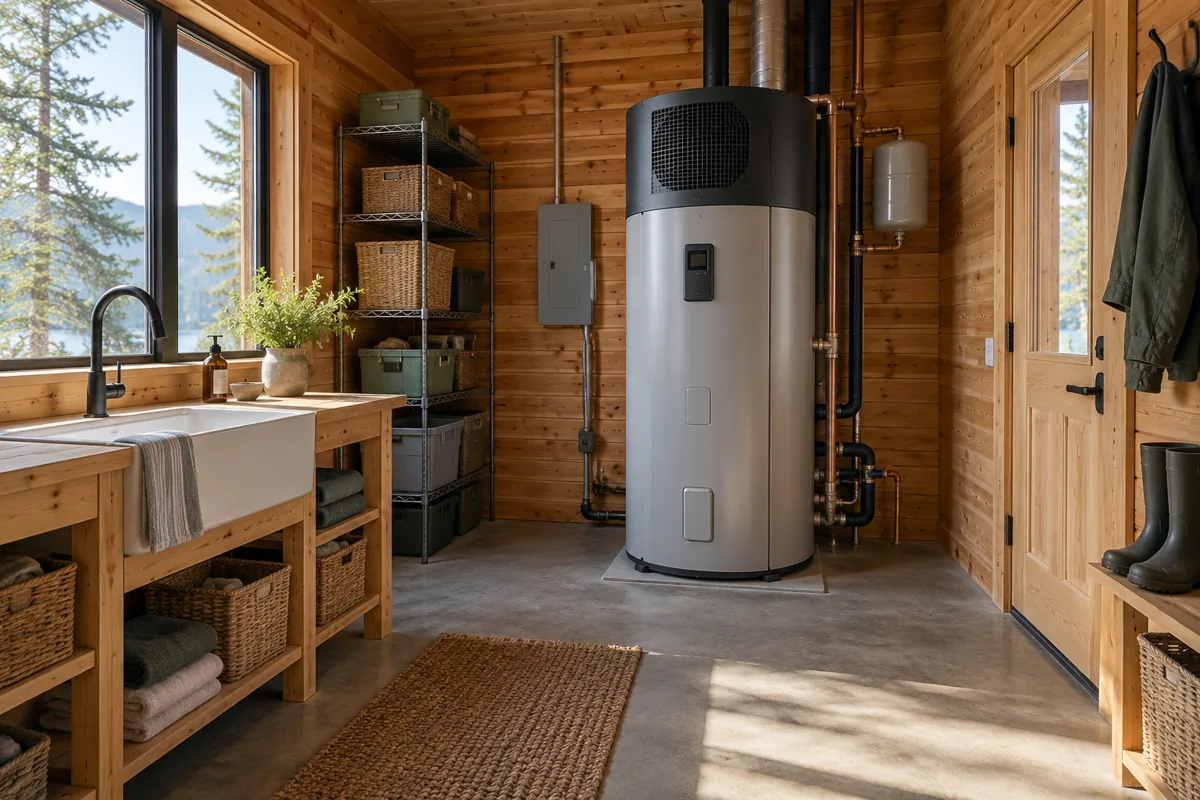
AI-generated cabin concept, used for illustration.
In this guide
Check the room conditions and service space as well as the tank dimensions. A heat-pump water heater that physically fits inside a cupboard may still need a different installation arrangement.
Read the installation requirements first
ENERGY STAR's buying guidance notes that these units draw heat from surrounding air and can cool their installation space. It also flags room temperature and available air space as selection issues. The exact model's instructions determine the installation you can use.
Ask the supplier to mark any required air paths, duct options, clearance and condensate arrangements on the cabin drawing. Do not assume a louvred door solves every air-volume requirement.
Check the cupboard in three dimensions
Measure the finished enclosure, not the framing opening. Include the door, pipes, valves and shelving. Show the space needed to remove filters, service components and eventually replace the unit.
| Check | What to put on the drawing |
|---|---|
| Equipment envelope | Tank and connected components |
| Air arrangement | Approved intake and discharge paths |
| Maintenance | Filter removal and service access |
| Water management | Required condensate and other drainage |
| Replacement | Route through doors and around corners |
Consider the room next door
If the cupboard shares a wall with a bedroom, ask about the selected unit's operating sound and proposed installation details. Review when it will run under the intended hot-water schedule. A weekend cabin can place several showers close together, so recovery and operating modes belong in the sizing discussion.
For an illustrative layout review, compare a cupboard beside the bed with a larger utility area beside the entry. Record lost storage, access and the proposed air route for both. Choose after the system designer confirms which arrangements are acceptable.
Include empty-cabin conditions
Tell the installer if the building is allowed to cool substantially between visits. Ask how that affects the unit's permitted operation, energy use and restart plan. Have any freeze protection coordinated with the rest of the water system.
Retain the chosen model's manual and agreed settings. Do not turn an energy-saving mode into a water-hygiene instruction; follow the manufacturer and local requirements for operation.
Use the project checklist to track unresolved items. Our hot-water demand guide covers usage, while utility-cupboard planning helps preserve enough space around the equipment.