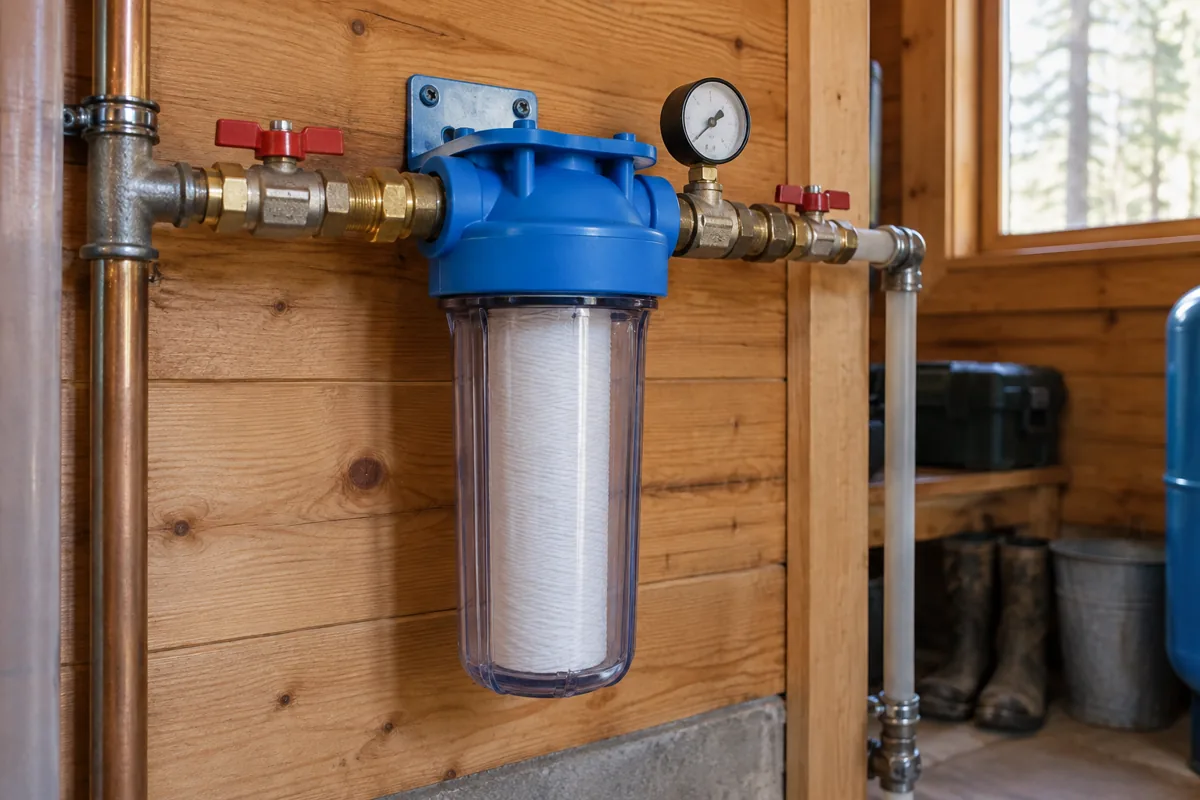
AI-generated cabin concept, used for illustration.
In this guide
Ask for the filter’s pressure-drop data at your required flow, both when clean and at the manufacturer’s service limit. A cartridge’s micron number alone does not tell you how the shower will perform.
Separate three specifications
Particle-retention rating describes one aspect of filtration. Flow capacity describes the intended operating range. Pressure drop describes the difference across the equipment under stated conditions. Ask the supplier to explain each using the actual housing and cartridge combination.
If you are also concerned about drinking-water safety, request evidence for the specific contaminants involved. A sediment filter should not be assumed to remove dissolved contaminants or make unsafe water safe. The EPA's private-well guidance links treatment choices to identified water-quality problems and testing.
Use a simultaneous-use scenario
Imagine a cabin where a shower uses 7 litres per minute while a kitchen tap uses 5. The combined illustrative demand is 12 litres per minute. Give that scenario to the supplier rather than asking whether a filter is “big enough for a cabin.”
Ask for the expected pressure loss at 12 L/min and how it changes during cartridge loading. The water-system designer should assess that alongside the pump, pipework, elevation changes and other treatment stages.
Make the comparison visible
| Quote detail | What to request |
|---|---|
| Exact cartridge | Model, dimensions and retention specification |
| Operating data | Flow range and pressure-loss information |
| Service trigger | Manufacturer's replacement or cleaning criterion |
| Installation | Approved orientation, pressure rating and isolation |
| Access | Space to remove the bowl or cartridge safely |
A large housing that cannot be opened inside the utility cupboard is not an acceptable finished arrangement. Mark the removal envelope on the drawing before shelving is fitted.
Establish a baseline
After installation, ask the installer to record the normal operating condition and demonstrate approved maintenance. Where pressure gauges are part of the design, have their purpose and acceptable readings explained in writing.
If flow later falls, compare conditions before replacing unrelated equipment. Note whether the change affects all outlets, hot water only or one shower. Avoid opening a pressurized housing; follow the manufacturer's procedure and use a qualified service provider where needed.
Save the data in the project checklist. Read water pressure versus flow for the broader diagnosis and utility-cupboard planning for space coordination.