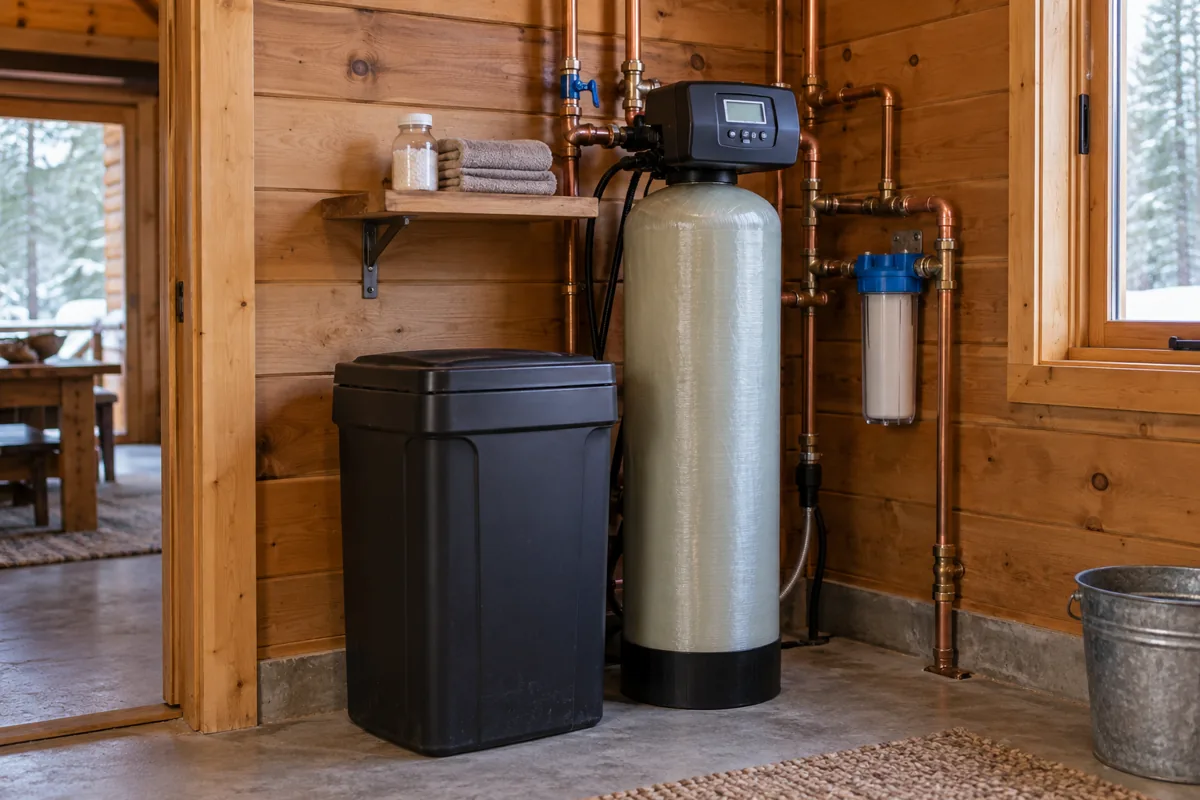
AI-generated cabin concept, used for illustration.
In this guide
Confirm hardness with a suitable test and identify any other water-quality concerns before selecting equipment. Scale and soap residue can prompt an investigation, but appearance alone is not a complete water assessment.
Understand what hardness describes
The US Geological Survey describes hardness mainly in terms of dissolved calcium and magnesium. Its categories use milligrams per litre as calcium carbonate. Keep the units with your result when comparing it with a product specification.
Hardness is a separate question from microbiological safety and many other contaminants. Do not treat a hardness result or a softener installation as proof that private-well water is safe to drink.
Build a short treatment brief
Ask a qualified water-treatment provider to work from laboratory results, intended uses and the existing system. Include the water source, peak simultaneous use, available space, drain arrangements and whether the cabin sits unused for long periods.
| Information | Why the supplier needs it |
|---|---|
| Test results with units and date | Establishes what the treatment must address |
| Shower and appliance use | Helps assess service flow and capacity |
| Water source and pump arrangement | Identifies system compatibility questions |
| Occupied and empty periods | Informs operating and restart instructions |
| Maintenance access | Determines whether routine service is practical |
Compare a whole service arrangement
For a hypothetical cabin with two showers used together, ask how the proposed equipment performs at that combined flow. Do not compare units only by the size of their cabinet.
Request a written explanation of consumables, regeneration or cleaning requirements, waste discharge and expected maintenance. Confirm the local acceptability of any discharge arrangement with the appropriate authority or system designer.
If the cabin uses septic treatment, make sure the water-treatment provider and wastewater designer understand the proposed arrangement. Avoid accepting incompatible assumptions from two separate quotations.
Keep the evidence after installation
Retain the initial test, treatment specification, installation record and any follow-up test appropriate to the intended use. Label the bypass and other controls, with an explanation of when they may be operated.
The EPA private-well guidance is a useful starting point for choosing tests with a certified laboratory and local health advice.
Use the project checklist to track those records. Our well-testing guide covers the wider testing plan, while filter pressure-drop questions address a different equipment issue.