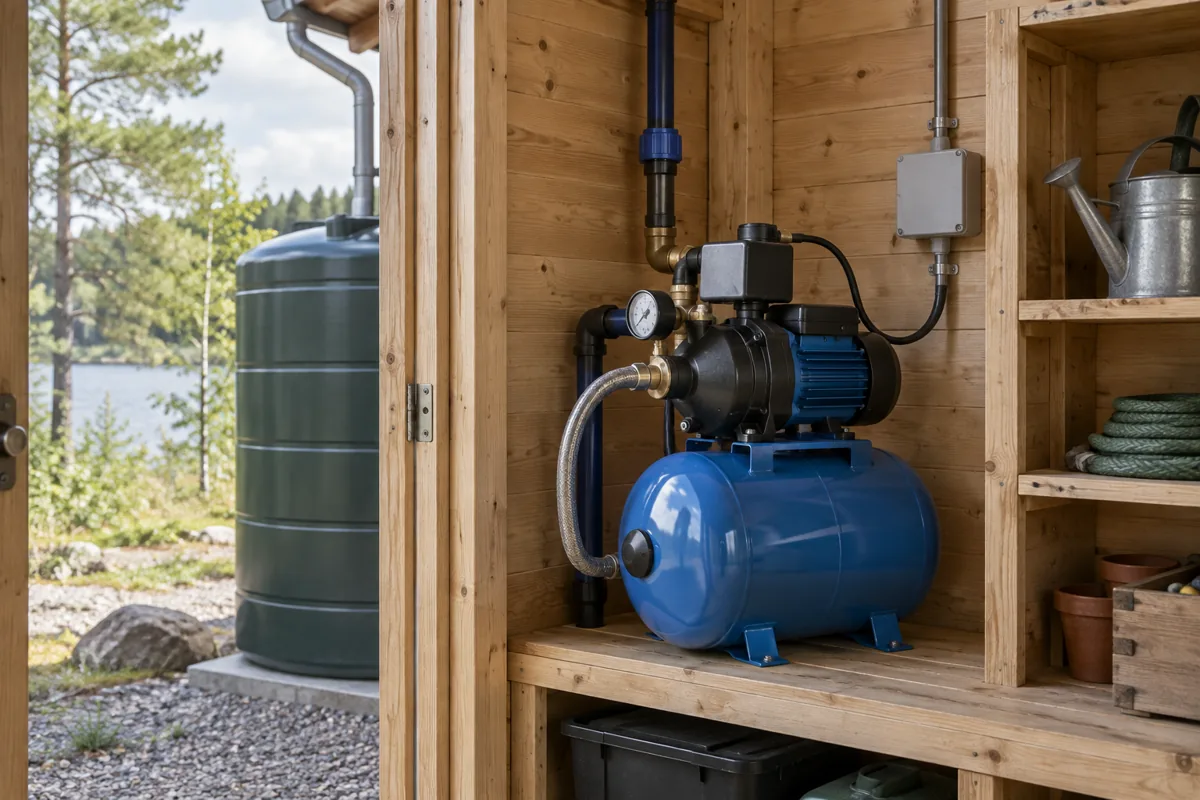
AI-generated cabin concept, used for illustration.
In this guide
Multiply the pump’s electrical input in kilowatts by its operating hours to estimate energy in kilowatt-hours. Use measured consumption where possible, because runtime and operating conditions matter.
Start with the right number
A motor's advertised rating, water-delivery capacity and electrical input are not necessarily the same quantity. Ask the supplier which figure describes input power at the proposed duty point, or have consumption measured with suitable equipment.
Your Home's rainwater guide notes that pumped systems have ongoing electricity costs. To estimate your own, you need the pump and its pattern of use rather than a generic cost per household.
An illustrative daily calculation
Suppose measured input averages 0.55 kW while the pump operates, and accumulated runtime is 36 minutes per day:
0.55 × (36 ÷ 60) = 0.33 kWh per day.
Over 30 identical days that is 9.9 kWh. At an invented energy rate of $0.25/kWh, the energy charge would be $2.48 after rounding. This excludes fixed charges, other equipment and any additional standby use.
The figures demonstrate arithmetic; they are not typical pump performance or a tariff quote. Enter your input and runtime in the energy cost calculator.
Compare useful output
If one measured day delivered 300 litres using 0.33 kWh, that equals 1.1 kWh per 1,000 litres. Keep the delivered volume and operating conditions with that number before comparing another pump.
Pressure, pipework, treatment equipment and delivery height can affect the system's operation. Ask the designer to compare equipment at the required service conditions. A pump with a lower nameplate wattage is not automatically the better fit.
Keep peak power separate
A battery or inverter also needs to support the pump's running and starting requirements. The daily 0.33 kWh calculation does not establish that compatibility. Obtain the electrical requirements from the actual pump manufacturer and have the power system checked accordingly.
Listen for unexplained cycling and record when it happens. Have the installer investigate changes rather than adjusting pressure controls from an online example.
Add the result to your off-grid load list, alongside the controls and water-treatment equipment. Read pressure versus flow if the real problem is an unsatisfactory shower rather than the electricity bill.