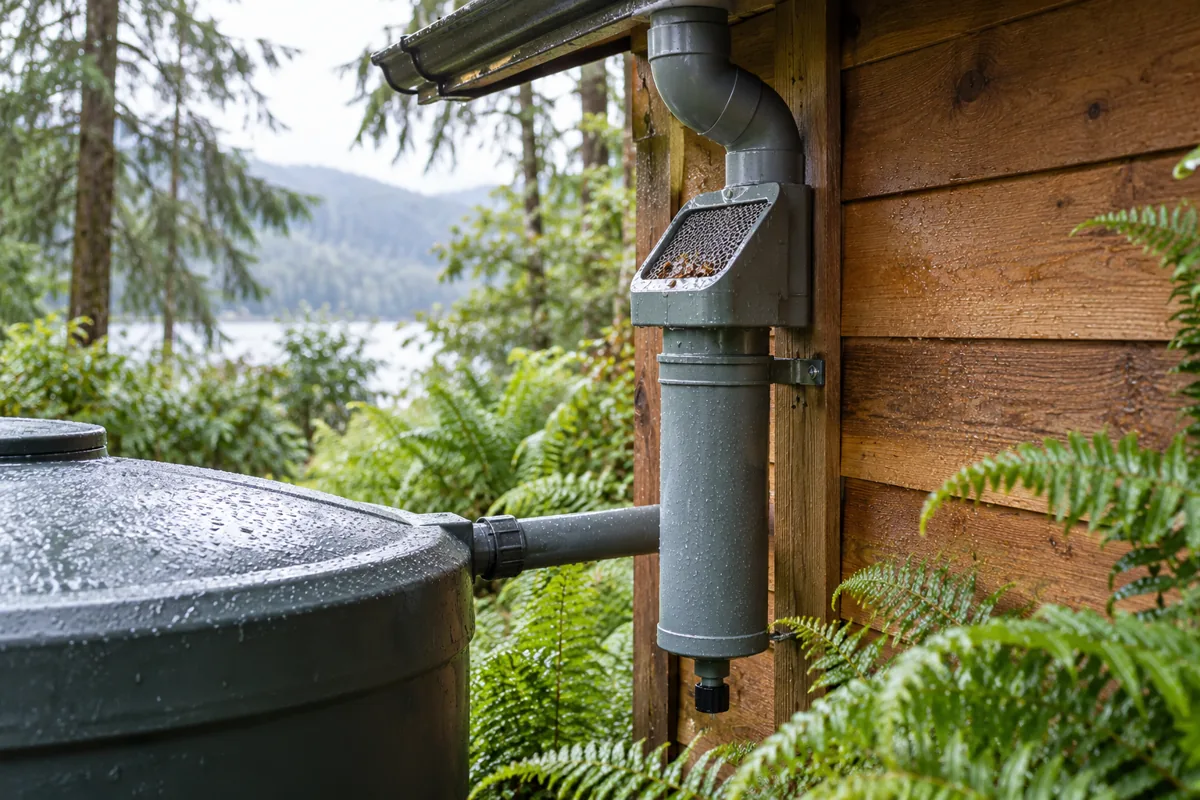
AI-generated cabin concept, used for illustration.
In this guide
A leaf screen, first-flush diverter and treatment filter address different parts of rainwater management. Listing all three on a quote does not establish that the finished water is suitable for drinking.
Follow the water in order
Sketch the route from the contributing roof to the intended tap. Mark the debris screen, first-flush arrangement, tank inlet, storage, pump and any treatment stages. Include the overflow and maintenance points rather than drawing only the main supply pipe.
Your Home's rainwater guidance describes first-flush devices as diverting initial roof runoff before it reaches the tank. The required arrangement and capacity need to match the roof, site and local requirements.
| Component | Question it addresses |
|---|---|
| Leaf screen | How is larger debris kept out of downstream equipment? |
| First-flush diverter | Where does initial runoff go, and how does the device reset? |
| Tank inlet screen | How is the storage opening protected and cleaned? |
| Treatment equipment | Which identified contaminants is it designed to address? |
Ask what happens after a dry spell
Imagine a cabin unused for a month before a storm. Ask the supplier how the first-flush device behaves, whether it needs manual attention and where diverted water drains. A device that depends on a task nobody performs may not work as intended.
Then check access. Can the screen be removed from a safe working position? Is there clearance below the diverter for cleaning? Who checks it when the cabin is vacant? Put those answers on the drawing.
Do not confuse clear water with safe water
The CDC explains that rainwater can contain germs and chemicals. A visible debris screen or first-flush stage does not prove those hazards have been addressed. Obtain testing and treatment advice for the proposed use from the relevant health authority and a qualified system designer.
Ask a treatment supplier to identify the exact contaminants, test results and certified performance supporting each proposed stage. Avoid accepting a vague description such as “whole-house purification” without that detail.
Keep collection losses consistent
The rainwater calculator uses a single collection-efficiency assumption. It does not model every first-flush event. If a detailed water-balance model separately subtracts diverted volumes, make sure the same loss is not counted twice.
Use the rainwater collection guide for the catchment calculation and the daily storage worksheet for timing. Equipment selection comes after those supply and use questions are clear.