AI-generated cabin concept, used for illustration.
In this guide
Choose a leak system around what happens after detection. A message on your phone helps only if it reaches you and someone can act; automatic shutoff adds another function that needs proper installation and testing.
Separate three types of protection
A spot sensor detects water at its location. A flow monitor looks at water moving through a pipe. An automatic shutoff system can close a compatible valve under defined conditions. Products may combine these features, but their capabilities and failure behavior differ.
The EPA's leak-detection guidance points homeowners to flow-monitoring and leak-alert technologies. Treat this as a starting point for comparing functions, not an endorsement of a particular device.
| Question | What to confirm |
|---|---|
| Internet fails | Does local detection still work? Is shutoff local or cloud-dependent? |
| Power fails | What backup exists, and what position does the valve retain? |
| Water is detected | Who receives the alert and who can visit? |
| Normal use looks unusual | How are guest stays and filling events handled? |
| Valve must be operated manually | Is it reachable and clearly labelled? |
Choose sensor positions from the plumbing plan
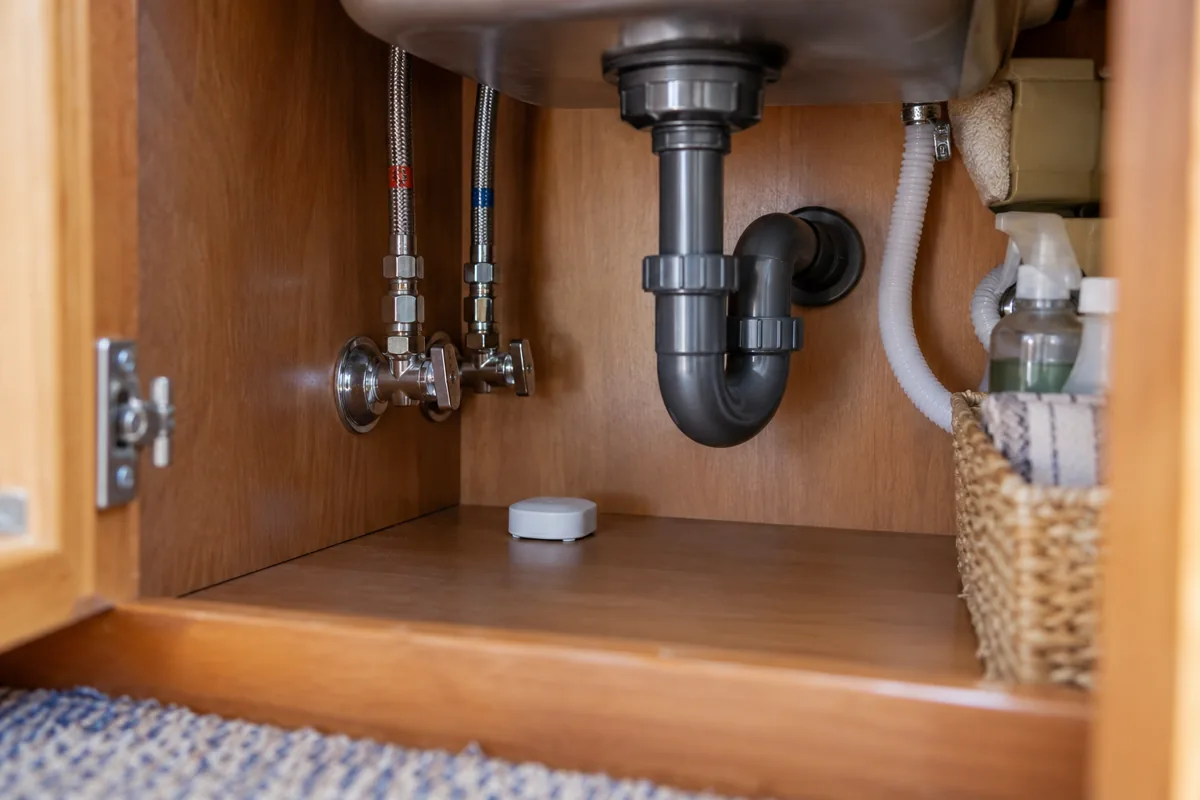
Mark the water heater, washing machine, sink cabinets and other relevant connections. Ask the installer which areas are actually covered by a sensor and where water could travel without reaching it.
An A-frame's low storage edges can conceal plumbing and delay discovery. A sensor should remain accessible for testing and battery replacement. Do not bury it behind fixed cabinetry simply to hide it.
Run an agreed test before relying on it
For a hypothetical weekend cabin, test the notification while you are at the property, then test the documented offline behavior with the installer. If automatic shutoff is included, have the plumber demonstrate safe valve operation and restoration. Coordinate with any equipment that depends on a continuous water supply.
Record what was tested and what was not. A successful alert is not proof that every pipe is protected or that freezing cannot damage the system.
Give the alert an owner
Keep a contact sequence and access arrangement. An alert sent to five people without a named responder can still produce no visit. Review the system after changing the router, phone or water supply.
Use the project checklist for tests and contacts. Pair alerts with unattended-cabin checks and a proper plumbing winterization plan.